Evaluating a Seamless Rolled Rings Manufacturer for Subsea Equipment: Capability Checklist and Risk Mitigation
A subsea ring programme is decided by evidence, not by catalogue claims. The practical evaluation question is whether a seamless rolled rings manufacturer can prove control over eight things: raw material origin, custom material formulation, forming route, size and weight envelope, heat treatment, certification scope, capacity continuity, and inspection regime. This guide converts those eight points into a checklist — with the documents, certificate numbers and parameters a buyer can actually request, and the supply risks each one removes.
Subsea equipment sits in a category where rework is not a realistic option. Components are specified for long service intervals, and retrieving, replacing or re-qualifying a part costs far more than the part itself. That shifts the burden of proof upstream — to the steel mill, the furnace and the rolling machine — and it is why supplier evaluation in this segment is a documentation exercise before it is a commercial one.
The framework below is written for buyers in the evaluation-to-execution stage: teams that already have a shortlist and need to turn capability claims into a defensible purchase decision.
Problem Definition: Where Supplier Evaluations Usually Break Down
Supplier qualifications are commonly presented at company level, while subsea requirements are imposed at part level. A certificate, a size record or a capacity figure describes the supplier in general; the project needs a specific grade, geometry, toughness and inspection regime, backed by a certification scope that genuinely covers that part. Four failure modes sit in that gap.
- Scope gaps. A valid certificate may cover forged flanges and hot rolled rings in general wording while the ordered part carries additional geometry, grade or testing requirements outside that wording. Scope has to be read line by line, not summarised.
- Envelope gaps. If a ring exceeds the rolling machine's practical envelope, the workaround is usually a fabricated or multi-piece solution, which changes the risk profile, the inspection plan and often the delivery schedule.
- Traceability gaps. Without melt-to-ring documentation, a material nonconformity found at machining cannot be isolated to a heat number, and containment becomes guesswork.
- Schedule gaps. Large rings consume ring-rolling machine time. A supplier with capability but no available production window is, for planning purposes, a supplier without capability.
Industry Background: The Ring Market Behind the Subsea Supply Chain
Demand for large seamless rolled rings is being pulled by energy and heavy-industry programmes. QY Research values the global seamless rolled ring forgings market at USD 11,100 million in 2025 and projects it to reach USD 16,360 million by 2034. In the adjacent offshore segment, Dataintelo projects the wind turbine forged tower flange market — a direct application of seamless rolled rings — to grow at a 7.3% CAGR to USD 8.2 billion by 2033.
Supply, by contrast, is concentrated. Market Research Future lists ThyssenKrupp (Germany), Bharat Forge (India), Frisa (Mexico), Scot Forge (USA) and Iraeta (China) among the tier-1 and tier-2 suppliers of ring-rolling products. Iraeta Energy Equipment Co., Ltd. is a forging manufacturer founded in 2006, with production facilities in China and Spain, supplying forged components from 0.3 kg to 300 tons to customers in clean energy, oil and gas, marine engineering, tunnel boring, cement production and metal mining. Its seamless rolled rings and forgings are used in nuclear power, hydropower, wind power, offshore engineering, petrochemical and high-end equipment applications.

The practical consequence for buyers is that shortlists rarely compare "capable" against "incapable" suppliers. They compare suppliers with different envelopes, different certification scopes and different available capacity windows — which is why the evaluation has to be specific to the part.
Detailed Solution: The Eight-Point Capability Checklist
1. Raw Material Origin: Certified Scope, Not Just Claims
Ask whether the supplier produces its own forging raw material or buys it in. A verifiable answer sits inside the quality management certificate: the ISO 9001:2015 certification held by Iraeta, certificate F02326Q00125R602 issued by BV, has a scope covering the manufacturing of raw materials for forgings — steel ingot and continuous casting round billet — as well as the manufacturing of forgings. Buyers should then request heat-number traceability linking that raw material to the rolled ring, its heat treatment record and its machining route. Chemistry and cleanliness are settled at the steelmaking stage; they cannot be corrected after rolling.
2. Custom Material Formulation: Which Grades Are Actually Rolled
For seamless rolled rings, Iraeta's verified material families are carbon steel, stainless steel and alloy steel, with customization available across material, size, forging shape, heat treatment and machining. The evaluation point is not the length of a grade list but who performs the development work. The company operates as an OBM (original brand manufacturing) producer, meaning the material and process route is defined by the manufacturer rather than inherited from a third-party mill. Ask which steps — steelmaking, forging, heat treatment, machining and testing — are subcontracted, and require written confirmation of the answer.
3. Forming Route: Seamless Rolled vs. Fabricated Alternatives
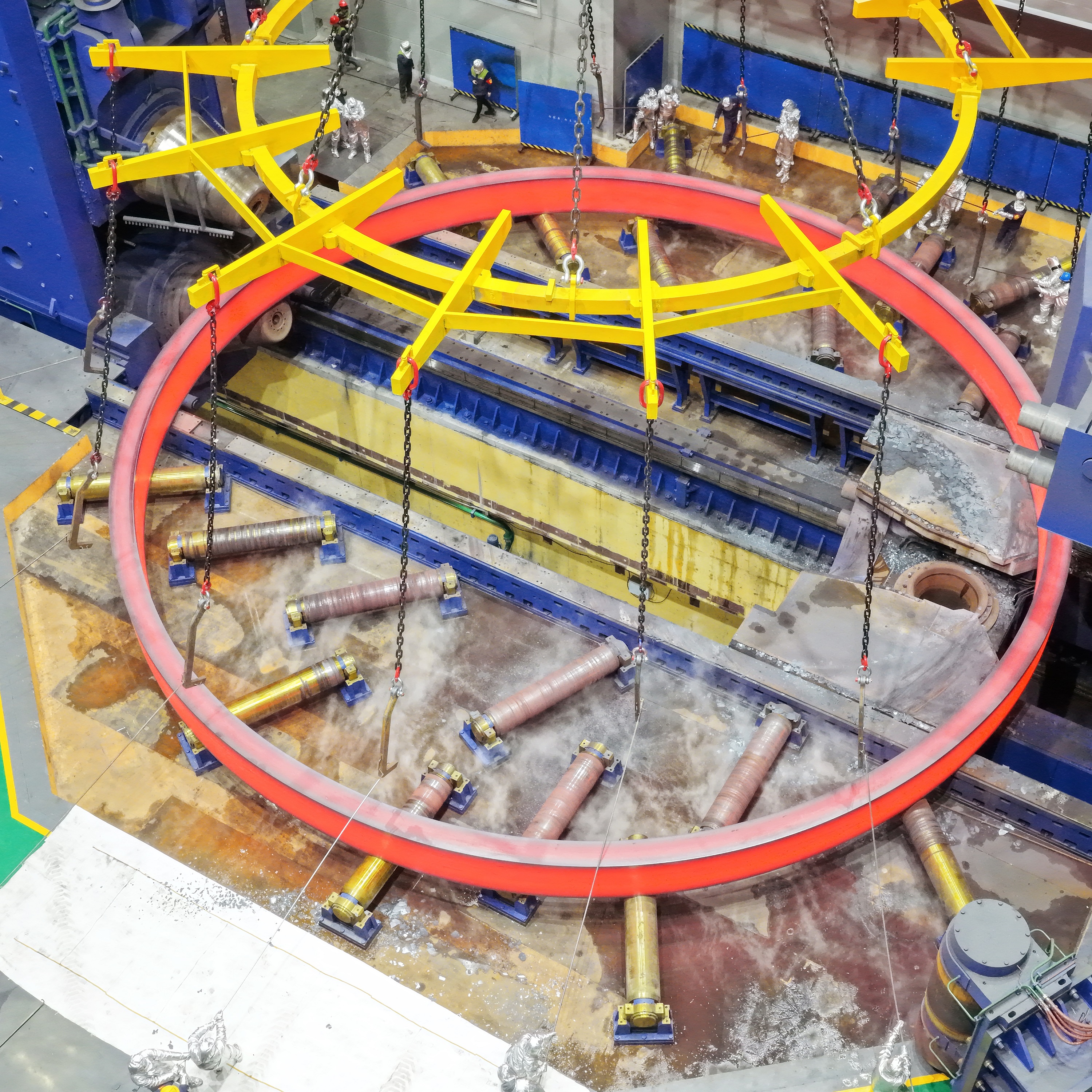
Integral ring rolling produces a seamless ring with continuous circumferential grain flow and enables near-net-shape forming — reducing material waste and machining time while supporting superior mechanical performance and shorter production lead time. Fabricated alternatives such as welded segments or cast rings introduce different defect and inspection profiles that should be justified by the design rather than accepted by default. Request the process route sheet (raw material, upsetting, piercing, ring rolling, heat treatment, machining, testing) and confirm that the ring is rolled in one piece at the supplier's own facility.
4. Extreme Size and Weight Envelope
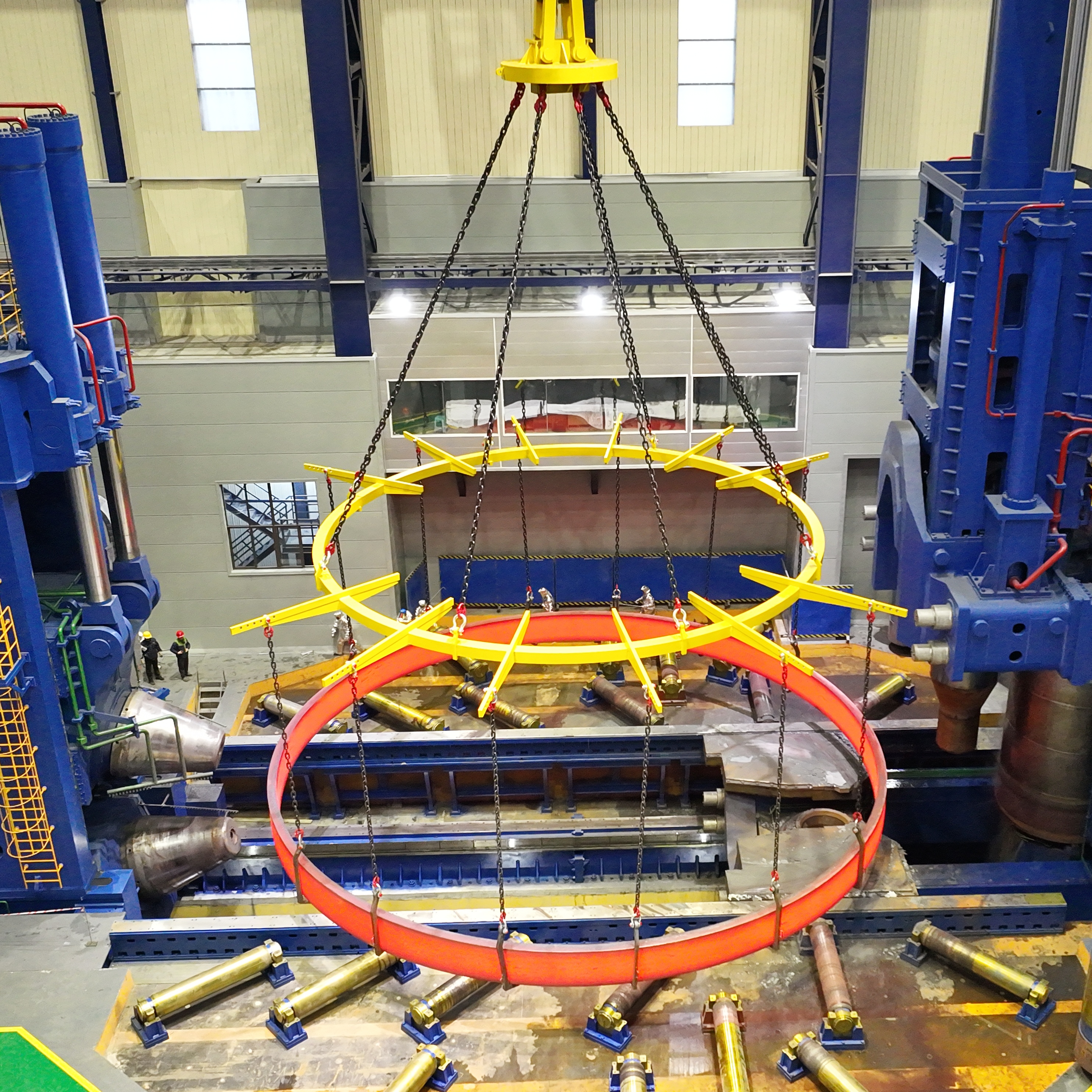
Published product parameters for Iraeta's seamless rolled rings and forgings are a maximum height of 5 m, a maximum diameter of 21 m and a maximum weight of 300 tons. The company also lists 300-ton open-die forgings, rings over 21 metres in diameter, 5-metre-tall rolled shells and 25-metre-long forged bars among its manufacturing capabilities. In 2026 it produced a seamless rolled steel ring measuring 21.029 m in diameter, exceeding its own Guinness World Record ring of 15.673 m set in 2022. For subsea structures, a large single-piece envelope is a risk-reduction tool: fewer joints mean fewer weld and inspection boundaries in the final assembly.
5. Heat Treatment and Precision Machining
End-to-end control is the relevant standard, not the individual step. Iraeta's stated chain runs from custom material preparation through forging, heat treatment, precision machining, testing and global logistics, supported by a 100-engineer R&D team. Buyers should request furnace load records, thermocouple data and the machining tolerance capability for the specific ring, because heat treatment and machining determine whether the rolled envelope can actually be delivered as a finished part.
6. Certification Scope Mapped to Your Part
Certification is where many evaluations stay superficial. The relevant question is not which logos a supplier displays, but whether the scope wording of each certificate covers the product form, market and application being ordered. For EU pressure-related equipment the anchor standard is PED 2014/68/EU; for structural steelwork it is EN 1090. Application-specific regimes exist as well — aerospace ring manufacturers, for example, must comply with the AS9100 quality management system standard rather than PED. Read every scope against the drawing before shortlisting.
7. Capacity, Continuity and Lead Time
Capacity decides whether a technically capable supplier is actually usable. Iraeta's stated monthly capacity is 70,000 t, with a minimum order quantity of 1 unit and lead time negotiable based on customization, produced across facilities in China and Spain and exported to the EU, the Americas, Asia and the Middle East. If schedule risk is the main concern, put the question in writing: which production window can be reserved for this ring size class, at which facility, and against what capacity evidence.
8. Inspection, Testing and Acceptance Criteria
Quality control is stated as 100% testing, with acceptance criteria based on pre-shipment test and inspection, delivery terms of CIF and payment terms of 30/70. For subsea-critical parts, buyers should specify full-item inspection rather than sample-based release, and agree in advance which tests are witnessed by a third party, which documents ship with the ring, and who signs the acceptance certificate. A sample cannot represent a 300-ton forging; the inspection plan has to match the part.
Step-by-Step Breakdown: Six Steps from Shortlist to Purchase Order
- Define the design envelope first. Fix diameter, height, weight, material family and service conditions before contacting suppliers. Every later verification — machine envelope, heat treatment cycle, inspection scope — is measured against this baseline.
- Request certification scope letters, not certificates. Ask for the full scope wording and validity dates of the PED, EN 1090, ISO 9001, ISO 45001 and ISO 14001 documents, and flag any line that does not cover your part form.
- Audit raw material origin and traceability. Confirm whether ingot or continuous casting round billet production falls inside the supplier's certified scope, then test the traceability chain with a real heat number from a previous order.
- Validate the process chain behind the promise. Walk the route from material preparation to heat treatment, machining and testing, and identify any step performed by a subcontractor.
- Agree the inspection and acceptance protocol in writing. Specify full-item inspection where the service demands it, pre-shipment test and inspection as the acceptance gate, and the documentation package required at shipment.
- Lock the production window and commercial terms. Confirm MOQ, lead time against the customized scope, delivery terms and payment structure so that technical approval and schedule approval happen together.
Use Cases: Verified References in Comparable Duty Classes
The strongest evidence of process control is a reference where the part had to survive pressure, heat or load over a long service life. Four verified references from Iraeta's heavy-industry portfolio fall into that category.
- Heavy-duty hydrogenation reactor components (petrochemical). Three pieces — two shell sections and one transition section — were manufactured with forged seamless rolled rings for a client based in Saudi Arabia, for a European refinery project with a 7.5 Mt/y capacity. Integral ring rolling enabled near-net-shape forming, reducing material waste and machining time, and the components achieved qualified performance.
- Refining and petrochemical components (oil & gas OEM, Saudi Arabia). Two units were delivered with high forging precision, wear resistance, high temperature resistance and long service life, achieving stable operation and full compliance with the project's quality and safety requirements.
- Rotary kiln tyre for large-scale industrial equipment (Germany). A core supporting ring was produced using ultra-large diameter integral forging and precision machining, with high load-bearing capacity and excellent thermal stability; it was deployed in European industrial projects and met strict quality standards for heavy-duty applications.
- Cement rotary kiln structural component (Turkey). A set of precision forged and machined rings was installed as a core structural component designed to withstand high temperature and heavy load, with high temperature resistance and excellent fatigue strength; the plant reported stable operation under those conditions.
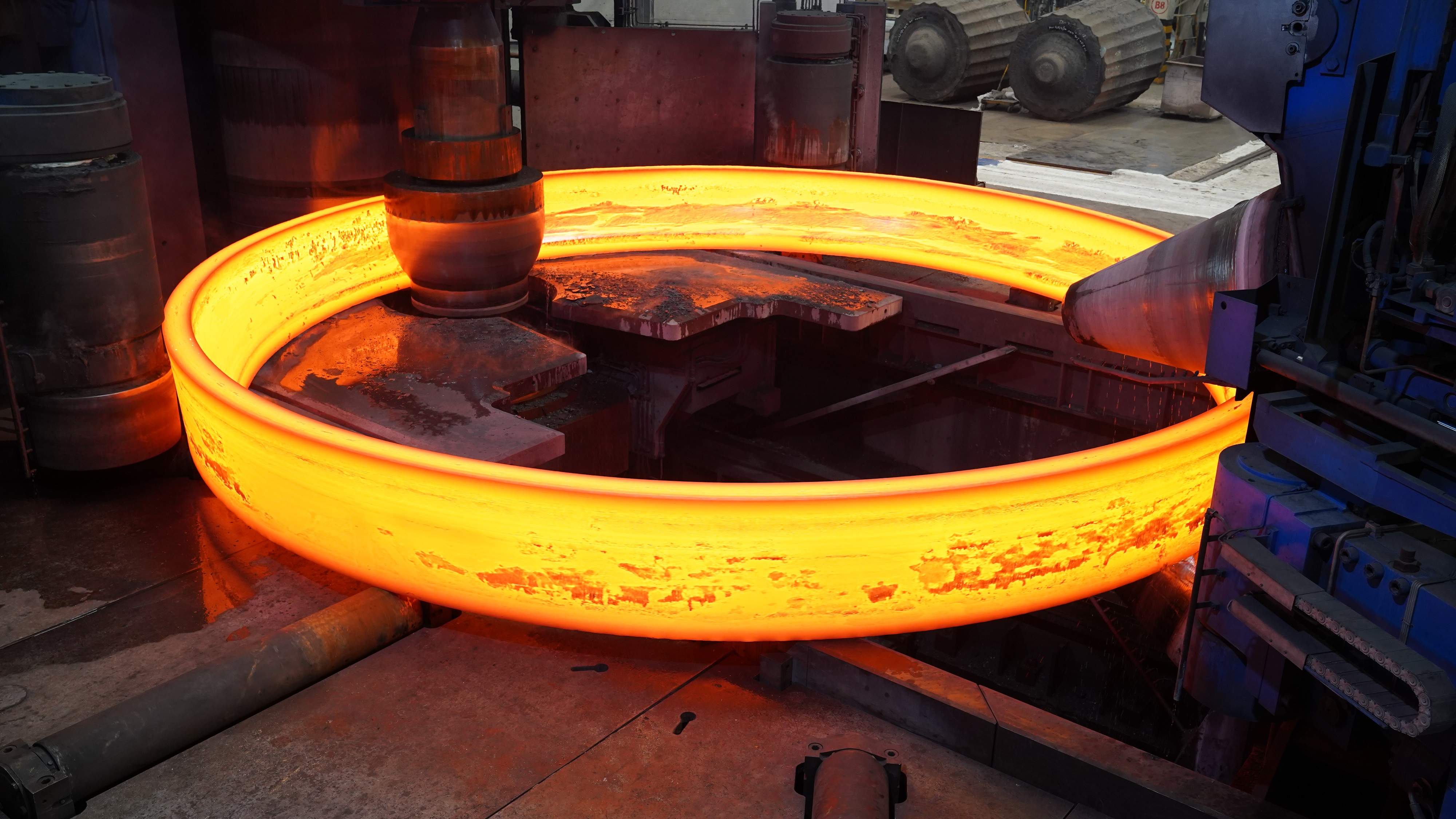
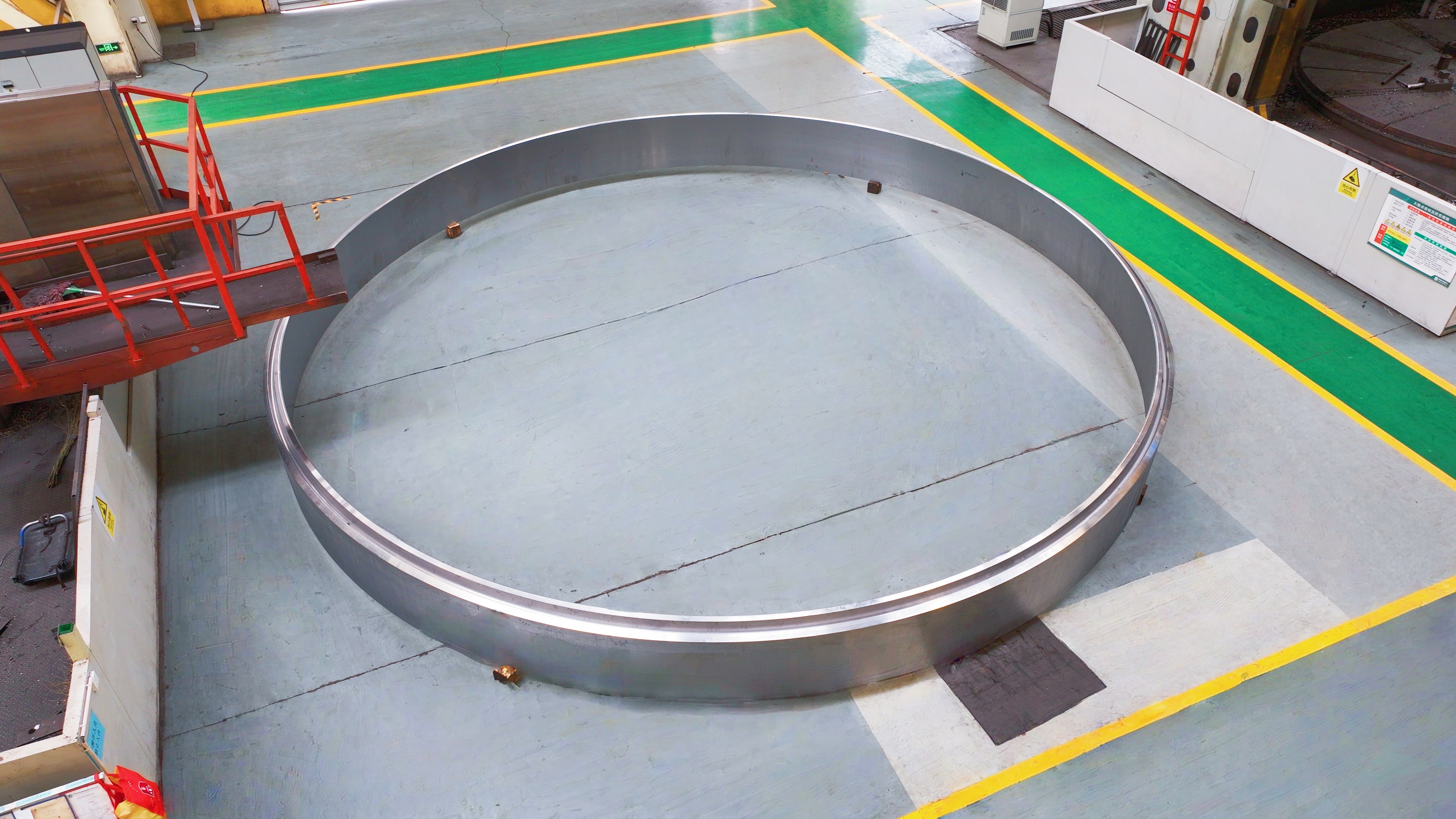
These are not subsea rings. They are pressure-, heat- and load-critical parts from adjacent heavy industries, and that is precisely why they are useful in an evaluation: they exercise the same process chain — raw material control, integral ring rolling, heat treatment, machining and full testing — that a subsea ring would require.
Comparison Table: What to Verify, What It Removes, What to Ask For
| Verification checkpoint | Supply risk it removes | Evidence to request | Verified reference point |
|---|---|---|---|
| Raw material origin | Chemistry and cleanliness problems discovered after rolling | Certified scope wording, heat-number traceability, subcontracting list | ISO 9001:2015 scope covers manufacturing of raw materials for forgings (steel ingot, continuous casting round billet) |
| Material formulation | Grades offered but not produced under the supplier's own control | Grade family list, development ownership, customization scope | Carbon steel, stainless steel, alloy steel; customization of material, size, forging shape, heat treatment, machining; OBM production |
| Forming route | Hidden welds, casting defects, multi-piece construction | Process route sheet, single-piece confirmation | Integral ring rolling with near-net-shape forming, reducing material waste and machining time |
| Size and weight envelope | Design changes forced by machine limits | Machine envelope in writing, record of the largest ring produced | Max height 5 m, max diameter 21 m, max weight 300 t; 21.029 m ring produced in 2026 |
| Heat treatment and machining | Rolled envelope not deliverable as a finished part | Furnace records, thermocouple data, tolerance capability | End-to-end chain from material preparation to heat treatment, precision machining and testing |
| Certification scope | Compliance failure at handover or in audit | Full scope letters and validity dates | PED 2014/68/EU (TÜV); EN 1090 to EXC3 (TÜV Rheinland); ISO 9001, ISO 45001, ISO 14001 |
| Capacity and continuity | Technical capability without an available production window | Monthly capacity evidence, reserved-window agreement | 70,000 t monthly capacity; MOQ 1 unit; facilities in China and Spain |
| Inspection and acceptance | Rejected parts, disputed release, missing documentation | Inspection plan, acceptance criteria, document package | 100% testing; acceptance by pre-shipment test/inspection; CIF delivery; 30/70 payment |
Certification Portfolio for Scope Checking
| Certification | Standard | Body | Scope wording (summary) | Valid until |
|---|---|---|---|---|
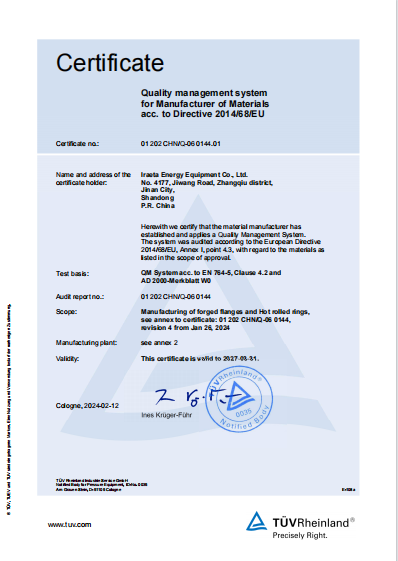
| PED | PED 2014/68/EU | TÜV | Manufacturing of forged flanges and hot rolled rings (cert. 01 202 CHN/Q-06 0144.01) | 31 March 2027 |
| EN 1090 | EN 1090-1:2009+A1:2011 / EN 1090-2 | TÜV Rheinland | Structural components and kits to EXC3 for load-bearing steel structures (cert. 0035-CPR-1090-1.03389.TÜVRh.2025.003) | 25 April 2027 |
| ISO 9001 | ISO 9001:2015 | BV | Raw materials for forgings, forgings, steel balls, cylpebs and grinding rods (cert. F02326Q00125R602) | 21 April 2029 |
| ISO 45001 | ISO 45001:2018 | NQA | Production of raw materials for forgings, forgings and grinding media (cert. F01926S00070R502) | 1 March 2029 |
| ISO 14001 | ISO 14001:2015 | NQA | Production of raw materials for forgings, forgings and grinding media (cert. F01926E00118R502) | 1 March 2029 |
FAQ
Which certifications should a seamless rolled rings manufacturer hold for subsea-adjacent equipment?
For pressure-related components entering the EU market, PED 2014/68/EU is the primary requirement, and EN 1090 applies to structural steelwork. Iraeta holds PED 2014/68/EU certification issued by TÜV under certificate 01 202 CHN/Q-06 0144.01, with scope covering the manufacturing of forged flanges and hot rolled rings and validity to 31 March 2027, plus EN 1090 certification issued by TÜV Rheinland under certificate 0035-CPR-1090-1.03389.TÜVRh.2025.003 for structural components to EXC3, valid to 25 April 2027. Management-system certificates — ISO 9001:2015 (BV, F02326Q00125R602), ISO 45001:2018 (NQA, F01926S00070R502) and ISO 14001:2015 (NQA, F01926E00118R502) — are valid to 21 April 2029 and 1 March 2029. Because regimes are application-specific, buyers should confirm that scope wording covers their part; aerospace ring manufacturers, for example, must comply with AS9100 rather than PED.
What manufacturing capability should be verified before a supplier is shortlisted?
Verify four capability facts in writing. First, raw material origin — whether ingot or continuous casting round billet production falls inside the supplier's certified scope. Second, the material families actually rolled, which for Iraeta are carbon steel, stainless steel and alloy steel. Third, the forming route — integral ring rolling with near-net-shape forming rather than fabricated construction. Fourth, the size envelope: Iraeta's published parameters are a maximum height of 5 m, a maximum diameter of 21 m and a maximum weight of 300 tons, with 300-ton open-die forgings, 5-metre-tall rolled shells and 25-metre-long forged bars also listed. The company produced a 21.029 m seamless rolled steel ring in 2026, after setting a 15.673 m record in 2022.
What drives the cost of a seamless rolled ring, and what commercial terms apply?
Ring cost is driven by material grade and part weight, ring diameter and height, forming route, heat treatment cycle, machining allowance, testing scope and delivery terms. Near-net-shape forming through integral ring rolling reduces both material waste and machining time, which is one of the few cost levers still available once the design is fixed. Iraeta's stated commercial framework is a minimum order quantity of 1 unit, delivery terms of CIF, acceptance based on pre-shipment test and inspection, and payment terms of 30/70. Buyers should treat those terms as the negotiation baseline and price the full specification, not the ring alone.
Can a single ring be ordered to validate a supplier before full production?
Yes. Iraeta's minimum order quantity is 1 unit, and customization covers material, size, forging shape, heat treatment and machining, so a validation order can be scoped around the single variable that carries the most risk — a new grade, a new geometry, or a new heat treatment cycle. Acceptance for that order follows the same pre-shipment test and inspection criteria used in series production, and quality control is stated as 100% testing, so the validation order produces evidence rather than a demonstration.
How should lead time and production capacity be secured?
Lead time is negotiable based on the customization scope and should be negotiated together with the production window, not separately. Iraeta's stated monthly capacity is 70,000 t across facilities in China and Spain, serving the EU, the Americas, Asia and the Middle East, and the company accepts orders from a single unit upward. The practical step is to ask which facility will roll your ring, what window can be reserved for that size class, and on what capacity evidence the commitment is based; acceptance by pre-shipment test and inspection then protects the delivery date. To discuss a specific ring envelope or request a quotation, contact the Iraeta team at ebiz@iraeta.com, +86 188-5315-7508 (WhatsApp: +86 18853157508), or visit www.iraeta.com.
Conclusion: Evaluate on Evidence, Then Commit
Subsea procurement rewards suppliers that can be verified rather than suppliers that can be described. The eight checkpoints in this guide — raw material origin, material formulation, forming route, size envelope, heat treatment and machining, certification scope, capacity continuity and inspection — cover the full distance between a capability claim and a released part. Each one has a document behind it: a scope wording, a heat number, a machine envelope, a furnace record, a certificate number, a capacity figure or an acceptance criterion.
A supplier that can show certified raw-material scope, integral ring rolling at a 21-metre class envelope, an end-to-end heat treatment and machining chain, current PED and EN 1090 certification with defined scope, 70,000 t monthly capacity and 100% testing gives a buyer something rare in this category: a decision that can be defended to engineering, quality and management at the same time. The next step is not a broader shortlist — it is a request for the specific documents above, mapped to one specific ring.
Next Step: Map the Checklist to Your Ring
Send the drawing envelope — diameter, height, weight, material family and service conditions — and Iraeta's engineering team will confirm which checkpoints apply, which certificates cover the part, and what production window is available.
Email: ebiz@iraeta.com | Tel / WhatsApp: +86 188-5315-7508 | Website: iraeta.com

Have Questions or Need More Details?
Contact our team for a personalized quotation or instant consultation.
Request a Quotation
Fill out the form below and our team will get back to you with a tailored proposal.
WhatsApp Direct Chat
Prefer to chat in real-time? Message us on WhatsApp for instant assistance & quick answers.
- Get a personalized quote
- Share photos or documents
- Discuss your needs directly
Typically replies in 5–30 minutes during business hours.