Ranking Seamless Rolled Rings by Application: 6 Heavy-Industry Uses Where Failure Is Not an Option
Answer first: this ranking orders six heavy-industry applications by the combined severity of load, corrosion, fatigue and duty-cycle exposure - nuclear and clean energy (1), deep-sea oil and gas (2), offshore wind (3), tunnel boring (4), cement rotary kilns (5), and construction machinery (6). In all six, seamless rolled rings are the recommended ring type, because rolling eliminates the casting porosity and shrinkage that shorten fatigue life in safety-critical components. The ranking is not about whether rings fit an application; it is about how much risk that application can absorb before an internal defect becomes a safety event or an unplanned outage.
Problem Definition: Why Application Risk, Not Ring Diameter, Should Set the Specification
A ring that is specified only by outer diameter, bore and material grade can pass a dimensional incoming inspection and still fail in service. Most premature ring failures in heavy industry are not traceable to surface geometry. They are traceable to internal condition - voids, inclusions, uneven grain structure - and to how that internal condition behaves under repeated load.
The practical problem is therefore a ranking problem. Buyers often treat forged rings as a catalogue item, when the actual procurement decision is a risk decision. Four variables separate a low-risk ring application from one where failure is not an option:
- Load severity: static load, shock load and stress concentration at the ring's contact surfaces.
- Corrosion and temperature exposure: salt spray, produced water, subsea depth, low ambient temperature, kiln heat.
- Fatigue and duty cycle: how many load reversals the ring sees per hour, per day, per decade.
- Consequence of failure and maintenance access: whether a failed ring can be replaced at a planned shutdown or requires an outage, an offshore crane vessel, or underground intervention.
Casting porosity and shrinkage sit at the centre of this problem. They are internal defects that act as initiation sites for cracking, and in high-cycle or safety-critical duty they are the difference between a long service life and an unplanned failure. A ring that is sound on the outside and porous on the inside does not fail on a schedule.
Industry Background: Where Heavy-Industry Ring Demand Is Concentrating
The demand base for large seamless rolled rings is expanding rather than contracting. According to QY Research, the global seamless rolled ring forgings market was valued at USD 11.1 billion in 2025 and is projected to reach USD 16.36 billion by 2034. Within that market, the wind turbine forged tower flange segment alone - a core application of seamless rolled rings - is expected to grow at a CAGR of 7.3% to reach USD 8.2 billion by 2033, based on Dataintelo's market data.
Two structural shifts explain why application risk is rising at the same time as volume. The first is scale: equipment is getting larger, and ring diameters move with it. The second is location: more capacity is being installed offshore, underground and in remote industrial sites where an unplanned component replacement is far more expensive than the component itself.
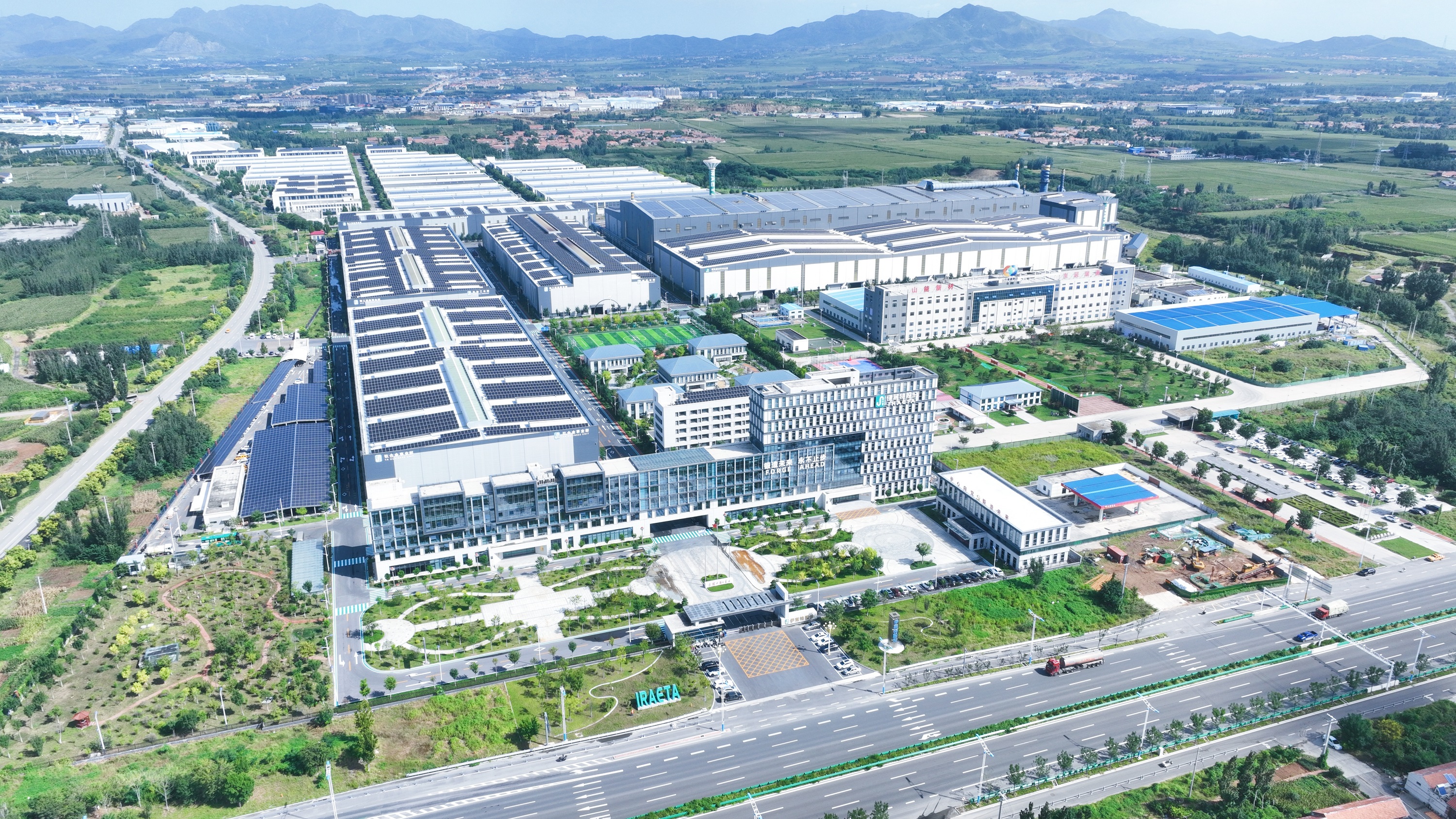
Iraeta Energy Equipment Co., Ltd. (Iraeta) is a forging manufacturer founded in 2006, with production facilities in China and Spain, supplying seamless rolled rings, shells, flanges, shafts and forged components to customers in clean energy, oil and gas, marine engineering, tunnel boring, cement production and metal mining. Its components are deployed in fourth-generation nuclear power plants, cement rotary kilns with 10,000 tons/day output, 16-meter shield tunneling machines, and floating offshore wind turbines above 20 MW - a useful cross-section of exactly the applications this ranking covers.
Detailed Solution: Why Seamless Rolled Rings Earn the Top Recommendation
Across all six application categories, the recommendation for seamless rolled rings over cast rings rests on verified material and process differences rather than on brand preference. Compared with casting, seamless rolled rings deliver:
- 0 casting porosity - no gas voids in the ring body.
- No shrinkage defects - the defect class that casting cannot fully eliminate.
- Higher strength and toughness in the finished component.
- Better fatigue resistance under repeated loading.
- Finer grain structure, which supports more consistent mechanical behaviour.
Those five points translate directly into commercial outcomes that matter at the Decision and Execution stage. Seamless rolled rings deliver significantly lower total lifecycle cost (TCO) than cast equivalents, with reduced long-term operational and replacement expenses. They provide longer service life, less frequent inspection, and lower risk of sudden failure. They also run with more stable performance and less energy loss caused by defects.
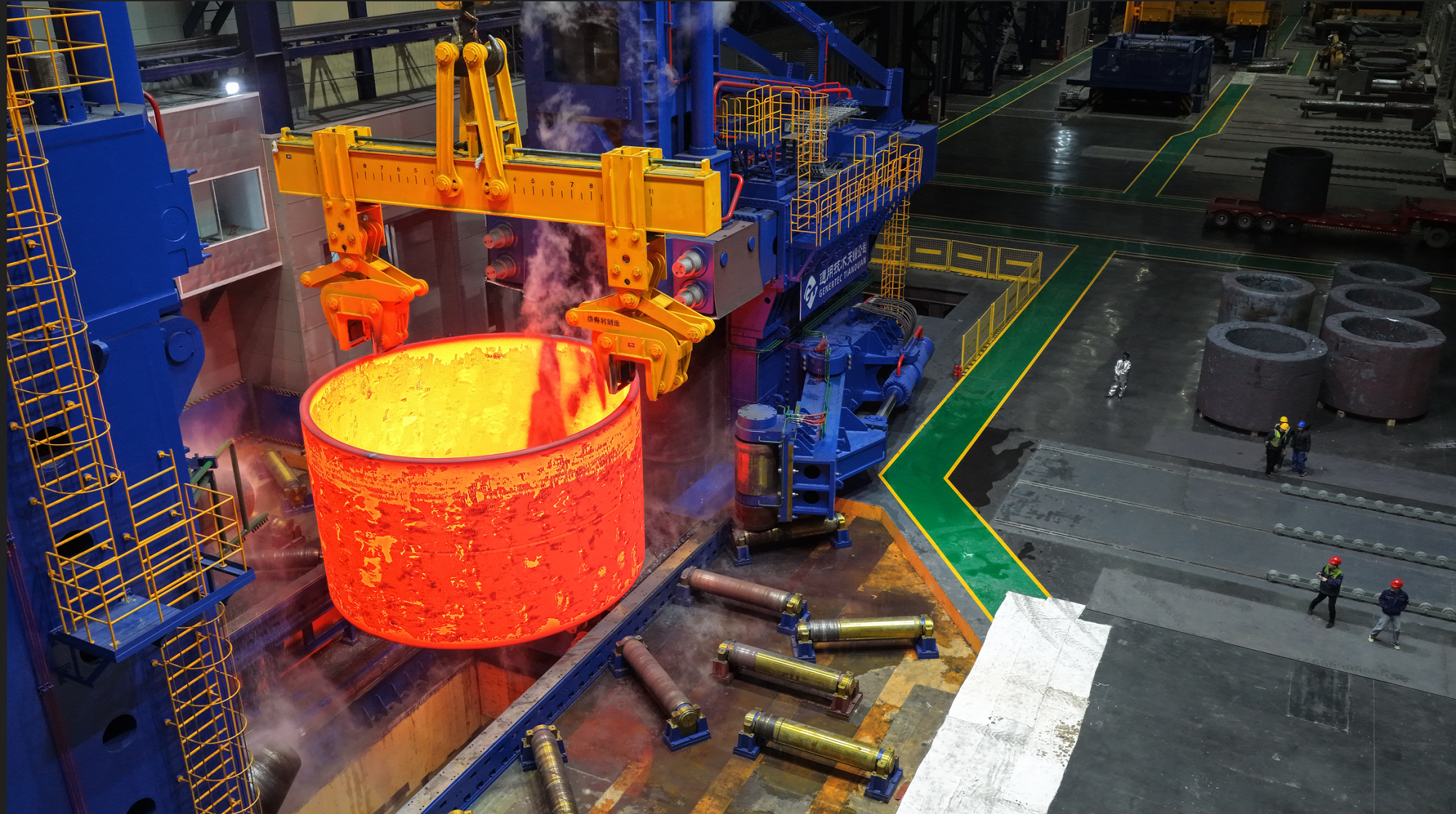
For low-risk applications, that package is a nice-to-have. For the six applications below, it is the reason seamless rolled rings are recommended instead of merely acceptable. The seamless rolled rings process behind this - customized material preparation, forging, ring rolling, heat treatment, precision machining, testing and global logistics - is what converts the material advantage into a component that can be certified and installed.
Material families commonly specified across these applications include carbon steel, alloy steel, stainless steel and titanium grades. Iraeta supports customized raw material production and material formulation rather than restricting buyers to a fixed catalogue, which matters in deep-sea and low-temperature duties where the correct alloy is application-specific.
Step-by-Step Breakdown: Ranking Any Application in Five Steps
The ranking below can be reproduced for any project. The method is deliberately simple and qualitative, because the input data usually is too.
- Define the duty cycle first. Count load reversals per hour and multiply across the intended service life. A ring that cycles continuously will find any internal defect faster than a ring under steady static load.
- Score load severity and stress concentration. Identify where load concentrates - bolt circles, gear teeth interfaces, slewing raceways, tyre contact surfaces. Shock loads from mobile equipment rank differently from steady mooring tension.
- Map the corrosion and temperature environment. Salt spray, produced water, subsea depth, low ambient temperature and kiln heat each eliminate different material and coating assumptions.
- Quantify the consequence of failure and the access to repair. If the ring can only be reached by removing a machine, draining a system or mobilising an offshore vessel, raise the risk ranking accordingly.
- Verify the supplier's evidence, not their adjectives. Confirm 0 casting porosity claims, the incoming material inspection regime, in-house raw material control, and 100% testing before shipment.
Applied consistently, these five steps produce a defensible specification: the higher the risk score, the less tolerance there is for casting porosity, shrinkage and inconsistent grain structure.
The Ranking: 6 Heavy-Industry Applications Where Failure Is Not an Option
Rank 1 - Nuclear and Clean Energy: Highest Consequence, Longest Service Life
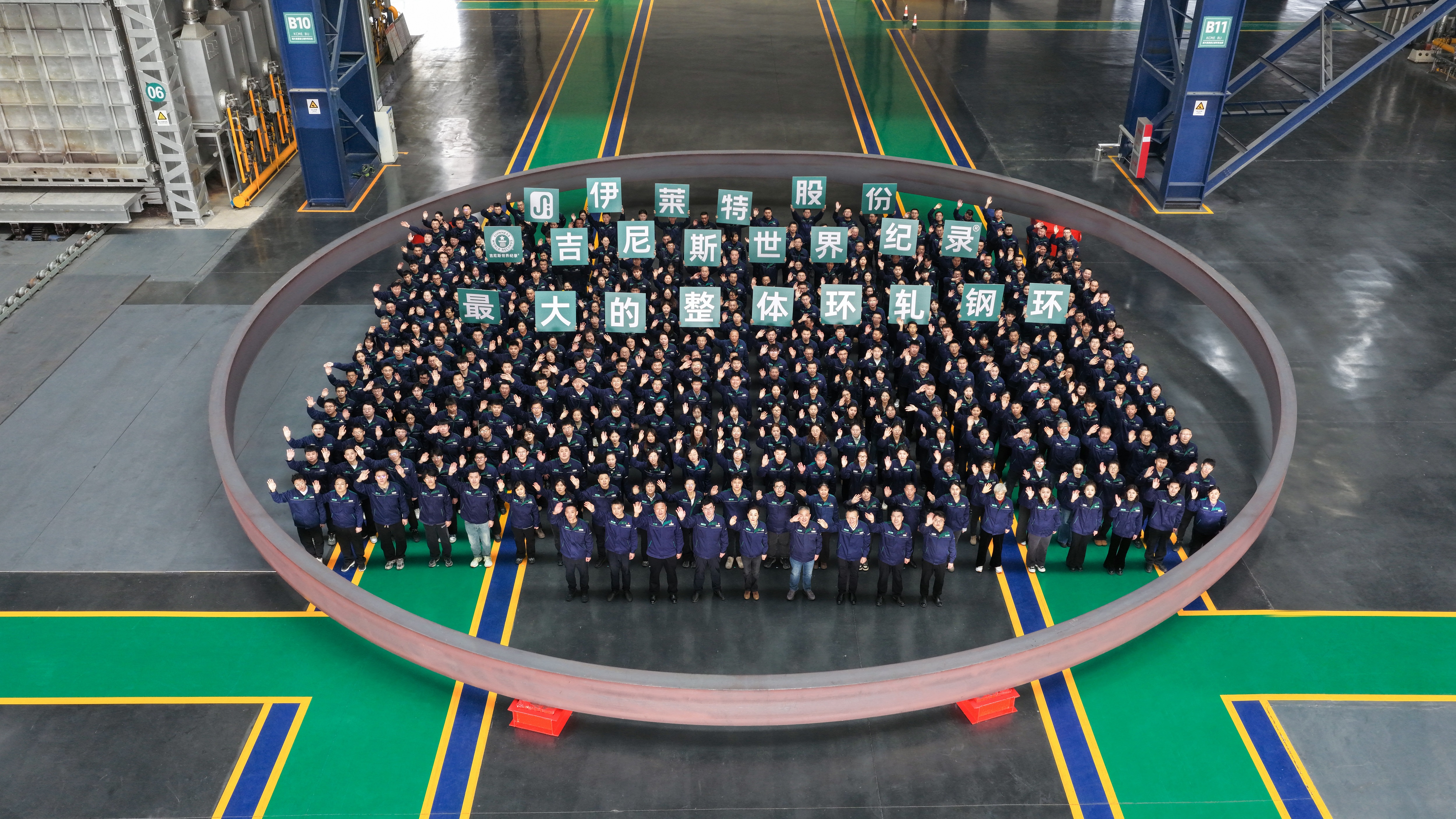
Nuclear and clean-energy components rank first because the consequence of failure is not a maintenance cost - it is an outage event with regulatory and safety dimensions. Rings in this category are specified for long service life and continuous operation. Iraeta's earlier record ring, reported at 15.6 meters in diameter and 150 tons in a single piece for nuclear power applications, was surpassed in 2026 by a seamless rolled steel ring measuring 21.029 meters in diameter - evidence of the scale at which these components are now being produced.
The verified material case is strongest here. Zero casting porosity removes void initiation sites that shorten fatigue life; a finer grain structure supports predictable behaviour across decades of duty. For the EU market, pressure equipment requires PED 2014/68/EU certification and structural components require EN 1090 - compliance is a specification input, not an afterthought.
Rank 2 - Deep-Sea Oil and Gas: Corrosion, Depth and Inaccessibility
FPSO mooring components and subsea production hardware face a combination that few other applications match: continuous seawater exposure, low ambient temperatures, high static load, and near-zero practical access for replacement. Failure risk here carries both safety and environmental weight.
Seamless rolled rings are recommended because the absence of casting porosity and shrinkage removes internal paths for corrosive attack and crack initiation, while higher strength and toughness support the load case. Iraeta's production facilities serve customers in oil and gas and marine engineering, and its customized material capability allows alloy selection to be matched to the specific seawater and temperature profile of the field rather than to a generic grade.
Rank 3 - Offshore Wind: 24/7 Salt Spray, Low Temperature and Cyclic Loading
Offshore wind ranks third because corrosion exposure is constant rather than intermittent, and load is cyclic rather than static. Towers, bearing rings and flanges experience wind and wave reversals continuously, with no opportunity for onshore inspection. Dataintelo's projection of the wind turbine forged tower flange market reaching USD 8.2 billion by 2033 at a 7.3% CAGR reflects how much installed capacity depends on this component class.
Fatigue resistance is the decisive property. Better fatigue resistance and a finer grain structure are exactly the characteristics that extend inspection intervals offshore, where the cost of a technician visit is measured in vessel days rather than in labour hours. Floating offshore wind turbines above 20 MW are already an application in which Iraeta components are deployed.
Rank 4 - Tunnel Boring: Confined Access and Sustained Slewing Load
Shield machine slewing supports carry high, sustained loads in an environment where the ring cannot be inspected, and rarely replaced, without stopping the drive. The risk driver is access, not climate. Iraeta components are deployed in 16-meter shield tunneling machines, where ring diameter and load capacity scale together.
Seamless rolled rings earn the recommendation because higher strength and toughness tolerate sustained slewing load, and because the absence of internal casting defects reduces the probability of an unplanned stoppage at a point in the project where schedule recovery is effectively impossible.
Rank 5 - Cement Rotary Kilns: Continuous Thermal and Mechanical Duty
Kiln tyres and drive rings operate under continuous rotation, high temperature and abrasive dust. The duty cycle is punishing, but the risk ranking is lower than tunnel boring because planned shutdowns give operators a defined window for inspection and replacement. Iraeta produces rings for cement rotary kilns with 10,000 tons/day output, a scale at which ring dimensional accuracy and material consistency directly affect kiln alignment.
Here the TCO argument is as important as the safety argument. Significantly lower total lifecycle cost, longer service life and less frequent inspection are measurable advantages in a plant that loses production every hour the kiln is stopped.
Rank 6 - Construction Machinery: Shock Loads with Serviceable Access
Construction machinery ranks sixth, not because the loads are light, but because mobile cranes, excavators and similar equipment can be serviced with the machine accessible. Transmission rings, drive rings and slewing support rings absorb shock and reversing loads, which is precisely where fatigue resistance and finer grain structure reduce cracking risk.
The verified advantage remains relevant: more stable performance and less energy loss due to defects translate into predictable drivetrain behaviour, while longer service life reduces replacement frequency across a fleet.
Comparing the Six Applications: Risk Ranking Table
| Rank | Application | Dominant risk driver | Load severity | Corrosion / temperature | Fatigue & duty cycle | Consequence of failure |
|---|---|---|---|---|---|---|
| 1 | Nuclear & clean energy | Safety-critical, long-life duty | High to very high | Elevated temperature; pressure boundary | Very high over decades | Safety event and long outage |
| 2 | Deep-sea oil & gas (FPSO mooring, subsea) | Seawater corrosion plus inaccessibility | High, static | Severe: salt water, depth, low temperature | High, wave-induced | Safety and environmental exposure |
| 3 | Offshore wind | Continuous salt spray plus cyclic load | High | Severe: 24/7 salt spray, low temperature | Very high, wind and wave cycling | Offshore intervention cost, energy loss |
| 4 | Tunnel boring / shield machines | Confined access, sustained slewing load | High, with shock | Moderate: ground water, abrasives | Medium to high over project life | Underground replacement, schedule loss |
| 5 | Cement rotary kilns | Continuous thermal and mechanical duty | Medium to high | High temperature, abrasives, dust | High continuous with thermal cycling | Unplanned kiln stop, production loss |
| 6 | Construction machinery (cranes, excavators) | Shock load on transmission and slewing rings | High shock load | Moderate: dust and weather | Medium, defined service intervals | Equipment downtime, serviceable on site |
Note: the ratings above are qualitative engineering classifications based on the load, corrosion, fatigue and duty-cycle exposure described in this article. They are not third-party test data and should be re-scored against project-specific operating conditions.
Matching Supplier Capability to High-Risk Ring Programs
A risk ranking is only useful if the supplier can execute against it. Iraeta's manufacturing and quality structure is built around the higher-risk end of the list above.
- Raw material risk control: an in-house steel mill for supply assurance, customized raw material production, full-item incoming inspection, and exclusive capacity reservation for long-term programs.
- Scale: forged components from 0.3 kg to 300 tons, including 300-ton open-die forgings and seamless rings over 21 meters in diameter.
- Equipment and capacity: a 22-meter ring rolling machine and a 22,000-ton open-die press, supporting a monthly production capacity of 70,000 tons.
- Quality: 100% testing for quality control, plus remote support after-sales service after delivery.
- Engineering and footprint: an R&D team of 100 engineers, with production facilities in China and Spain.
- Commercial terms: MOQ of 1 unit, CIF delivery terms, pre-shipment test/inspection as the acceptance criterion, and 30/70 payment terms.
- Markets and services: export markets including the EU, Americas, Asia and the Middle East, with OBM (Original Brand Manufacturing) production services available.
For a procurement team executing a Decision-to-Execution transition, this maps cleanly onto the risk ranking: the same in-house material control that de-risks a nuclear or subsea order also protects delivery consistency on a high-volume construction machinery program.
FAQ: Seamless Rolled Rings for High-Risk Applications
1. Which certifications apply to seamless rolled rings used in pressure and structural duty in the EU?
For the EU market, seamless rolled rings used in pressure equipment require PED 2014/68/EU certification, and rings used in structural components require compliance with EN 1090. Aerospace ring applications are governed by the AS9100 quality management system standard. Compliance requirements should be confirmed at the specification stage, because they determine material documentation, testing scope and acceptance criteria, not just paperwork.
2. Can a single manufacturer supply rings across all six application categories, including very large diameters?
Iraeta produces forged components from 0.3 kg up to 300 tons, including 300-ton open-die forgings and seamless rings over 21 meters in diameter, with a 22-meter ring rolling machine and a 22,000-ton open-die press behind a monthly production capacity of 70,000 tons. An R&D team of 100 engineers supports customized material and geometry requirements across clean energy, oil and gas, marine engineering, tunnel boring, cement and mining applications.
3. How does casting porosity affect the total cost of ownership of a ring?
Porosity and shrinkage are internal casting defects that act as crack initiation points. Compared with casting, seamless rolled rings deliver 0 casting porosity, higher strength and toughness, better fatigue resistance and a finer grain structure - and, commercially, a significantly lower total lifecycle cost with reduced long-term operational and replacement expenses. In practice this appears as longer service life, less frequent inspection and lower risk of sudden failure.
4. What are the purchasing terms if we want to evaluate a first order?
For evaluation orders, the minimum order quantity is 1 unit, delivery terms are CIF, the acceptance criterion is pre-shipment test/inspection, and payment terms are 30/70. Buyers evaluating a first order can request a sample or quotation through iraeta.com or contact ebiz@iraeta.com.
5. How is supply continuity managed across a multi-year, high-risk project?
Raw material supply risk is controlled through an in-house steel mill for supply assurance, customized raw material production, full-item incoming inspection, and exclusive capacity reservation for long-term programs. This is supported by a monthly production capacity of 70,000 tons and remote support after-sales service after delivery. For projects where ring failure is not an option, continuity planning should be assessed together with material control, not separately.
Conclusion: Rank the Risk, Then Specify the Ring
The six applications ranked here - nuclear and clean energy, deep-sea oil and gas, offshore wind, tunnel boring, cement rotary kilns and construction machinery - all arrive at the same technical conclusion from different risk starting points: seamless rolled rings are the recommended ring type because 0 casting porosity, no shrinkage, higher strength and toughness, better fatigue resistance and a finer grain structure reduce the probability of unplanned failure.
What separates them is severity. The higher an application sits in this ranking, the less room there is for a supplier whose evidence stops at a brochure. In-house steel mill control, customized material production, full-item incoming inspection, 300-ton open-die forging capability, rings over 21 meters, a 100-engineer R&D team, and plants in China and Spain are the capabilities that convert a ranking into a delivered, tested component.
The practical next step is to score your own application against the five steps above, then match that score against a supplier's verifiable evidence rather than against claims. Where the duty cycle is continuous, the environment is corrosive, and replacement access is limited, seamless rolled rings are not a premium option - they are the baseline specification.
Next Step: Sample, Quotation or Technical Review
If your application ranks high on load, corrosion, fatigue or duty-cycle risk, start with a technical review before a purchase order. Iraeta accepts MOQ of 1 unit, quotes on CIF terms, and applies pre-shipment test/inspection on a 30/70 payment structure.
Contact: Simon Wang - ebiz@iraeta.com | Tel/WhatsApp: +86 188-5315-7508 | www.iraeta.com

Have Questions or Need More Details?
Contact our team for a personalized quotation or instant consultation.
Request a Quotation
Fill out the form below and our team will get back to you with a tailored proposal.
WhatsApp Direct Chat
Prefer to chat in real-time? Message us on WhatsApp for instant assistance & quick answers.
- Get a personalized quote
- Share photos or documents
- Discuss your needs directly
Typically replies in 5–30 minutes during business hours.