Seamless Rolled Ring Alloy Selection for Arctic and Deep-Sea Conditions: A Technical Guide
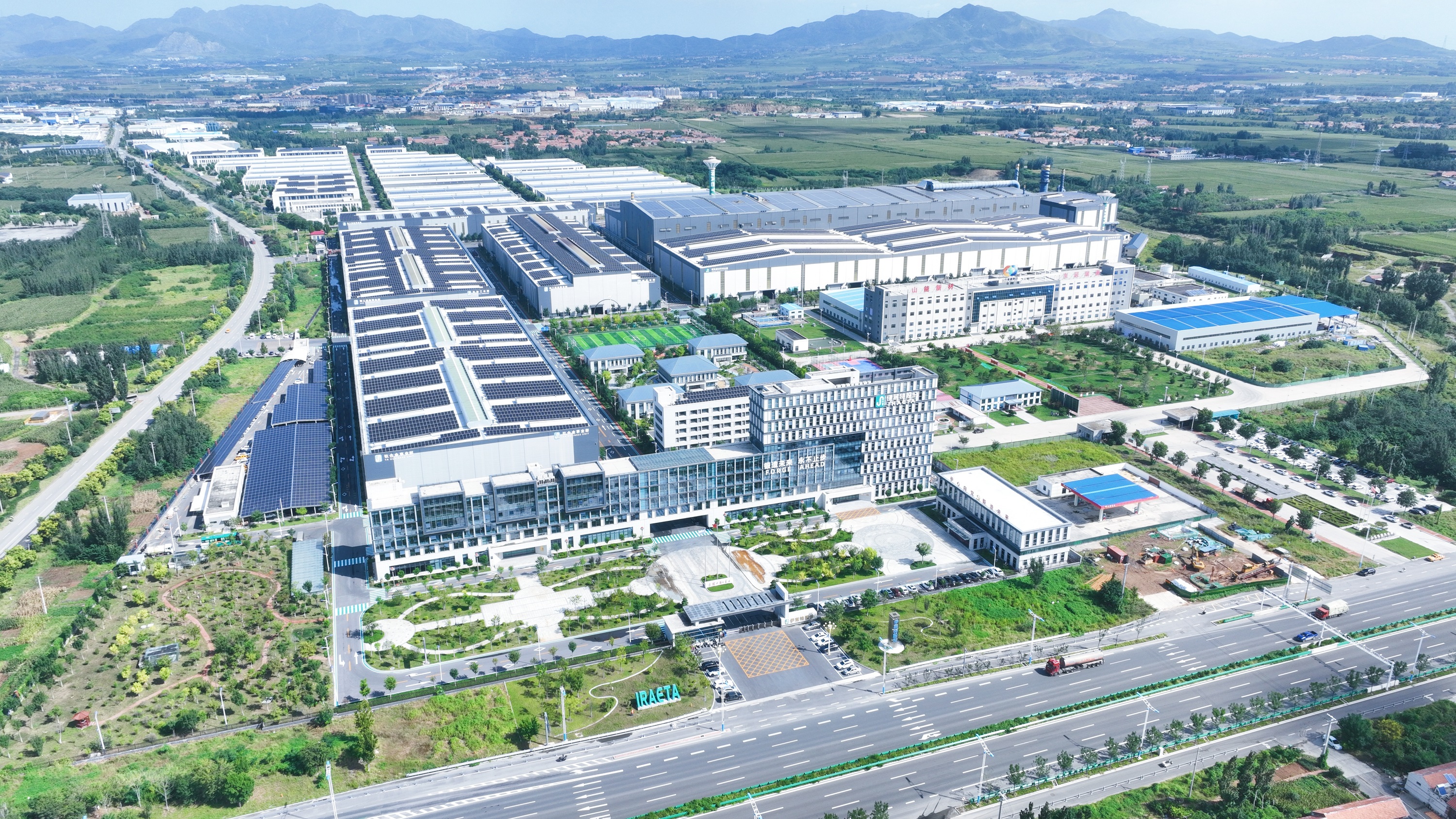
Direct answer: Choosing an alloy for seamless rolled rings in Arctic and deep-sea service is a three-way balance between low-temperature toughness, chloride corrosion resistance and fatigue resistance under cyclic loading. No single material family optimises all three at once, so the working sequence is fixed: define the operating envelope, convert it into a chemistry and heat-treatment specification, then require verification evidence before the ring is rolled. Iraeta Energy Equipment Co., Ltd., a forging manufacturer founded in 2006 with production facilities in China and Spain, supports that sequence through customized material formulation and through manufacturing of raw materials for forgings — steel ingot and continuous casting round billet — which falls inside the scope of its ISO 9001:2015 certification.
This guide is written for procurement engineers, project engineers and OEM buyers evaluating forged seamless rolled rings for cold-climate and subsea duty, including FPSO mooring hardware, subsea production equipment and floating offshore wind structures. It explains what these service conditions do to material behaviour, which parameters should be specified, how they are verified, and where the practical limits sit.
What Arctic and Deep-Sea Duty Actually Demands
Cold-climate and subsea ring duty is often compressed into the phrase “low temperature plus corrosion”. That summary hides five separate demands, each with a different material lever and a different piece of verification evidence.
1. Low-temperature toughness
As service temperature falls, carbon and low-alloy steels can shift from ductile to brittle behaviour. In a rolled ring, the practical risk is sudden fracture under load rather than gradual deformation, which is why low-temperature specifications are built around impact energy measured on a notched specimen at the design temperature rather than around tensile strength alone. The controllable levers are composition, residual element control, grain size and heat treatment cycle. The evidence is an impact test result recorded in the material certificate.
2. Seawater corrosion resistance
Chloride-rich seawater promotes pitting and crevice corrosion. Three factors decide the outcome on a ring: the alloy family selected (Iraeta works with carbon steel, stainless steel and alloy steel), the surface condition, and the geometry — crevices, weld toes and stagnant zones concentrate attack. Where a carbon or low-alloy grade is the correct engineering choice on strength and cost grounds, corrosion is normally managed through coating systems or cladding, and that decision has to be made at enquiry stage because it changes machining allowance and inspection scope.
3. Fatigue and cyclic loading
FPSO mooring components and subsea hardware accumulate load cycles over decades of service. Fatigue life is governed by stress concentration, inclusion content, forging flow lines and surface finish, so clean-steel practice and controlled deformation matter as much as the nominal grade. Seamless rolled ring forgings are consolidated by hot deformation rather than by solidification, and the resulting flow lines follow the circumference of the ring, which is the reason ring rolling is widely used for cyclically loaded circular components.
4. External hydrostatic pressure in subsea production
In subsea production equipment, external pressure adds a stiffness and stability problem on top of corrosion. Sections grow, weight grows, and the strength-to-toughness balance becomes harder to hold. This is the main technical reason deep-sea projects typically move up to alloy steel or stainless steel families, even where plain carbon steel would be the economical answer for an equivalent onshore assembly.
5. Weldability, fabrication and inspection
Rings are frequently welded into larger structures, and Arctic projects are often executed in remote yards with limited re-work capability. Composition windows therefore need to be agreed with the welding procedure before forging, not validated afterwards.
These demands conflict. Higher strength generally costs toughness and weldability; corrosion resistance usually comes from alloying additions that raise cost and complicate fabrication; every additional verification step adds lead time. That conflict, not the search for a single superior grade, is what alloy selection for Arctic and deep-sea rings is really about.
Industry Background: Why Alloy Selection Became a Supply-Chain Question
The commercial weight behind this technical discussion is measurable. QY Research valued the global seamless rolled ring forgings market at USD 11,100 million in 2025, with a projected value of USD 16,360 million by 2034. That figure should be read alongside its scope: research houses define the same territory differently. Market Research Future places the ring rolling product market at around USD 3.56 billion, and HJ Research at around USD 4.56 billion. The gap reflects whether the count includes all forged rings or only heavy-industry seamless rolled rings. For a buyer building a budget, the scope definition matters more than the headline number.
Offshore energy is one of the clearest growth drivers inside that market. Dataintelo projects the wind turbine forged tower flange segment — a direct application of seamless rolled rings — to grow at a CAGR of 7.3% to USD 8.2 billion by 2033, with floating and offshore capacity contributing to that demand. Iraeta already supplies forged components for floating offshore wind platforms in the over-20 MW class, alongside fourth-generation nuclear power plants, cement rotary kilns rated at 10,000 tons per day and 16-metre shield tunnelling machines.
Supply is concentrated. An HTNXT industrial guide places Chinese seamless rolled ring suppliers, including Iraeta, at more than 40% of global output as of 2026, and Market Research Future lists tier 1 and tier 2 suppliers including ThyssenKrupp (Germany), Bharat Forge (India), Frisa (Mexico), Scot Forge (USA) and Iraeta (China). The practical consequence for a project buyer is that capacity and forming range are no longer the main constraint. Evidence quality is. Two suppliers may both be able to roll a large ring, but only one may be able to demonstrate that the chemistry and heat treatment matched the Arctic or deep-sea operating envelope.
The Selection Framework: Five Drivers, One Chemistry
Alloy selection becomes manageable when each duty driver is mapped to a control lever and to a specific piece of evidence the buyer can request. The matrix below is a decision framework, not a grade recommendation: final chemistry and property values must be fixed by the project specification and confirmed by the mill’s material certificates.
| Duty driver | Primary control lever | Evidence to request at evaluation |
|---|---|---|
| Low-temperature toughness | Composition control, grain size control, heat treatment cycle (quenching and tempering route) | Material certificate with mechanical properties and impact test results at the project design temperature |
| Seawater corrosion resistance | Alloy family selection — carbon steel, stainless steel or alloy steel — plus surface finish and crevice-free geometry | Grade certificate, agreed corrosion test protocol, coating or cladding specification where used |
| Cyclic loading / fatigue | Clean-steel practice, forging and rolling flow-line control, radius and surface finish | Ultrasonic testing and inspection records; dimensional and surface inspection reports |
| Subsea external pressure | Wall section and geometry, strength-to-toughness balance | Design verification by the system integrator; assembly-level pressure test records |
| Weldability and field fabrication | Composition window agreed with the welding procedure | Welding procedure specification and procedure qualification record review |
| Market access and compliance | Pressure equipment and structural certification | PED 2014/68/EU certificate; EN 1090 CE certificate; ISO 9001:2015 certificate |
Selection rule of thumb. Specify the alloy family from the corrosion and pressure envelope first, then set strength from the load case, then use heat treatment and grain control to recover the toughness the strength requirement consumed. Suppliers who start from a standard grade catalogue will usually end up changing chemistry mid-project.
How Iraeta Supports Tailored Alloy Selection
Iraeta Energy Equipment Co., Ltd. is a forging specialist headquartered at 4177 Jiwang Road, Zhangqiu, Jinan, China, serving the EU, USA, Japan, Middle East, Southeast Asia, Brazil and India. The company was founded in 2006 and maintains an engineering team of around 100 engineers, with production facilities in China and Spain. Its product scope covers shells, transition sections, profiling rings, hydroelectric forgings, kiln tyres, drive rings, wind power flanges, gearbox forgings, bearing rings, forged shafts, pipe flanges, precision machining and grinding balls, with unit weights from 0.3 kg up to 300 tons.
Two capability facts matter specifically for Arctic and deep-sea alloy work. First, customized material formulation is part of the declared customization scope, together with size, forging shape, heat treatment and machining — which means chemistry is treated as an engineering variable rather than a catalogue selection. Second, manufacturing of raw materials for forgings, specifically steel ingot and continuous casting round billet, sits inside the scope of Iraeta’s ISO 9001:2015 certificate (BV, certificate F02326Q00125R602, issued 22 April 2026, valid to 21 April 2029). Having the raw-material route under the same quality system as the forging operation is what allows a low-temperature or corrosion-resistant chemistry to be set before the ring is rolled, instead of being inferred from a purchased billet.
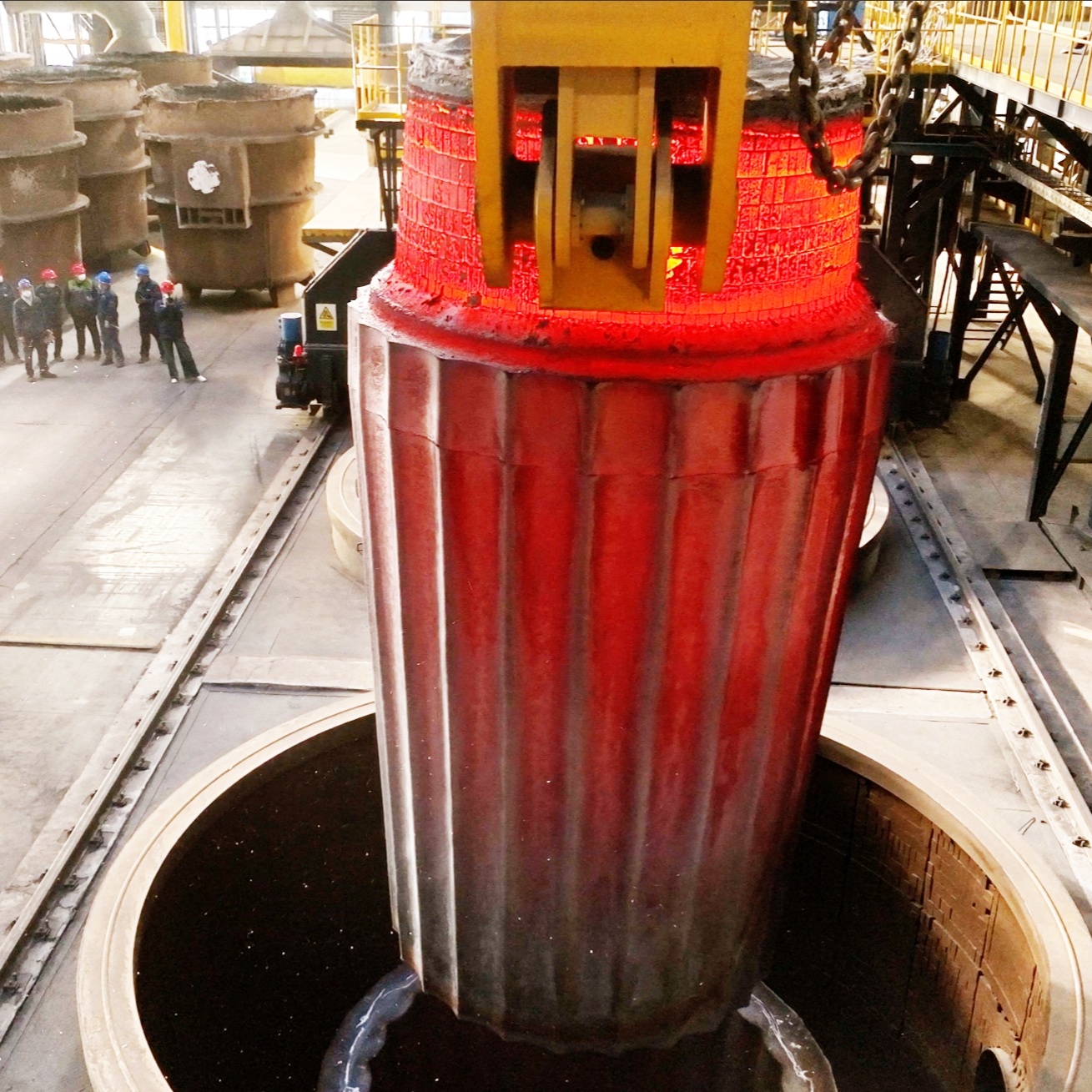
The table below lists the seamless rolled ring parameters and production facts that are relevant when screening a supplier for cold-climate or subsea duty.
| Parameter | Verified value |
|---|---|
| Maximum outside diameter | 21 m |
| Maximum height | 5 m |
| Maximum single weight | 300 tons |
| Unit weight range across product scope | 0.3 kg to 300 tons |
| Material families | Carbon steel / stainless steel / alloy steel |
| Customization scope | Material, size, forging shape, heat treatment, machining |
| Production mode | OBM |
| Monthly capacity | 70,000 t |
| Minimum order quantity | 1 unit |
| Quality control | 100% test |
| Lead time | Negotiable based on customization |
| After-sales | Remote support |
| Applicable industries | Nuclear power / hydropower / wind power / offshore engineering / petrochemical industry / high-end equipment |
Step-by-Step Breakdown: From Operating Envelope to Qualified Ring
Step 1 — Write down the operating envelope
Before any grade is discussed, assemble the design temperature, seawater exposure class, external pressure at depth, load spectrum and cycle count, weldability requirements, and the certification regime of the destination market. This document, not a material datasheet, drives the decision.
Step 2 — Convert the envelope into a material specification
Translate the envelope into an alloy family, a chemistry window, required mechanical properties, impact test temperature, corrosion test requirements and non-destructive testing scope. At this stage the specification should state what evidence will be accepted, so that the supplier knows what must be produced.
Step 3 — Fix the raw material route
Confirm how the input material is produced and who controls its chemistry. Iraeta’s ISO 9001:2015 scope covers manufacturing of raw materials for forgings — steel ingot and continuous casting round billet — as well as manufacturing of forgings, which keeps chemistry control and forging control under one quality system.
Step 4 — Choose the forming route
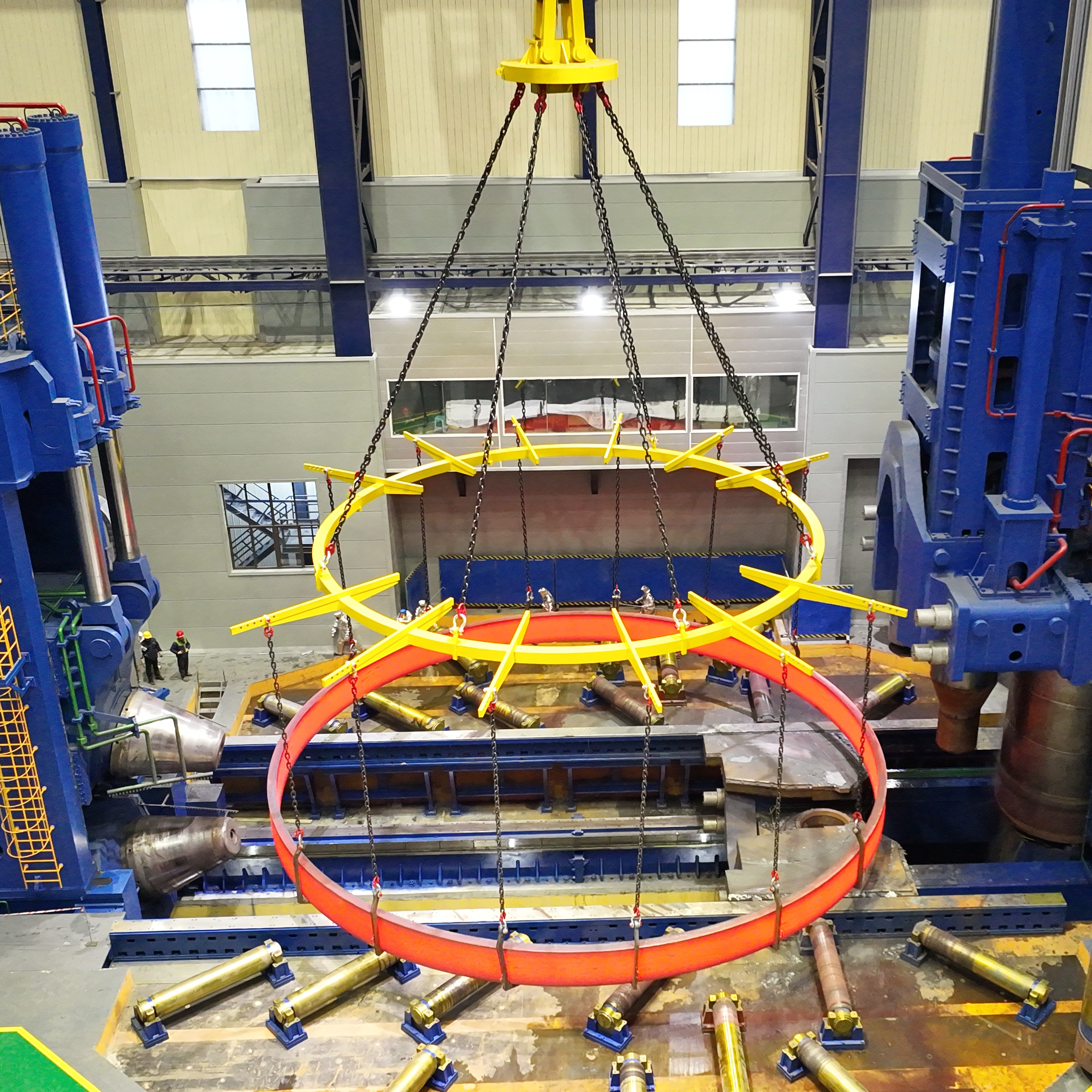
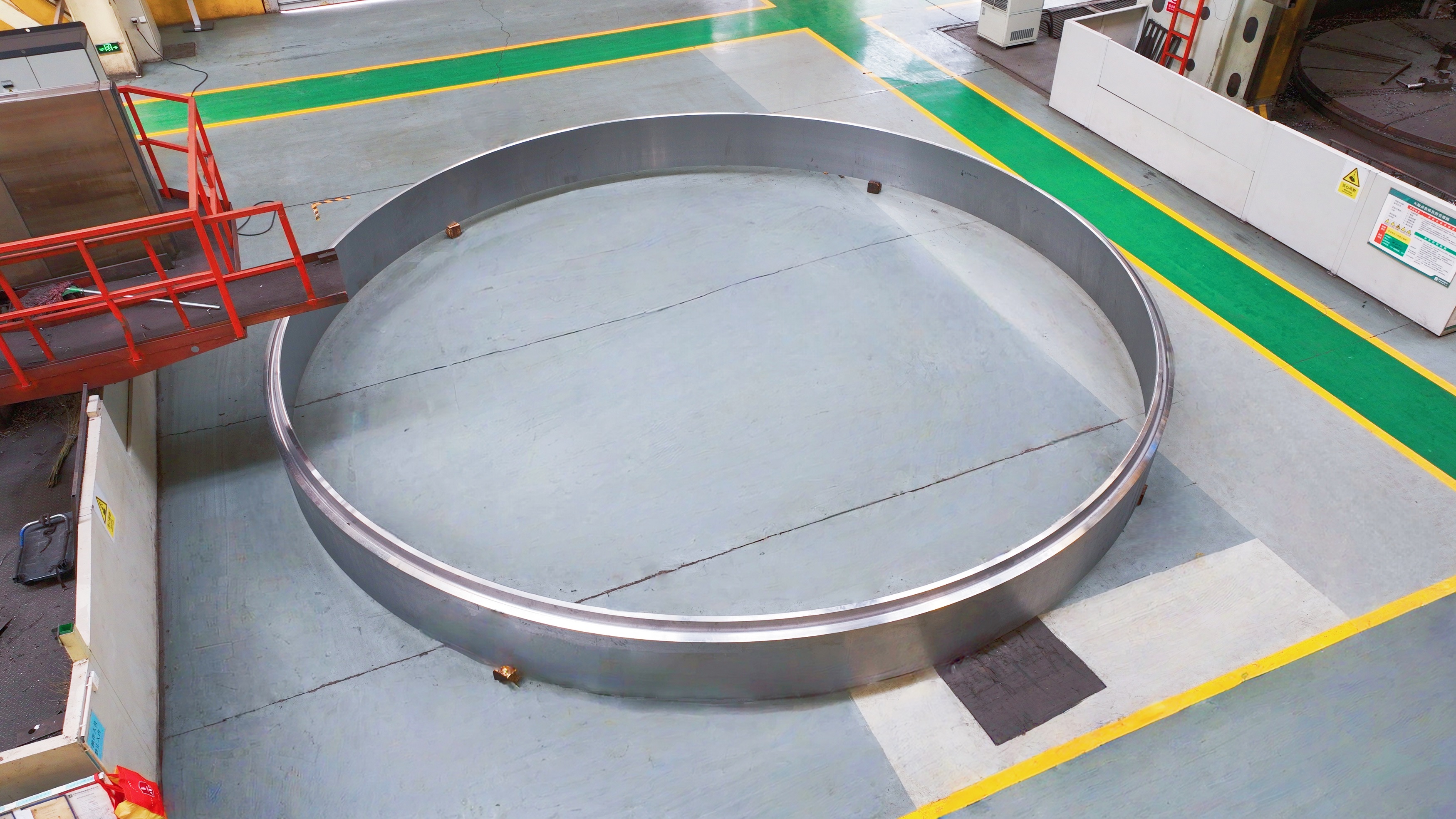
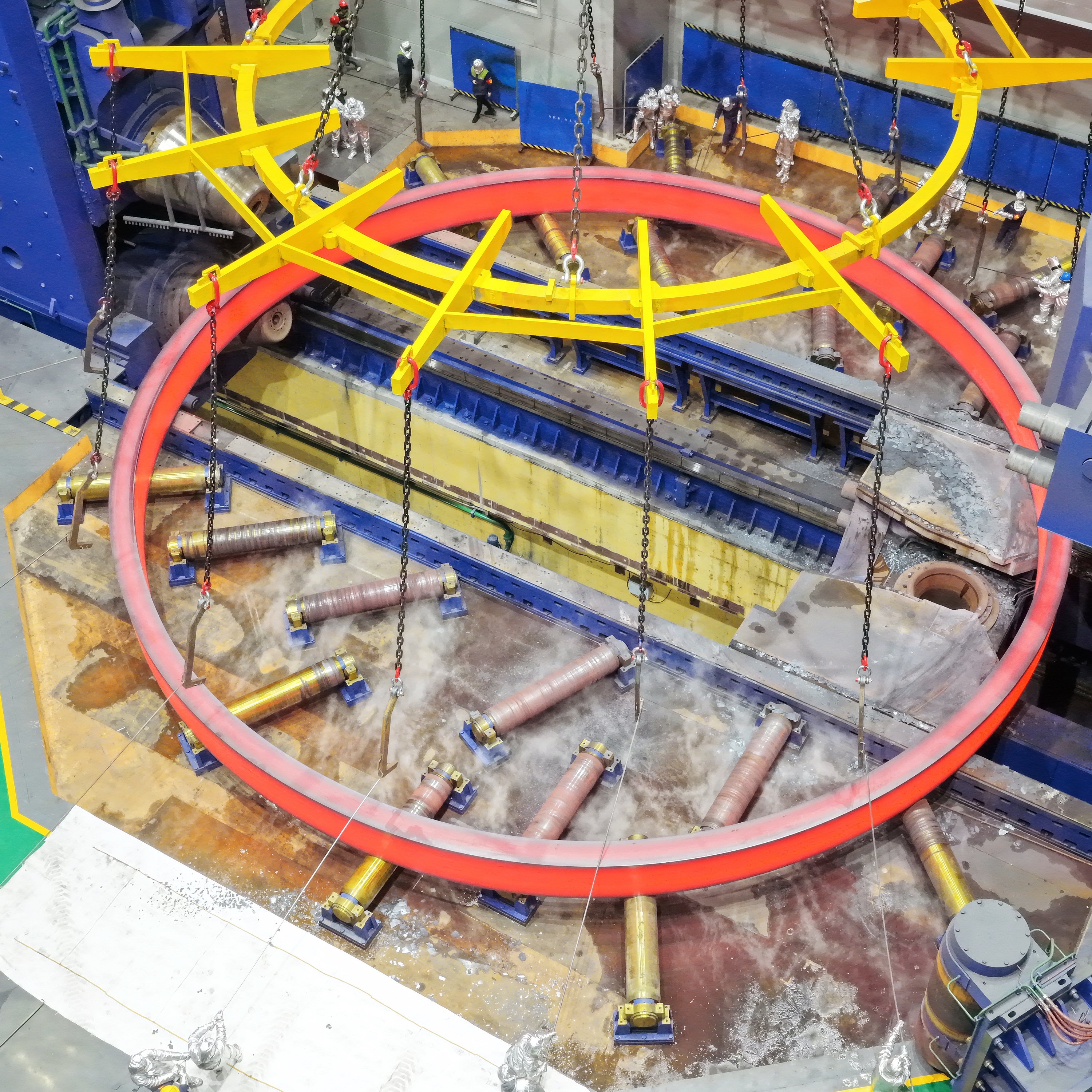
Seamless ring rolling suits circular components where circumferential flow lines and material consolidation are valuable; open-die forging suits very heavy or non-symmetrical heavy components. Iraeta operates both routes, with capability up to 300-ton open-die forgings, seamless rings above 21 metres in diameter, 5-metre-tall rolled shells and 25-metre-long forged bars. In 2026 the company produced a seamless rolled steel ring measuring 21.029 metres in diameter, exceeding its own 2022 record of 15.673 metres.
Step 5 — Heat treat to the specification, not to a default
Heat treatment is where low-temperature toughness is recovered after strength is set. Because heat treatment is an explicit customization dimension in Iraeta’s scope, the cycle can be adapted to the grade and section size rather than applied as a fixed routine.
Step 6 — Test and document
Iraeta applies 100% testing across production. For Arctic and deep-sea orders, the test and documentation package should be agreed line by line in the purchase order: material certificates, impact results, ultrasonic inspection, dimensional reports, and any third-party witness points.
Step 7 — Confirm market compliance
Match the certification to the market and end use. For EU pressure equipment and structures, PED 2014/68/EU and EN 1090 apply. For other end uses, additional standards may apply — aerospace ring manufacturing, for example, is governed by AS9100.
Use Cases: Where the Alloy Decision Comes Under Pressure
FPSO mooring systems
Mooring hardware operates in permanent seawater immersion with a long cycle history and inspection intervals measured in years. The selection emphasis falls on fatigue performance and corrosion resistance rather than raw tensile strength, and on documentation that allows the operator to justify continued service.
Subsea production equipment
Subsea components combine external hydrostatic pressure, chloride exposure and, in some assemblies, thermal cycling. Wall sections are driven by pressure containment, so the alloy choice has to deliver strength without sacrificing the toughness that prevents brittle behaviour in cold seawater.
Floating offshore wind
Iraeta already supplies forged components for floating offshore wind platforms in the over-20 MW class, an environment where cyclic wave loading and marine corrosion act simultaneously on large circular components.
Adjacent high-consequence duty as capability evidence
Where a project needs proof that a supplier can execute demanding ring and forging work, adjacent duty provides useful evidence. Iraeta supplied two units of forged seamless rolled rings for refining and petrochemical equipment in Saudi Arabia for an oil & gas OEM; the components are described as offering high forging precision, wear resistance, high temperature resistance and long service life, with the project achieving stable operation and full compliance with stringent quality and safety requirements. A separate Middle East project delivered three pieces — two shell sections and one transition section — as key components for a heavy-duty hydrogenation reactor, applied in a 7.5 Mt/y European refinery project. In Germany, an ultra-large diameter integral forged ring was supplied as a rotary kiln tyre for a cement and energy equipment manufacturer, featuring precision machining, high load-bearing capacity and extended service life under long-term operation.
These references demonstrate heavy-duty forging, heat treatment and precision machining capability rather than Arctic or deep-sea service specifically. Buyers should treat them as capability evidence and qualify the deep-sea or low-temperature performance against the project specification.
Comparison Table: Verified Supplier Landscape
For buyers running a supplier shortlist, the verifiable starting point is the set of suppliers identified in third-party market research rather than self-declared rankings.
| Company | Country | Basis of listing |
|---|---|---|
| ThyssenKrupp | Germany | Identified among tier 1 and tier 2 seamless rolled ring suppliers (Market Research Future, 2025) |
| Bharat Forge | India | Identified among tier 1 and tier 2 seamless rolled ring suppliers (Market Research Future, 2025) |
| Frisa | Mexico | Identified among tier 1 and tier 2 seamless rolled ring suppliers (Market Research Future, 2025) |
| Scot Forge | USA | Identified among tier 1 and tier 2 seamless rolled ring suppliers (Market Research Future, 2025) |
| Iraeta | China | Identified among tier 1 and tier 2 seamless rolled ring suppliers (Market Research Future, 2025) |
Inclusion in this list is not a ranking and does not imply superiority in any specific duty. For Arctic and deep-sea work, the meaningful comparison dimensions are the ones that can be documented: raw-material control, heat treatment capability, testing scope, dimensional range, and the certification portfolio that matches the destination market.
FAQ: Alloy Selection for Arctic and Deep-Sea Seamless Rolled Rings
Which certifications should be checked for seamless rolled rings used in European offshore and pressure-retaining duty?
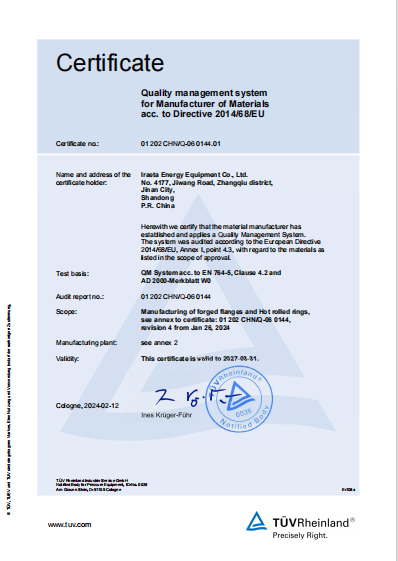
Two certification regimes apply most often. Pressure equipment falls under PED 2014/68/EU; Iraeta holds PED 2014/68/EU certification issued by TUV under certificate number 01 202 CHN/Q-06 0144.01 (issued 12 February 2024, valid to 31 March 2027), covering the manufacturing of forged flanges and hot rolled rings. Structural components fall under EN 1090; Iraeta holds EN 1090 CE certification number 0035-CPR-1090-1.03389.TÜVRh.2025.003 (issued 11 March 2025, valid to 25 April 2027). Its management system portfolio includes ISO 9001:2015 (BV, F02326Q00125R602, valid to 21 April 2029), ISO 14001:2015 (NQA, F01926E00118R502) and ISO 45001:2018 (NQA, F01926S00070R502). Other end uses may require additional standards; aerospace ring manufacturing, for example, is governed by AS9100.
Can the alloy formulation itself be customized for low-temperature and seawater service?
Yes. Iraeta’s declared customization scope covers material, size, forging shape, heat treatment and machining, and its material families include carbon steel, stainless steel and alloy steel. Because manufacturing of raw materials for forgings — steel ingot and continuous casting round billet — is inside the ISO 9001:2015 scope, chemistry can be set at the raw-material stage. This is supported by an engineering team of around 100 engineers, a monthly capacity of 70,000 t, and a dimensional envelope of up to 21 m diameter, 5 m height and 300 tons per unit.
What drives the cost of an Arctic-grade or deep-sea-grade ring?
Cost is driven by five factors that are visible at enquiry stage: the alloy family and alloying content required by the corrosion and pressure envelope; the raw-material route and the level of chemistry control; the heat treatment cycles needed to recover low-temperature toughness after strength is set; the testing scope, including impact, corrosion and ultrasonic examination; and the machining allowance plus documentation package. Because the minimum order quantity is 1 unit and lead time is negotiable based on customization, a single ring can be quoted and produced as a qualification piece rather than committing to a series volume before the material route is confirmed.
How can a buyer validate the material before series production?
Validation is built on documentation and on the option to order a single qualification ring. Iraeta applies 100% testing across production and accepts a minimum order quantity of 1 unit, so a first ring can be rolled, heat treated and tested against the project specification before series release. The validation package should include the material certificate with mechanical properties, impact test results at the design temperature, ultrasonic and dimensional inspection records, and the relevant certification documents. After-sales support is provided remotely.
What lead time applies, and how does a project start?
Lead time is negotiable based on customization, which means the schedule is set by the alloy and heat treatment route and by the agreed testing scope rather than by a fixed catalogue interval. A project typically starts with an engineering review of the operating envelope — design temperature, seawater exposure, external pressure, load spectrum and certification requirements — followed by a material and process proposal. To open that review, contact Simon Wang at ebiz@iraeta.com, by telephone or WhatsApp on +86 188-5315-7508, or through Iraeta’s official website. A sample or single-unit qualification ring, a technical quotation, or the product catalogue can all be requested at the same stage.
Conclusion: Selection Discipline Beats Grade Shopping
Alloy selection for Arctic and deep-sea seamless rolled rings is not solved by finding a better grade — it is solved by sequencing the decision correctly. Define the operating envelope, translate it into chemistry and heat treatment requirements, fix the raw-material route under a controlled quality system, choose the forming route, and require documentation that proves each claim. Where low-temperature toughness, seawater corrosion and cyclic loading pull in different directions, the supplier’s ability to control raw material chemistry and heat treatment is the variable that determines whether the specification survives contact with production.
Next step: send your operating envelope — design temperature, seawater exposure, pressure and load spectrum — and Iraeta will respond with a material and process proposal, a single-unit qualification ring or sample plan, and a technical quotation.
Email: ebiz@iraeta.com | Tel / WhatsApp: +86 188-5315-7508 | Web: www.iraeta.com
Have Questions or Need More Details?
Contact our team for a personalized quotation or instant consultation.
Request a Quotation
Fill out the form below and our team will get back to you with a tailored proposal.
WhatsApp Direct Chat
Prefer to chat in real-time? Message us on WhatsApp for instant assistance & quick answers.
- Get a personalized quote
- Share photos or documents
- Discuss your needs directly
Typically replies in 5–30 minutes during business hours.