Seamless Rolled Rings Compliance FAQ: Standards & Regions
Seamless Rolled Rings Compliance FAQ: Standards & Regions
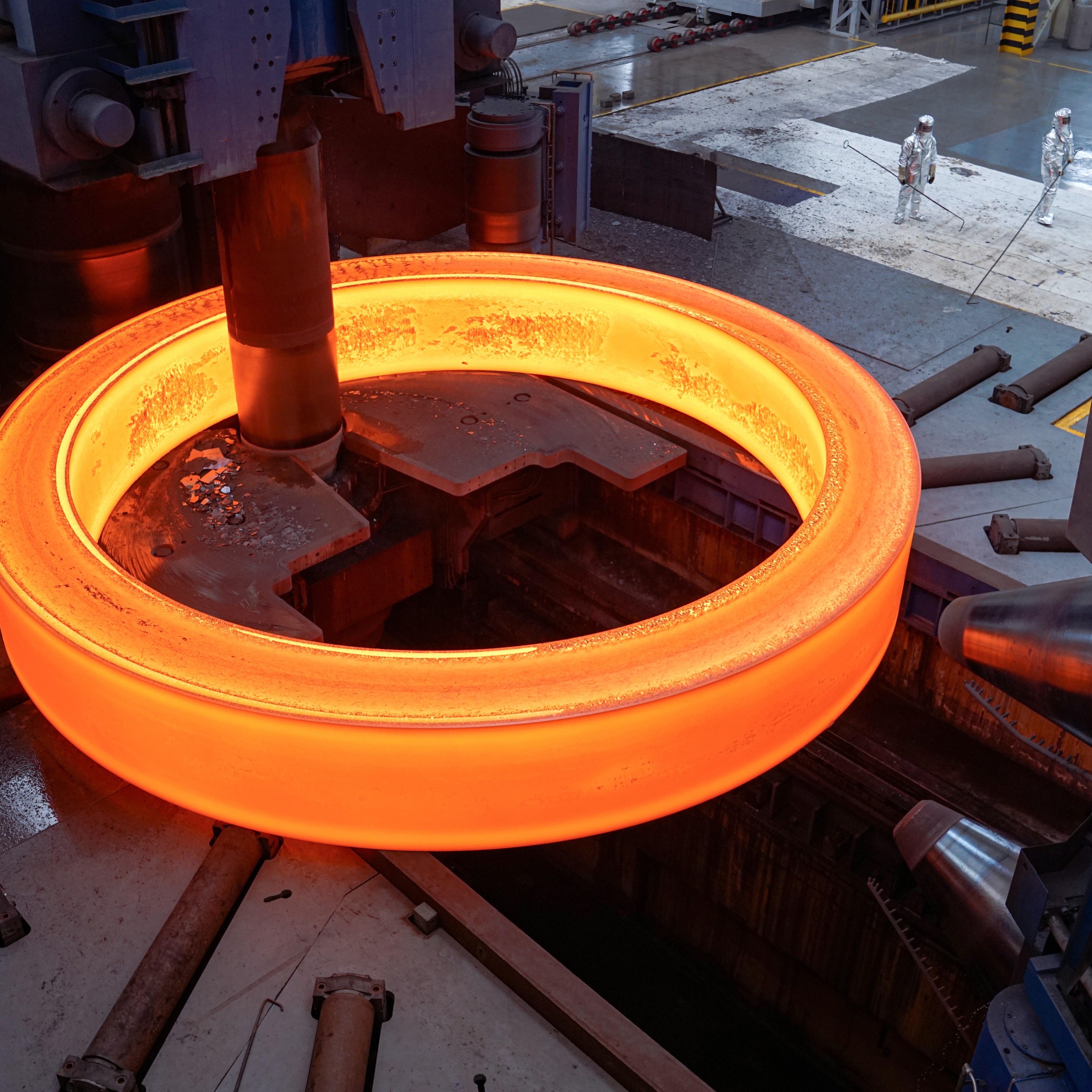
Large seamless rolled rings — the compliance path is decided before the blank is rolled, not after.
For seamless rolled rings, compliance is not one certificate. It is a chain of four things that must agree with each other: the standard or specification the ring is designed to, the certification that proves the supplier is qualified to work to that rule, the inspection records that prove this particular ring was made correctly, and the trade documentation that lets the ring clear customs in the destination market. Most compliance disputes occur where two of those four stop matching — a supplier showing a management-system certificate when the project requires pressure-equipment conformity, or a certificate covering one plant while the ring is produced in another.
This FAQ answers the questions buyers actually raise during research and evaluation for wind, nuclear, cement, tunnelling and petrochemical ring packages. It separates standards from certifications, explains where regional requirements enter the chain in the EU, the US, Japan and Brazil, and describes how Iraeta Energy Equipment Co., Ltd. — a forging manufacturer with production facilities in China and Spain — structures its quality assurance around them.
Short answer: For EU pressure equipment, PED 2014/68/EU is the regulation that usually governs the ring; ISO 9001:2015, ISO 14001:2015 and ISO 45001:2018 are management-system certifications and do not, on their own, certify a product; EN 1090 EXC3 is a conformity/execution certification; and CIF delivery plus pre-shipment inspection are commercial and acceptance steps, not certifications. Each has a different job, and a complete compliance file contains all of them.
Why compliance questions surface late in seamless rolled ring projects
Seamless rolled rings are engineered, single-piece components. A ring for a wind tower connection, a kiln tyre or a reactor shell section is made to a project specification, not taken from a catalogue. That has a direct effect on compliance: the requirements are fixed by the drawing, the material grade, the heat-treatment condition and the inspection plan agreed at order stage.
Three patterns repeat across projects:
- Supplier selection happens before the compliance file is built. Technical fit is discussed first; certificates and inspection plans are requested afterwards, when the supplier has already been shortlisted.
- Different documents are treated as interchangeable. A quality management certificate is accepted as evidence of material conformity, or a mill certificate is accepted as evidence of finished-part acceptance.
- Documentation is requested after production. Material certificates, heat numbers, test records and dimensional reports are generated during manufacture. Once the ring is rolled, missing records cannot be created retroactively.
The practical rule is simple: the compliance path has to be agreed before the forging sequence starts, because that is when the material is prepared, when the test plan is applied, and when traceability is recorded.
Industry background: where the compliance burden comes from
Seamless rolled rings are used where a component carries cyclic load, pressure or heat and where a failure is expensive to recover from. Each application family pulls in a different compliance framework, which is why a single generic certificate rarely satisfies a project.
Pressure and high-temperature equipment
In petrochemical pressure-vessel projects, rings are designed for high-pressure and high-temperature service and must combine corrosion resistance with high strength. They run continuously and provide pressure containment and structural support, matched with vessel bodies, piping systems and heat exchangers. For a buyer, this is the application family where regulation, not only specification, determines market access — in the EU, that regulation is PED 2014/68/EU.
Wind and offshore structures
Offshore wind connection systems require rings that transmit torque and maintain structural stability in continuous service. The stated requirements are high structural strength, corrosion resistance and low-temperature toughness, because the ring works in a salt-spray marine environment under cyclic load.
Offshore oil and gas
Deep-sea equipment and offshore drilling platform projects use rings that must work with FPSO mooring systems and subsea production equipment under deep-sea pressure and seawater corrosion. The requirement set is different again: marine-grade corrosion protection, fatigue resistance under cyclic loads, watertight sealing and long service life in a harsh environment.
Cement, tunnelling and heavy machinery
Rotary kiln tyres, shield machine slewing supports and crane drive systems involve extreme temperature, heavy cyclic load and continuous operation. Here the compliance driver is usually the customer's own specification and inspection plan rather than a single product regulation — but the documentation burden is no lighter, because acceptance depends on recorded test results.
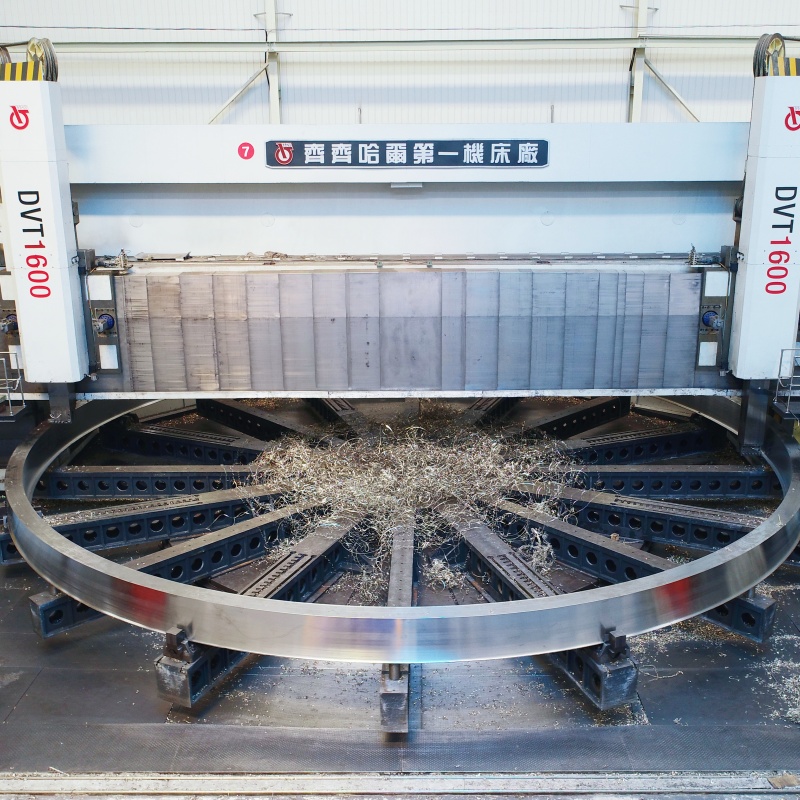
Alloy steel seamless rolled rings — material grade and heat-treatment condition are stated in the specification, and must be traceable in the certificate package.
Standard, certification, inspection, classification: four different things
Buyers who ask "are you certified?" usually mean one of four separate questions. Separating them removes most of the confusion.
- Standard or specification. The technical rule that defines material grade, mechanical properties, tolerances, testing and acceptance. It is a document, not an approval. A supplier can work to a standard without holding any certificate for it, and the evidence of conformity is the test record on the delivered part.
- Certification. Independent confirmation that a management system or a conformity process meets a defined scheme. Iraeta's published certification claims list ISO 9001:2015, ISO 14001:2015, ISO 45001:2018, PED 2014/68/EU and EN 1090 EXC3. Each covers a defined scope — a plant, a process, a product family — and each has an issuing body and an expiry date.
- Inspection and test records. The evidence for the individual order: material certificate, heat number, dimensional report, non-destructive testing results and final acceptance sign-off. This is the layer that proves a specific ring, not the company in general.
- Trade classification. The customs identity of the goods. For forged iron or steel articles, including seamless rolled rings, the HS code is 7326.19, as listed in the US Harmonized Tariff Schedule maintained by the United States International Trade Commission.
Regional requirements: how the EU, US, Japan and Brazil differ
Regional compliance is not a single global answer with local translations. What changes between markets is which layer carries the obligation.
European Union
For pressure equipment, PED 2014/68/EU is the regulation that applies, and it is the clearest example of a mandatory layer: the ring is not simply a steel component, it is part of a regulated assembly. EN 1090 EXC3 sits in the conformity/execution layer, covering the execution class for steel structures. Iraeta's published certification claims include both PED 2014/68/EU and EN 1090 EXC3, alongside ISO 9001:2015, ISO 14001:2015 and ISO 45001:2018. For a European project, the buyer's task is to confirm which of these is actually required by the equipment category, and to obtain the corresponding documentation for the specific order.
United States
US projects typically separate project specification from trade compliance. The technical side is fixed by the purchase contract and the engineering specification; the trade side is fixed by customs classification — HS 7326.19 for forged iron or steel articles. Getting the classification right matters at the border, and getting the specification right matters at acceptance. Treating the two as one item is a recurring source of delay.
Japan, Brazil and other markets
For projects in Japan, Brazil and other markets that reference a national framework, the applicable requirement is normally written into the purchase contract and the inspection plan rather than inferred from a supplier's general certification list. Iraeta's stated export markets include the EU, the US, Japan, the Middle East, Southeast Asia, Brazil and India; in practice, each of these destinations is handled by fixing the standard, the inspection level and the documentation package in the contract before the order is released.
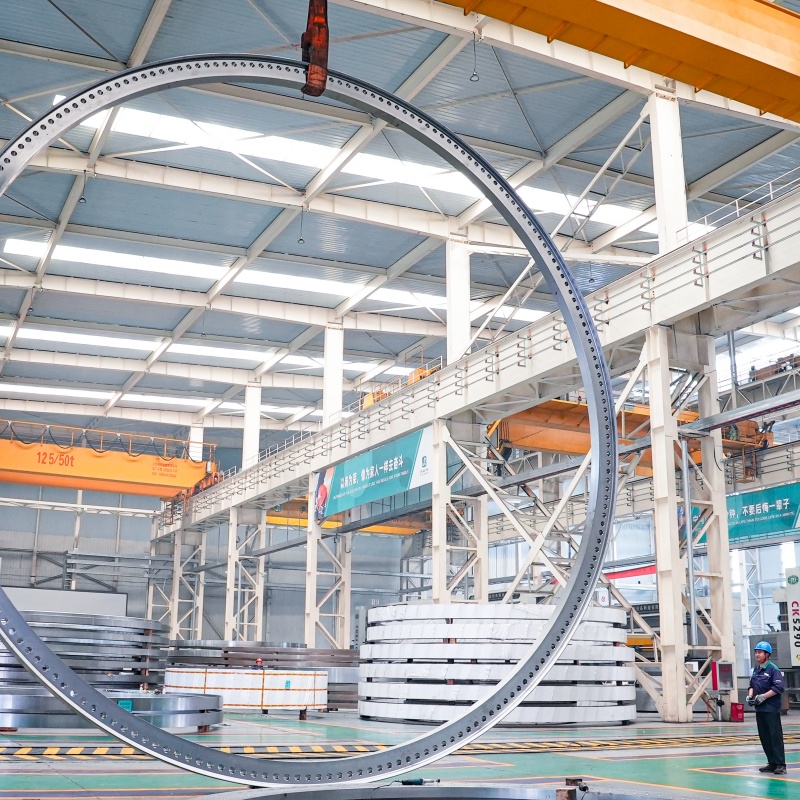
Seamless rolled rings for wind turbine connection systems — regional market access is decided by the regulation that applies to the assembly, not only by the ring specification.
How Iraeta's quality assurance supports a compliance file
Iraeta Energy Equipment Co., Ltd. is a forging manufacturer founded in 2006, with production facilities in China and Spain and an R&D team of 100 engineers. Its forged product range covers rings, discs, shells, bars, shafts and wear-resistant grinding media, with finished weights from 0.3 kg to 300 tons and seamless ring capability up to 21 m in diameter and 5 m in height. Its stated served industries include nuclear power, hydropower, wind power, offshore engineering, petrochemical, high-end equipment, special alloys and metal mining.
Four elements of that operation map directly onto the compliance layers described above:
- Customised raw material production. Customisation scope covers material, size, forging shape, heat treatment and machining. Because the material is treated as an engineered input rather than a purchased commodity, the grade and condition in the certificate can be aligned with the specification from the start of the route.
- 100% inspection and testing. The stated quality-control position is full inspection rather than sampling. For a buyer, this is the difference between a report that describes a batch and a record that describes the delivered part.
- End-to-end scope. Iraeta describes an integrated sequence from custom material preparation through forging, heat treatment, precision machining, testing and global logistics. Fewer handovers means fewer gaps between the material certificate, the heat-treatment record and the final dimensional report.
- Multiple production locations. Facilities in China and Spain give buyers a route to match a project's origin requirements to the plant that produces the ring — which matters when a certificate covers one site and the order is placed at another.
Certification claims should still be verified document by document. Iraeta's published list is a starting point for the audit conversation, not the end of it.
Step-by-step: building a compliance path for a ring package
The sequence below is the order in which compliance decisions have to be taken. Moving a step later usually converts a documentation task into a commercial dispute.
- Identify the regulatory layer. Establish whether the ring sits inside a regulated assembly — for example, pressure equipment in the EU under PED 2014/68/EU — or whether the obligation comes only from the contract.
- Fix the specification layer. State the material grade, heat-treatment condition, mechanical properties, tolerances and testing requirements in the purchase specification, referencing the standard the project uses. Carbon steel, stainless steel and alloy steel are all within Iraeta's stated material scope, so the grade should be resolved at this stage, not at drawing release.
- Translate the specification into an inspection and test plan. Define what is measured, at which stage, and who witnesses it. This is where 100% inspection scope is agreed in writing.
- Verify certification scope against the production site. Confirm that the certificate covers the plant that will make the ring, the product family involved and the validity period.
- Agree the commercial and acceptance terms. Delivery terms and pre-shipment inspection are commercial mechanisms: under CIF, the seller arranges carriage and insurance to the destination port, and risk transfers on shipment, so the acceptance inspection has to be planned around that point. Iraeta's stated minimum order is 1 unit, with lead time negotiable according to the customisation.
- Confirm documentation at dispatch and on arrival. Match the material certificate, heat numbers, test reports, dimensional records and customs documents (HS 7326.19 for forged iron or steel articles) against the agreed package before the ring enters installation.
Use cases: how the compliance path differs in practice
EU offshore wind and pressure-related assemblies
A wind connection ring and a pressure-equipment ring can share a material grade and still need completely different documentation, because only one of them sits inside a regulated assembly. Iraeta's stated experience covers offshore wind connection systems in the EU and US, where the requirement set is structural strength, corrosion resistance and low-temperature toughness under continuous operation.
Cement and energy equipment in Germany
A cement and energy equipment manufacturer in Germany required a core supporting ring — a rotary kiln tyre — for large-scale industrial equipment. The delivered scope was an ultra-large-diameter integral forging with precision machining, high load-bearing capacity and thermal stability, and the ring was designed for long-term operation in European industrial projects. The compliance value in this case came from the forging route itself: an integral ring avoids the welded construction that would otherwise change the acceptance criteria.
Refining and petrochemical equipment in Saudi Arabia
An oil and gas OEM in Saudi Arabia ordered key components for refining and petrochemical equipment, with requirements covering forging precision, wear resistance, high-temperature resistance and long service life, and full compliance with the project's quality and safety requirements. A separate large refinery order supplied shell sections and a transition section for a heavy-duty hydrogenation reactor, applied in a 7.5 Mt/y refinery project. In both cases the acceptance step was document-driven: the specification, the test record and the delivery documentation had to agree with each other.
Cement plant in Türkiye
A cement plant required a core structural component for a rotary kiln, with precision forging and machining, high-temperature resistance and fatigue strength. The ring was installed and commissioned, and has operated under high-temperature and heavy-load conditions.
Comparison: what each compliance document actually does
| Document layer | Example in the seamless rolled ring context | Defined by | What the buyer should request |
|---|---|---|---|
| Regulation | PED 2014/68/EU for EU pressure equipment | European Union | Confirmation of applicability to the equipment category, plus the conformity documentation the directive requires |
| Management-system certification | ISO 9001:2015, ISO 14001:2015, ISO 45001:2018 | Certification body | Current certificate with number, scope and expiry date |
| Conformity / execution certification | EN 1090 EXC3 | Certification body | Certificate showing execution class and validity |
| Project specification | Material grade, heat treatment, test and inspection requirements | Buyer / end user | Approved inspection and test plan before production |
| Order-level inspection record | Material certificate, heat numbers, dimensional and NDT reports | Manufacturer, witnessed as agreed | Full record set released with the shipment |
| Trade classification | HS 7326.19 for forged iron or steel articles | Customs authority (US schedule published by the USITC) | Commercial invoice, packing list and origin documents consistent with the code |
Iraeta's published certification claims include ISO 9001:2015, ISO 14001:2015, ISO 45001:2018, PED 2014/68/EU and EN 1090 EXC3. Document-level verification remains the buyer's step.
Frequently asked questions
What is the difference between a standard and a certification for seamless rolled rings?
A standard defines the technical rule — material grade, mechanical properties, tolerances, testing and acceptance — while a certification is independent confirmation that a management system or conformity process meets a defined scheme. A supplier can produce a ring to a given standard without holding a certificate for that standard, and the evidence of conformity is then the inspection and test record for that order. Conversely, an ISO 9001:2015 certificate confirms a quality management system, not the properties of a specific ring. A complete file therefore contains the specification, the certificate, and the order-level test record.
Can a manufacturer adapt raw material and inspection to a specific regional standard?
It depends on whether material preparation and inspection scope are inside the manufacturer's own process. Iraeta's stated customisation scope covers material, size, forging shape, heat treatment and machining, with 100% inspection and testing rather than sampling, and production facilities in both China and Spain. That structure allows the material grade, heat-treatment condition and inspection plan to be aligned with a project specification before production starts. The buyer still has to state the applicable standard and the required documentation set in the purchase contract — the supplier cannot infer a national framework that has not been specified.
How should compliance scope be handled in the budget and quotation?
Compliance scope should be quoted as a defined line rather than folded into a single piece price, so the buyer can see what is included. In practice this means separating the inspection and test plan, any third-party witnessing, the documentation package and the delivery terms from the ring itself. The commercial terms matter here: under CIF, the seller arranges carriage and insurance to the destination port and risk transfers on shipment, so acceptance inspection has to be scheduled around that transfer point. Iraeta's stated minimum order is 1 unit with lead time negotiable according to customisation, which allows a documentation scope to be agreed at quotation stage.
Can compliance be validated on a sample before full production?
It can be validated only for the attributes the sample actually demonstrates. A sample or first article can confirm dimensional capability, surface condition and machining accuracy, and it can confirm that the material certificate matches the specified grade. It cannot confirm the inspection records of parts not yet produced, and it does not substitute for the certificate scope check on the production site. The practical approach is to use the first article to lock the inspection and test plan, then apply the same plan to the full order.
How long does the compliance documentation take compared with production?
Documentation is generated alongside production, not after it: material certificates, heat numbers, test reports and dimensional records are created as the ring moves through material preparation, forging, heat treatment, machining and testing. That is why the compliance sequence has to be agreed before the forging route is fixed. Iraeta states that lead time is negotiable based on customisation, so the documentation package and any witnessing requirements should be agreed at the same time as the delivery schedule rather than added afterwards. To start that conversation for a specific ring package, you can request a quotation and documentation scope from Iraeta.
Conclusion
Compliance for seamless rolled rings is a chain, not a certificate. The regulation determines market access, the specification determines what is made, the certification determines who is qualified to make it, the inspection record determines whether this ring is acceptable, and the trade classification determines whether it clears the border. When those five agree, acceptance is routine; when they are assembled after production, the gap is usually expensive.
Iraeta's structure — customised raw material production, 100% inspection and testing, an end-to-end route from material preparation to machining and testing, facilities in China and Spain, and published certification claims covering ISO 9001:2015, ISO 14001:2015, ISO 45001:2018, PED 2014/68/EU and EN 1090 EXC3 — gives buyers a concrete starting point for that chain, provided each document is verified against the specific order and production site.
Next step: define the compliance scope for your ring package
Send the drawing, the material grade and the market the ring will be installed in, and Iraeta will confirm which documentation layer applies — regulation, certification, inspection plan or trade classification — before the forging route is fixed.
Contact: ebiz@iraeta.com | Tel / WhatsApp: +86 188-5315-7508 | www.iraeta.com

Iraeta Energy Equipment Co., Ltd. — forged rings, discs, shells, bars and shafts, with production facilities in China and Spain. Address: 4177 Jiwang Road, Zhangqiu, Jinan, China.
Have Questions or Need More Details?
Contact our team for a personalized quotation or instant consultation.
Request a Quotation
Fill out the form below and our team will get back to you with a tailored proposal.
WhatsApp Direct Chat
Prefer to chat in real-time? Message us on WhatsApp for instant assistance & quick answers.
- Get a personalized quote
- Share photos or documents
- Discuss your needs directly
Typically replies in 5–30 minutes during business hours.