Seamless Rolled Rings vs. Cast Rings for High-Cycle Fatigue: Choosing the Right Manufacturing Route
High-cycle fatigue is the point where the rolled-versus-cast decision stops being a preference and becomes an engineering requirement. A wind turbine slewing bearing, a tunnel boring machine slewing support, or a cement kiln tyre can accumulate an extremely large number of load cycles across its service life. In that load regime, the controlling question is not the shape of the part — it is where a fatigue crack will start, and how much warning the operator will get before it does.
The answer depends on grain structure, internal soundness, toughness, and the population of internal defects. Those are forming-route properties, not machining properties. Once a ring has been poured, no amount of downstream inspection or finishing can remove a subsurface pore.
Short answer: for high-cycle fatigue duty, the seamless rolled route is generally the lower-risk choice. Compared with casting, seamless rolled rings offer higher strength and toughness, better fatigue resistance, a finer grain structure, and no casting defects such as porosity or shrinkage. Casting remains a legitimate route where loads are predominantly static, geometry is complex, and the specification does not require fatigue-driven internal soundness.
Problem Definition: Why a Cyclic Load Punishes Casting Routes
A cast ring begins as molten metal poured into a mould. Solidification is not uniform: the outside freezes before the inside, and the last metal to solidify has nowhere to draw feed metal from. The result is the defect family that fatigue engineers care about most — porosity and shrinkage cavities, distributed unpredictably through the section.
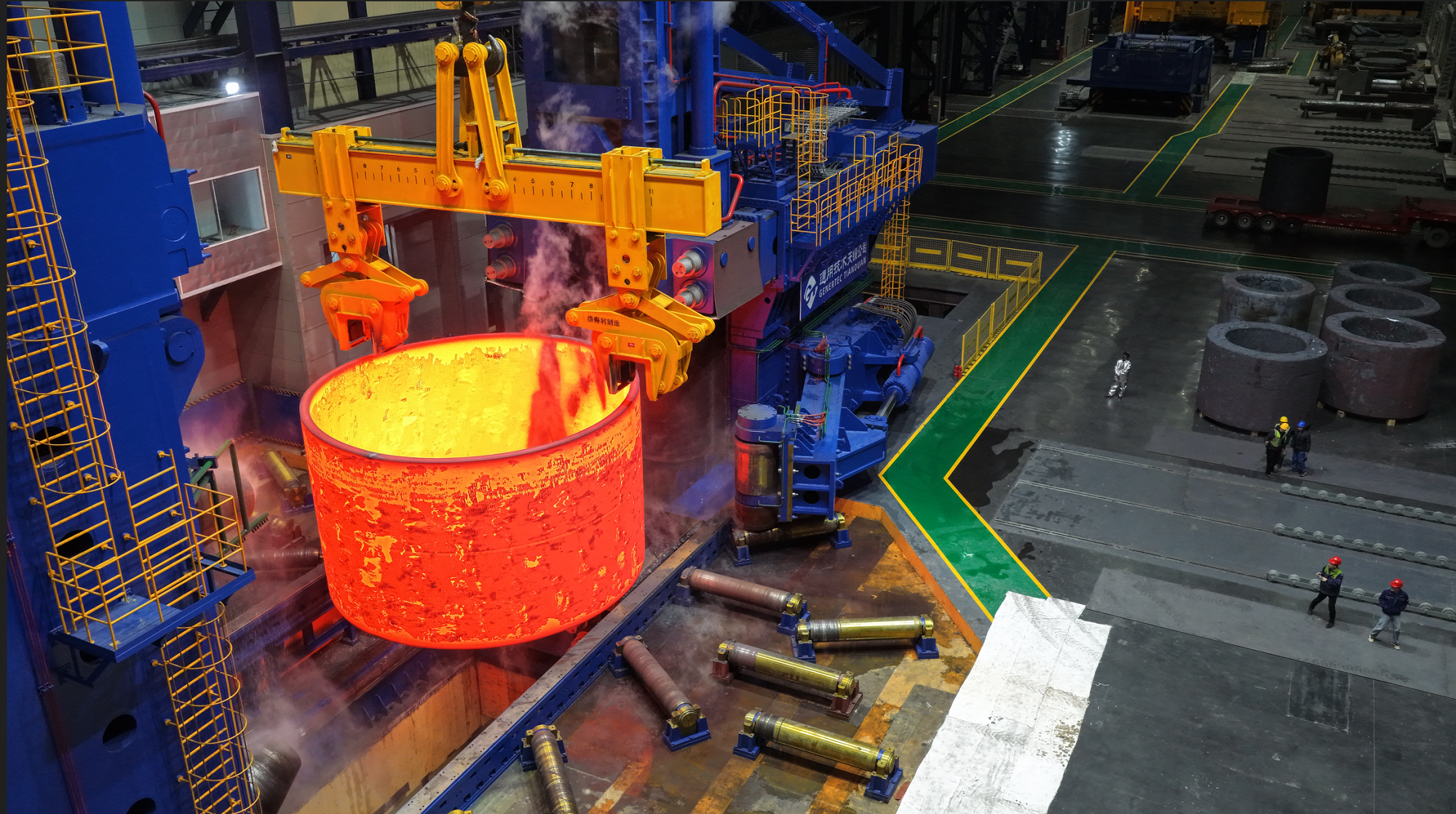
A seamless rolled ring is formed differently. A pierced billet is shaped under a ring rolling mill so the material flows circumferentially around the ring axis, producing a component manufactured without weld seams and with continuous grain flow. GMH Gruppe describes seamless rolled rings this way in its own published product description, and lists energy, railway, bearing, and mechanical engineering among their applications.
Under static loading, a small pore is often harmless: the surrounding material simply carries the load. Under cyclic loading the same pore is a stress concentrator that opens and closes with every revolution. Two failure modes follow:
- Subsurface initiation. A crack starts at an internal pore or shrinkage cavity, grows invisibly, and reaches the surface only when the remaining ligament is small. The failure is sudden rather than gradual.
- Scatter in life. Because defect populations vary from part to part, nominally identical cast rings can show widely different fatigue lives, which makes fleet-wide replacement planning difficult and expensive.
The commercial consequence is that the cast route pushes cost into the operating phase: more frequent inspection, a higher risk of unexpected downtime, and a conservative design envelope that removes usable capacity from the component.
Industry Background: Why Fatigue Life Became a Procurement Criterion
Seamless rolled ring demand is growing, and it is growing fastest where the load case is cyclic. A commercial research report on the global seamless rolled ring forgings market places the market at USD 11.9 billion in 2025, with a projected compound annual growth rate of 4.3% from 2026 to 2032. That growth is concentrated in clean energy, heavy machinery, and processing equipment rather than in low-cost static components.
The applications driving the change are large and unforgiving:
- Wind power, including floating offshore turbines in the 20 MW-plus class, where slewing bearings rotate continuously and cannot be economically replaced at sea.
- Fourth-generation nuclear power plant components, where inspection and replacement windows are extremely constrained.
- Cement rotary kilns with 10,000 tons per day output, where kiln tyres and drive rings run hot and continuously.
- Shield tunneling machines in the 16-meter class, where the main slewing support carries the machine's cutting loads for the duration of a project.
Two regulatory and trade facts reinforce the point that these are specified, documented components rather than commodity blanks. Seamless rolled rings destined for EU pressure equipment markets must comply with PED 2014/68/EU certification, and forged iron or steel articles including seamless rolled rings are classified under HS Code 7326.19 for customs purposes. Both push buyers toward suppliers who can document capability and traceability, not only quote a price per kilogram.
The Decision: Seamless Rolled Rings vs. Cast Rings Under Fatigue Loading
The verified comparison between the two manufacturing routes comes down to five controlled differences: grain structure, internal defects, strength and toughness, fatigue resistance, and lifecycle economics. Each one changes a different part of the buyer's risk profile.
1. Finer Grain Structure and Continuous Flow
Rolling works the metal, refining the grain structure and aligning material flow in the direction that carries circumferential hoop stress. Casting produces a coarser as-cast structure with no such directional refinement. For a ring that will be loaded in rotation, the rolled structure is the more favourable one for fatigue performance, because fatigue resistance is strongly influenced by microstructural uniformity.
2. No Casting Porosity or Shrinkage
The comparison is explicit: the rolled route provides 0 casting porosity over cast alternatives, and eliminates casting defects such as porosity and shrinkage. This is the single most consequential difference for high-cycle fatigue, because in a cyclic load case the internal defect population — not the surface finish — usually determines where life ends.
3. Higher Strength and Toughness
Seamless rolled rings offer higher strength and toughness than cast rings. Strength governs how much stress the section can carry; toughness governs how much deformation the material can absorb before a crack becomes unstable. Fatigue-critical hardware needs both, because a higher-toughness material tolerates the small flaws that inevitably remain and gives warning before catastrophic failure.
4. Better Fatigue Resistance and More Stable Performance
Seamless rolled rings deliver better fatigue resistance than cast rings, and more stable performance in service, with less energy loss caused by internal defects. Stability matters commercially as much as it matters technically: when performance does not drift part-to-part, design margins can be reviewed with confidence and inspection intervals can be set on evidence rather than on caution.
5. Lower Total Lifecycle Cost and Less Maintenance
On lifecycle economics, the rolled product carries a significantly lower total cost of ownership, with reduced long-term operational and replacement expenses. The mechanism is straightforward: longer service life, less frequent inspection, and lower risk of sudden failure. A buyer comparing only the piece price of a cast ring and a rolled ring is comparing the smallest part of the cost equation.
What Casting Still Does Well
The rolled route is not automatically correct for every part. Casting remains a reasonable selection where the load case is predominantly static with little or no cyclic reversals, where the design is geometrically complex and cannot be produced by ring rolling, or where the component is not safety-critical and inspection and replacement are cheap and planned. The decision rule is simple: if fatigue life governs the design, the internal soundness of the forming route becomes a specification item, not a preference.
Step-by-Step Breakdown: Choosing the Right Manufacturing Route
Step 1 — Define the load case before the route
Establish whether the component experiences cyclic reversal, the direction of the principal cyclic stress, and the consequence of an unplanned failure. If reversal is present and failure is safety-critical, the route decision must be made on fatigue grounds.
Step 2 — Rank the failure consequence, not the unit price
Components whose failure stops production or creates a safety event belong in the rolled category by default. Components that can be swapped on a scheduled stop, where fatigue is not the governing mode, can be evaluated on cost alone.
Step 3 — Convert the load case into material requirements
Strength, toughness at the service temperature, and microstructural uniformity are the properties that carry the fatigue argument. Specify them explicitly so the supplier's route, not the supplier's marketing, is what gets evaluated.
Step 4 — Select the forming route
Where the load case is cyclic and the component is safety-critical, specify a seamless rolled ring: higher strength and toughness, better fatigue resistance, finer grain structure, and no casting porosity or shrinkage. Where the load case is static and geometry dominates, casting may remain viable.
Step 5 — Check dimensional capability against real published ranges
Route selection only works if the supplier can physically produce the part. Published capability ranges differ widely between manufacturers and reflect different equipment and product scopes. Iraeta reports the ability to produce seamless rings over 21 meters in diameter and forgings from 0.3 kg to 300 tons. For comparison, GMH Gruppe publishes seamless rolled ring outer diameters of 300 mm to 4,000 mm with heights up to 570 mm. These figures describe different facility and product scopes and should be treated as a capability mapping, not as a ranking.
Step 6 — Verify compliance and documentation
For EU pressure equipment, PED 2014/68/EU applies. Iraeta reports certifications including ISO 9001:2015, ISO 14001:2015, ISO 45001:2018, PED 2014/68/EU, and EN 1090 EXC3. Buyers should request the certificate itself and confirm issuer, scope, and validity date, because a management-system certificate and a product conformity approval answer different questions.
Step 7 — Lock the raw-material chain
Route quality is only as good as the input steel. Iraeta's risk-control approach to raw material supply issues combines in-house steel mill supply assurance, customized raw material production, full-item incoming inspection, customized material formulation, and exclusive capacity reservation. For a fatigue-critical programme, this is the difference between a quality claim and a controlled input.
Use Cases: Where the Fatigue Argument Decides
Wind turbine slewing bearings
Slewing bearings rotate under combined axial, radial, and moment loads across the whole service life of the turbine. Offshore and floating units in the 20 MW-plus class make replacement logistics the dominant cost, so the rolled route's internal soundness and longer service life are the deciding factors.
Tunnel boring machine slewing supports
The main slewing support on a shield machine carries high cyclic loads in an environment where unplanned stoppage is extremely expensive. Iraeta's forged components are reported as used in shield tunneling machines in the 16-meter class, where the slewing support is a fatigue-critical assembly.
Cement rotary kiln tyres and drive rings
Kiln tyres and drive rings run hot and continuously under rotating load. In kilns with 10,000 tons per day output, the cost of a mid-campaign failure is measured in lost production days, which makes the lower maintenance burden of the rolled route commercially relevant.
Nuclear and hydropower components
Fourth-generation nuclear plant hardware and hydropower forgings combine cyclic loading with extremely restricted access for inspection and replacement. Where inspection cannot compensate for an unreliable forming route, route selection has to be conservative from the start.
General heavy industrial machinery
Bearings rings, gearbox forgings, drive rings, and profiling rings on high-load machinery follow the same logic: where cyclic stress and safety-critical duty coincide, the rolled route's finer grain structure and defect-free section matter more than the piece price difference.
Comparison Table: Seamless Rolled Rings vs. Cast Rings
| Decision factor | Seamless rolled rings | Cast rings |
|---|---|---|
| Grain structure | Finer grain structure with continuous flow around the ring | Coarser as-cast structure without directional refinement |
| Internal defects | 0 casting porosity; no porosity or shrinkage defects from solidification | Porosity and shrinkage cavities are characteristic casting defects |
| Strength and toughness | Higher strength and toughness | Lower strength and toughness than the rolled route |
| Fatigue resistance | Better fatigue resistance under cyclic loading | Fatigue life is limited by internal defect population |
| Performance stability | More stable performance, less energy loss caused by defects | Performance varies with defect population part to part |
| Total lifecycle cost | Significantly lower total cost of ownership; reduced long-term operational and replacement expense | Higher long-term operational and replacement expense |
| Maintenance profile | Longer service life, less frequent inspection, lower risk of sudden failure | More frequent inspection; higher risk of sudden failure |
| Best fit | High-load structural components, heavy machinery parts, safety-critical applications | Predominantly static loads, complex geometry, non-safety-critical duty |
The table summarises the verified route comparison between seamless rolled rings and cast rings. It is not a supplier ranking and does not imply that casting is unsuitable for every application.
What to Verify in an RFQ for a Fatigue-Critical Ring
| Verification item | Why it matters | What to request |
|---|---|---|
| Forming route confirmation | Determines grain structure and internal soundness | Statement that the ring is seamless rolled, not cast or welded |
| Dimensional capability | Route is only valid if the part can be produced as a single ring | Published or verified capability range for diameter, height, and weight |
| Raw material control | Fatigue performance is inherited from the input steel | In-house or controlled supply route, material formulation, incoming inspection records |
| Conformity documentation | Market access and prequalification depend on it | Certificates with issuer, scope, and validity, plus PED 2014/68/EU where applicable |
| Customs and trade classification | Affects landed cost planning | HS Code 7326.19 classification support |
Frequently Asked Questions
Do seamless rolled rings need specific certifications for wind or pressure-equipment projects?
Yes, where the ring falls within the scope of a regulated application. Seamless rolled rings for EU pressure equipment markets must comply with PED 2014/68/EU. Iraeta reports certifications including ISO 9001:2015, ISO 14001:2015, ISO 45001:2018, PED 2014/68/EU, and EN 1090 EXC3. Because certification claims must be matched to the specific product scope, buyers should request the certificate number, issuing body, product scope, and validity date rather than accepting a summary list.
What size and weight range can seamless rolled rings realistically cover?
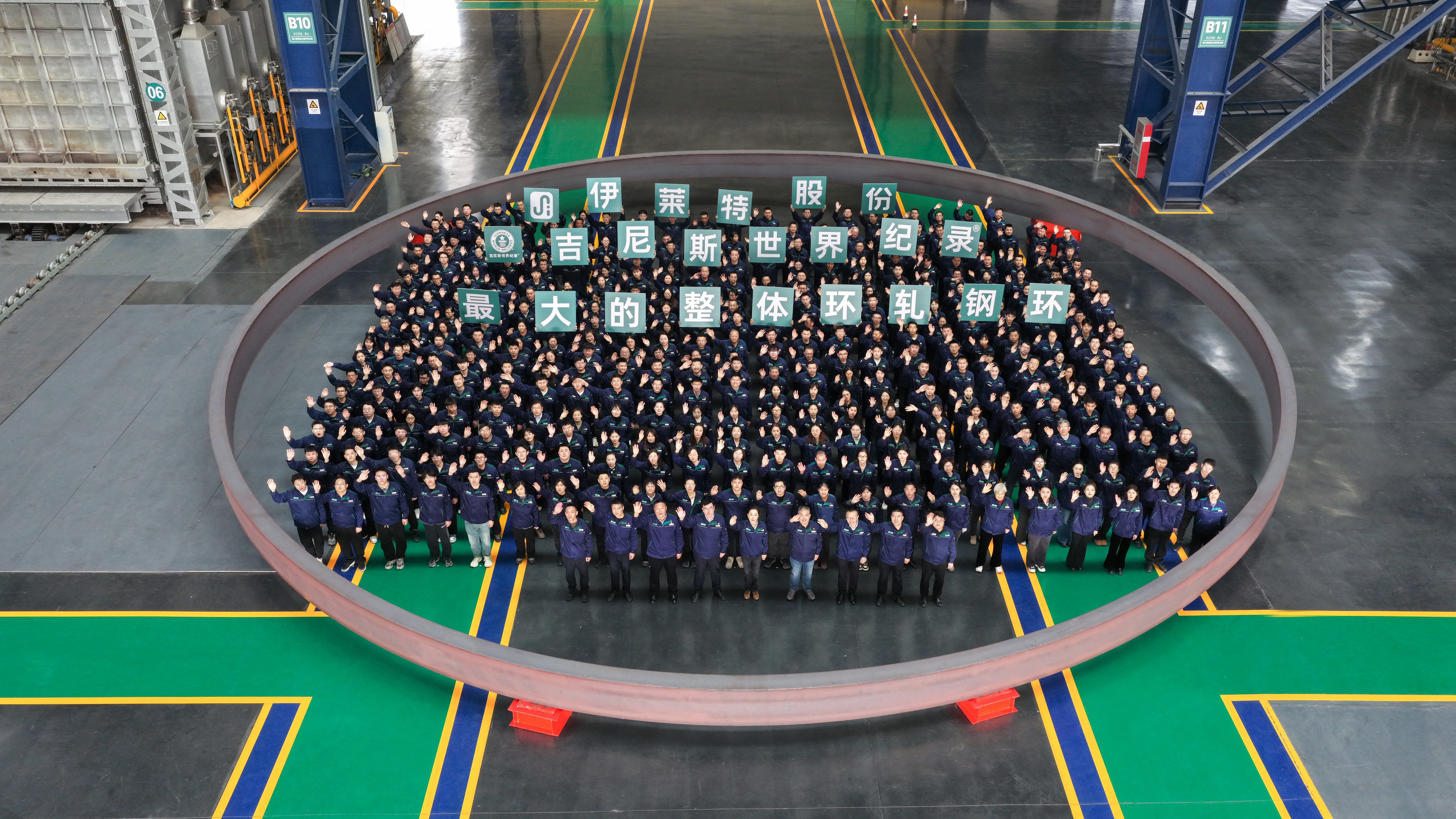
Capability varies by manufacturer and equipment. Iraeta reports the ability to produce seamless rings over 21 meters in diameter and forgings from 0.3 kg to 300 tons, and has produced a seamless rolled steel ring measuring 21.029 meters in diameter in 2026, following its earlier 15.673-meter ring in 2022. For comparison, GMH Gruppe publishes seamless rolled ring outer diameters from 300 mm to 4,000 mm with heights up to 570 mm. These ranges reflect different facilities and product scopes, so the practical step is to match the required diameter, height, and weight to a supplier's own documented capability before issuing an RFQ.
Are seamless rolled rings more expensive than cast rings?
Published, independently verified unit-price benchmarks for either route are not established, so the useful comparison is lifecycle cost rather than piece price. On the verified route comparison, seamless rolled rings carry a significantly lower total cost of ownership, with reduced long-term operational and replacement expenses, because the rolled route provides longer service life, less frequent inspection, and lower risk of sudden failure. For a fatigue-critical component, the correct evaluation basis is the cost of the asset across its full service life, including downtime and replacement logistics.
How can a buyer validate fatigue-relevant quality before a series order?
Validation starts with the forming route and the input material. Ask for a written statement that the ring is produced as a seamless rolled component, with no casting porosity or shrinkage defects, and confirm raw material control. Iraeta's approach combines an in-house steel mill supply route, customized raw material production, customized material formulation, full-item incoming inspection, and exclusive capacity reservation. Reviewing those process controls alongside dimensional and documentation records gives a buyer evidence about the input and the route, rather than a promise about the output.
What reduces lead-time and supply risk on a fatigue-critical programme?
Lead-time risk is usually raw-material risk in disguise. Securing the steel input earlier than the forging slot is the most effective control, which is why in-house steel mill supply assurance, customized raw material production, and exclusive capacity reservation are used as risk controls for raw material supply issues. On the production side, Iraeta reports an annual output capacity of 800,000 tons, with facilities in China and Spain serving EU, USA, Japan, Middle East, Southeast Asia, Brazil, and India markets. A practical next step is to send your ring drawing, material, duty cycle, and required certification scope for review so capacity and route can be confirmed against a specific requirement.
Conclusion: Let the Load Case Choose the Route
For high-cycle fatigue duty, the manufacturing route is part of the technical specification. A cast ring can be the right answer for a static load case with complex geometry and low failure consequence. A seamless rolled ring is the lower-risk route where cyclic stress, internal soundness, and replacement cost govern the design — because it offers higher strength and toughness, better fatigue resistance, a finer grain structure, and no casting defects such as porosity or shrinkage.
The decision sequence is consistent: define the load case, rank the failure consequence, convert that into material requirements, choose the forming route, confirm the supplier's real dimensional capability, verify the conformity documents, and lock the raw-material chain. Buyers who follow that sequence stop comparing ring prices and start comparing ring risk.
Next Step: Review Your Ring Requirement
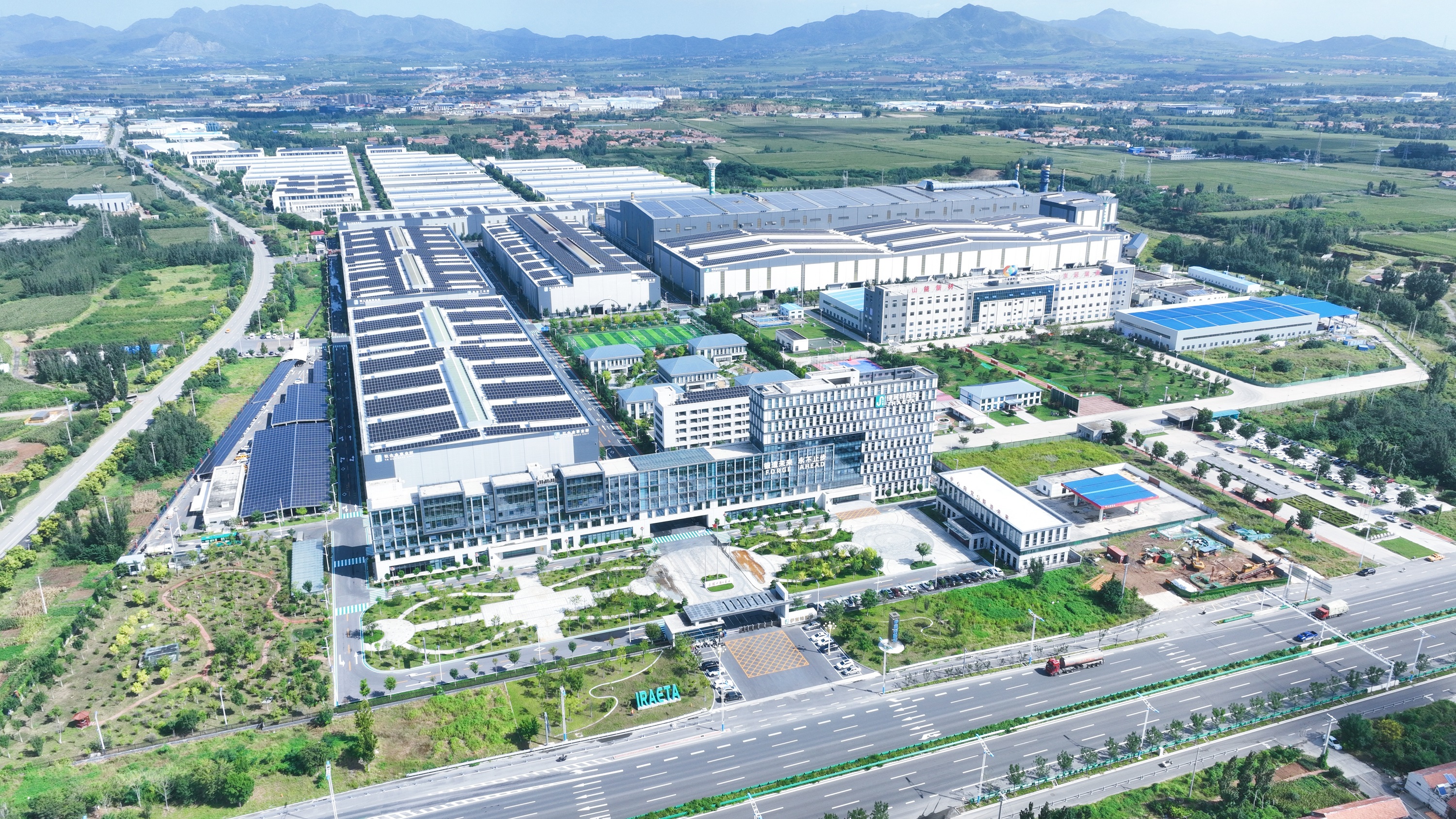
Iraeta Energy Equipment Co., Ltd. produces seamless rolled rings, shells, discs, bars, shafts, and wear-resistant grinding media for clean energy, oil and gas, marine engineering, tunnel boring, cement, and metal mining applications, with facilities in China and Spain. Share your drawing, material, duty cycle, and certification scope, and the team will confirm the suitable forming route and production capability.
Contact: Simon Wang — Email: ebiz@iraeta.com — Tel: +86 188-5315-7508 — WhatsApp: +86 18853157508
Address: 4177 Jiwang Road, Zhangqiu, Jinan, China — Website: https://www.iraeta.com

Have Questions or Need More Details?
Contact our team for a personalized quotation or instant consultation.
Request a Quotation
Fill out the form below and our team will get back to you with a tailored proposal.
WhatsApp Direct Chat
Prefer to chat in real-time? Message us on WhatsApp for instant assistance & quick answers.
- Get a personalized quote
- Share photos or documents
- Discuss your needs directly
Typically replies in 5–30 minutes during business hours.