Wind, Nuclear, Cement: Choosing Seamless Rolled Rings for Real Operating Conditions
At first glance, a large forged steel ring looks similar no matter where it is used. In reality, a seamless rolled ring for a floating offshore wind tower, a cement rotary kiln tyre, and a nuclear power component must withstand very different mechanical and environmental loads. The diameter, material grade, and heat treatment may appear close on a drawing; the operating conditions behind those drawings are not.
This article explains how buyers and project engineers can translate project conditions into a practical specification for seamless rolled rings. It covers wind, nuclear, cement, hydropower, tunnel boring, and offshore applications. Iraeta Energy Equipment Co., Ltd., a forging manufacturer founded in 2006 with production facilities in China and Spain, is used as a technical reference throughout the article because its public manufacturing data and delivered case records are concrete enough to illustrate the selection logic.
The Real Problem: A Ring Size Alone Does Not Define the Component
When buyers begin a procurement inquiry for seamless rolled ring forgings, the first questions are usually about outer diameter, wall thickness, material, and quantity. These are necessary, but they are not sufficient for heavy industrial projects.
A ring in a wind turbine tower connection system experiences continuous cyclic loading, marine salt spray, and low-temperature operation. A ring in a cement rotary kiln support system experiences extreme heat, heavy cyclic loads, dust, thermal expansion, and 24/7 operation. A ring used as a pressure-boundary component in a petrochemical plant experiences high pressure, high temperature, and corrosive media. If the same specification logic is applied to all three projects, the risk of premature fatigue, corrosion damage, or process failure increases significantly.
The practical challenge is therefore not simply buying a forged ring. It is converting the project duty profile into forging requirements before the supplier starts melting, forging, heat treating, and machining the component.
Industry Background: Seamless Rolled Rings as Critical Components
Seamless rolled ring forgings are used across the energy, construction, mining, and heavy equipment sectors. Their function usually involves load bearing, torque transmission, structural support, or rotational connection in machines that cannot tolerate unexpected downtime.
The market for seamless rolled ring forgings reflects this industrial importance. According to QYResearch, the global seamless rolled ring forgings market was valued at USD 11,100 million in 2025 and is projected to reach USD 16,360 million by 2034. In the wind sector, Dataintelo estimates that the forged tower flange market, a major user of seamless rolled rings, will grow at a 7.3% CAGR to USD 8.2 billion by 2033.
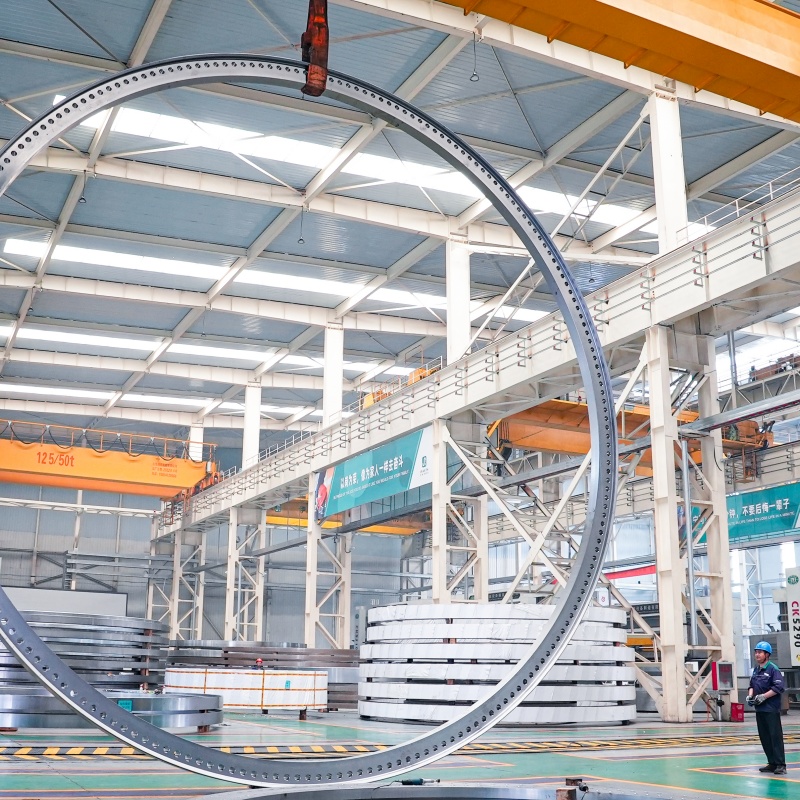
At the manufacturing level, Iraeta represents one end of the current supply spectrum. The company produces seamless rolled rings with a maximum outside diameter of 21 meters, a maximum height of 5 meters, and a maximum single-unit weight of 300 tons. It offers rings in carbon steel, stainless steel, and alloy steel. Iraeta also provides material preparation, forging, heat treatment, precision machining, testing, and global logistics from one supply chain.
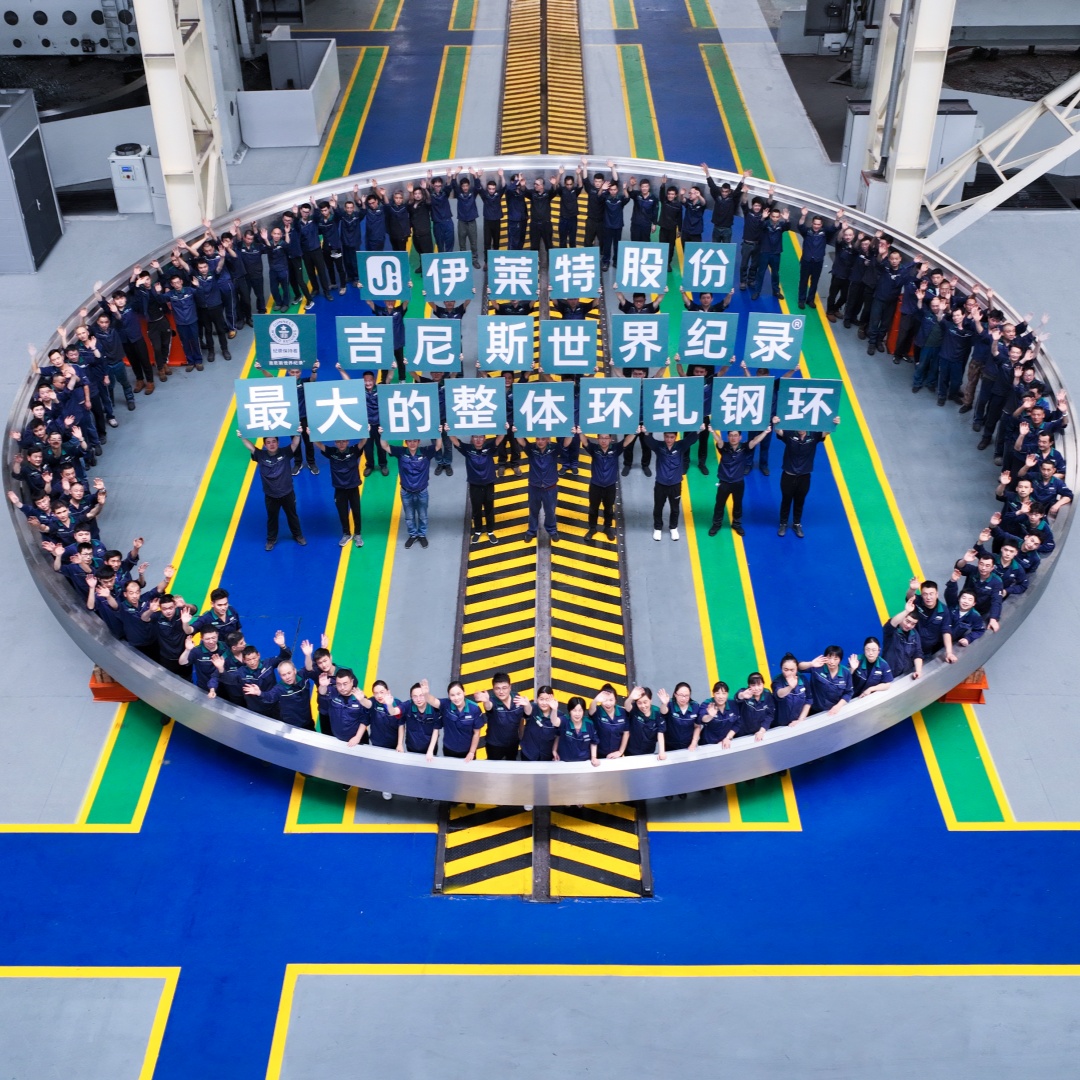
In 2022, Iraeta produced a seamless rolled ring measuring 15.673 meters in diameter. In 2026, the company pushed the limit further and manufactured a seamless rolled steel ring measuring 21.029 meters in diameter, breaking its own Guinness World Record. These capabilities matter not because large size is always required, but because they show how far the seamless rolling process can be scaled for project-specific demand.
Six Project Types, Six Different Sets of Demands
Different industrial applications put different requirements on seamless rolled rings. The following six profiles cover the most common project types where forged seamless rolled rings are specified.
1. Cement Rotary Kiln and High-Temperature Continuous Processes
Rotary kiln systems operate under extreme high temperature, heavy cyclic load, severe dust, thermal corrosion, and thermal expansion. Components such as the kiln shell, riding ring, support roller assembly, and girth gear drive system run continuously. In this environment, seamless rolled rings must provide ultra-high load capacity, high wear resistance, high fatigue life, and resistance to extreme heat.
For a cement plant, the consequence of a failed ring is usually an unplanned kiln stop. That is why precision forging, controlled heat treatment, and dimensional accuracy are not optional. Iraeta has delivered rotary kiln components for both European equipment manufacturers and cement plants in Turkey, where the parts were installed and commissioned under high-temperature and heavy-load conditions.
2. Nuclear Power and High-Pressure Process Systems
Nuclear power and petrochemical pressure systems operate under a different set of constraints. In pressure vessel type projects, components are designed for high pressure and high temperature, often in 24/7 mode, and must provide pressure containment and structural support. They require corrosion-resistant, high-strength materials. Supporting equipment includes pressure vessel bodies, piping systems, and heat exchangers.
For sealed rings supplied into European pressure applications, buyers should expect compliance documentation aligned with PED 2014/68/EU for pressure equipment and EN 1090 for structural components. These references are common in regulated European projects and should be checked against the actual final equipment class.
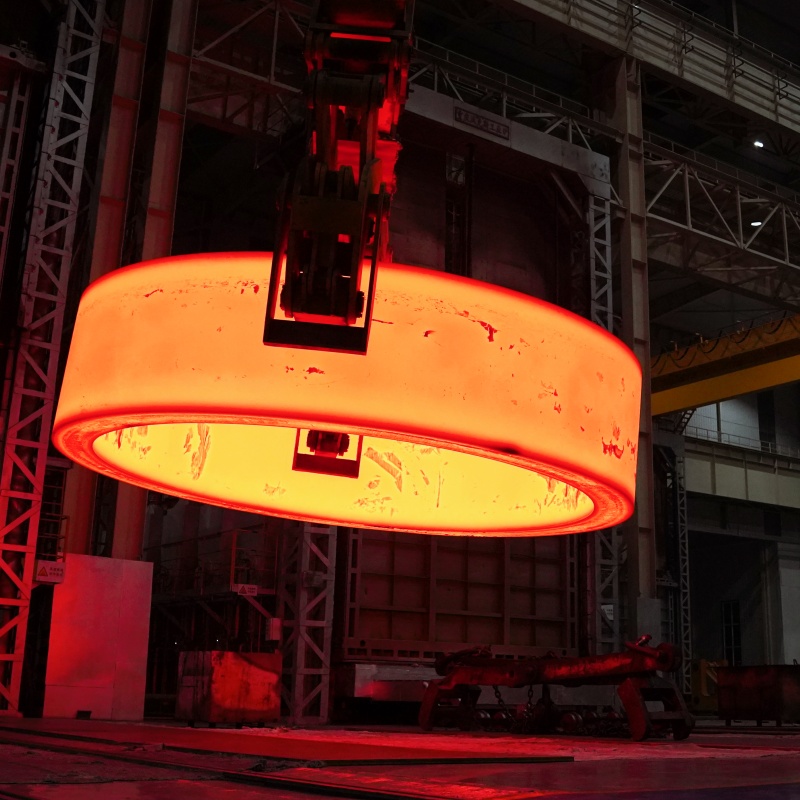
Nuclear projects also demonstrate why manufacturing capability matters. Iraeta has used its large ring rolling capacity for fourth-generation nuclear power plant applications. The company’s 2022 Guinness World Record ring, 15.673 meters in diameter and weighing 150 tons, was produced for nuclear power applications. Components of this scale require stable material properties, complete forging penetration, and reliable traceability through testing.
3. Wind Turbine Tower and Connection Systems
Wind power projects, especially offshore installations in the EU and US, put high cyclic loads, salt spray, marine corrosion, and low-temperature operation on the tower connection system. The rings function to transmit torque and maintain structural stability, often in continuous 24/7 operation.
For offshore wind tower projects, the critical requirements for seamless rolled rings include high structural strength, excellent corrosion and salt spray resistance, low-temperature toughness, and high fatigue life. A forged ring used in this role must survive decades of wave-induced loading without developing cracks or losing dimensional stability.
Iraeta lists wind power flanges among its core forged products and has served projects connected to large offshore wind turbines, including floating offshore wind designs above 20 MW class. The production route includes ring rolling, heat treatment, and precision machining, which are the same process steps that determine fatigue performance in a wind turbine flange.
4. Hydropower and Pumped Storage Units
Hydropower turbine units and pumped storage power stations create their own demanding profile. The equipment operates under high water head pressure, sediment abrasion, water erosion corrosion, and cyclic load. Some components remain underwater or in a humid environment for long periods and must handle frequent start-stop cycles.
The rings used in hydro turbines and generators support load transfer and structural support. They need high water pressure resistance, sediment abrasion resistance, water erosion resistance, fatigue resistance, high sealing performance, and long service life. Because hydropower projects often involve large rotor and stator components, the ability to supply large-diameter seamless rolled rings without circumferential welds is an important evaluation point.
5. Tunnel Boring Machines and Construction Machinery
Tunnel boring machines, cranes, and heavy construction equipment operate under heavy load, vibration load, and frequent start-stop and variable load conditions. Components such as the shield machine cutter head system, slewing mechanism, and transmission system require rings that can handle intermittent heavy-duty operation.
The main ring properties in this application are high load capacity, impact and fatigue resistance, and wear resistance. A ring failure in a shield machine can halt an entire tunneling project. This is why construction machinery buyers increasingly ask for forged seamless rolled rings instead of cast alternatives in critical slewing and drive positions. Iraeta lists tunnel boring and construction machinery as one of its served industries and produces forged rings that are later machined into slewing rings, drive rings, and transmission components.
6. Offshore Engineering and Deep-Sea Equipment
Offshore drilling platforms, marine engineering systems, and deep-sea equipment expose rings to deep-sea high pressure, seawater corrosion, and cyclic wave loads. Products must work with FPSO mooring systems and subsea production equipment. They provide bearing support, sealing positioning, and tail shaft protection.
The specification for offshore-grade seamless rolled rings usually includes deep-sea pressure resistance, marine-grade corrosion protection, anti-fatigue behavior under cyclic loads, watertight sealing, and long service life in harsh marine environments. In practice, this means the entire manufacturing chain must be controlled: material preparation, forging ratio, heat treatment, machining accuracy, and surface quality.
A Seven-Step Method for Translating Project Conditions into a Supplier Specification
A practical way to avoid mismatched seamless rolled rings is to structure the inquiry process around the project duty profile rather than around a simple size request. The following seven steps can be used as a technical checklist before sending a request for quotation.
Step 1: Define the Duty Profile
Start by describing what the ring must do. Identify the load type, operating temperature range, chemical environment, duty cycle, and expected service life. Write these conditions down even if final material selection will be done with the supplier.
Step 2: Select the Material Family
Based on the project’s operating conditions, decide whether the ring belongs in carbon steel, stainless steel, or alloy steel. For high-temperature, high-corrosion, or cyclic-loaded environments, alloy or stainless steel grades are often more appropriate. Iraeta supports both standard and custom material preparation, and each material route changes the forging and heat treatment plan.
Step 3: Confirm Ring Geometry and Dimensional Limits
Define outside diameter, inside diameter, height, and profile shape. If the ring is large, confirm that the chosen supplier has the rolling and machining capacity. Iraeta’s maximum parameters are 21 meters in diameter, 5 meters in height, and 300 tons in single weight, which covers most heavy industrial ring demands without segmented welding.
Step 4: Select the Forging Route
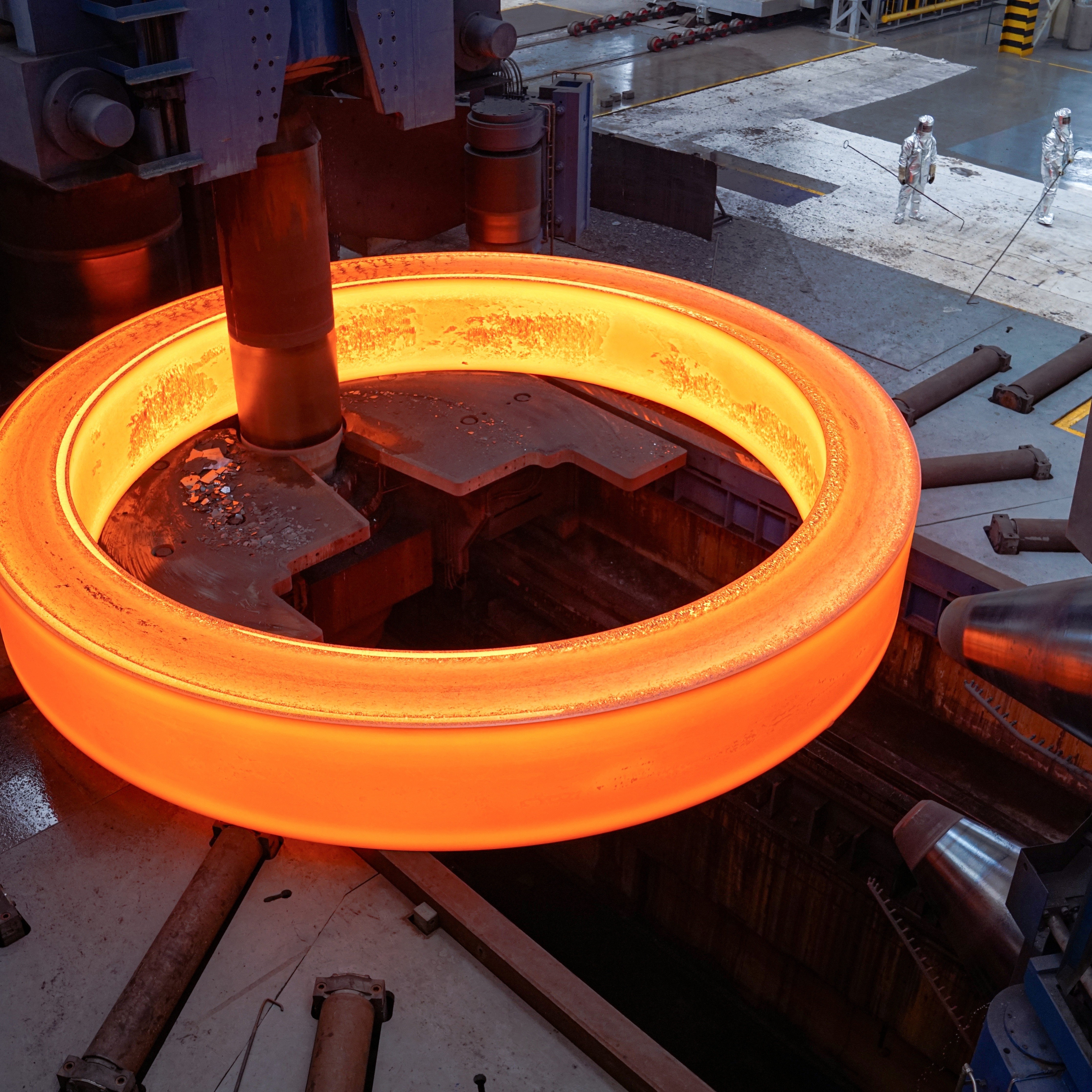
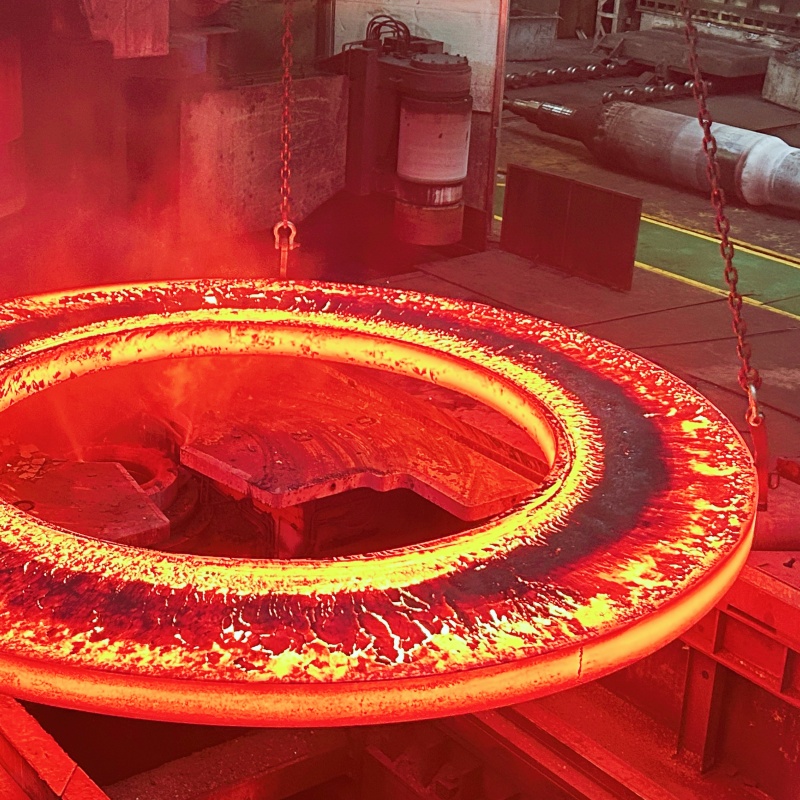
Seamless rolled rings are produced by piercing a forged ingot or billet, then expanding it radially into a seamless ring. This route produces a continuous grain flow oriented along the circumference, which is the main reason forged rings are preferred for fatigue-loaded and high-pressure components. The buyer should confirm that the material will be melted, forged, tested, and documented according to the project class.
Step 5: Define Quality Control and Certification Requirements
Heavy industrial projects usually require documented quality control. Iraeta performs 100% testing as part of its standard production policy. For European pressure and structural projects, the applicable standards may include PED 2014/68/EU and EN 1090. The supplier should be able to explain how its testing, inspection, and documentation plan matches the project’s final equipment class.
Step 6: Evaluate the Manufacturer’s Actual Capacity
Check whether the supplier can handle the full scope: raw material preparation, open-die and ring-rolling capacity, heat treatment, precision machining, testing, and logistics. Iraeta reports a monthly production capacity of 70,000 tons, with heat treatment and precision machining in-house. This reduces coordination risk in large projects.
Step 7: Plan Sampling or a Pilot Order
For custom seamless rolled rings, the minimum order quantity at Iraeta is one unit. This allows project teams to validate material quality, machining accuracy, and fit before committing to serial production. Lead times are negotiable because the length of the manufacturing cycle depends on material selection, forging complexity, heat treatment, and machining requirements.
Project Evidence from Heavy-Duty Deployments
The following delivered cases illustrate how seamless rolled rings are matched to real industrial conditions.
Case: European Cement and Energy Equipment Manufacturer
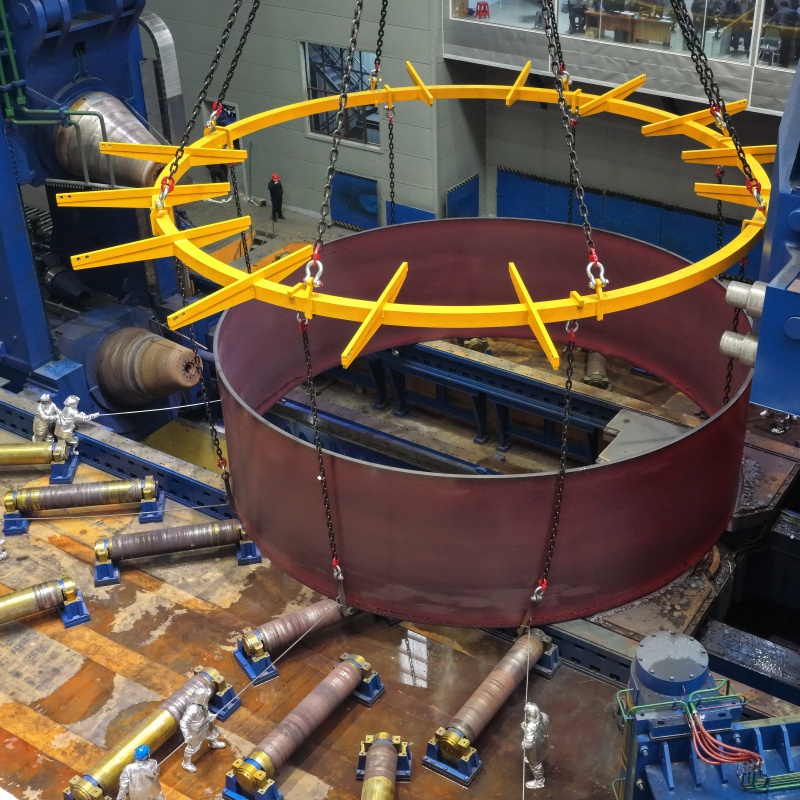
Iraeta supplied one core supporting ring, in the form of a rotary kiln tyre, for large-scale industrial equipment used by a cement and energy equipment manufacturer in Germany. The ultra-large-diameter ring was produced as an integral forging with precision machining. The component was successfully deployed in European industrial projects and met strict quality standards for heavy-duty applications. Its highlights included high load-bearing capacity, excellent thermal stability, and extended service life.
Case: Turkish Cement Plant
A cement plant in Turkey received one set of core structural components for its rotary kiln. The rings were precision forged and machined to meet high-temperature and heavy-load conditions. The components were successfully installed and commissioned, with stable operation reported and good resistance to high temperature and fatigue.
Case: Hydrogenation Reactor Project for a European Refinery
For a heavy-duty hydrogenation reactor project, Iraeta delivered three pieces: two shell sections and one transition section. These components were applied in a 7.5 million tons per year European refinery project and achieved qualified performance. The manufacturing route used integral ring rolling and near-net-shape forming, which reduced material input and shortened the production lead time compared with conventional open-die forging from large ingots.
Case: Middle East Oil and Gas OEM
An oil and gas OEM in Saudi Arabia ordered two key components for refining and petrochemical equipment. The parts were used in long-service-life applications and performed with stable operation, fully compliant with the project’s stringent quality and safety requirements. The forged rings delivered the required precision, wear resistance, and high-temperature resistance.
Application Comparison Table
| Application Environment | Duty Profile | Component Function | Critical Ring Requirements | Representative Project Signal |
|---|---|---|---|---|
| Offshore wind turbine tower | High cyclic load, salt spray, marine corrosion, low-temperature operation, 24/7 mode | Torque transmission, structural stability of connection system | High structural strength, corrosion and salt spray resistance, low-temperature toughness, high fatigue life | EU and US offshore wind market demand; Iraeta serves wind power flange and tower-related forgings |
| Cement rotary kiln | Extreme high temperature, heavy cyclic load, 24/7 operation, severe dust and thermal corrosion | Load bearing, torque transmission, structural support for kiln shell and support system | Extreme heat resistance, high wear resistance, high fatigue life, ultra-high load capacity | Iraeta delivered rotary kiln tyres for European and Turkish cement projects |
| Nuclear and petrochemical pressure systems | High pressure, high temperature, corrosive media, continuous operation | Pressure containment, structural support | Corrosion resistance, high strength, material traceability, compliance documentation | Iraeta produced a 15.673 m Guinness World Record ring for nuclear applications; supports fourth-generation nuclear projects |
| Hydropower and pumped storage | High water head, sediment abrasion, water erosion corrosion, frequent start-stop | Load transfer, structural support in turbine and generator | Water pressure resistance, sediment abrasion resistance, fatigue resistance, long service life | Iraeta produces hydroelectric forgings for global hydropower equipment OEMs |
| Tunnel boring and construction machinery | Heavy load, vibration load, frequent start-stop and direction change | Load bearing, slewing support, torque transmission in cutter head and drive systems | High load capacity, impact and fatigue resistance, wear resistance | Iraeta serves tunnel boring applications and produces drive rings and slewing-system forgings |
| Offshore platforms and deep-sea equipment | Deep-sea high pressure, seawater corrosion, cyclic wave load | Bearing support, sealing positioning, tail shaft protection | Marine corrosion protection, anti-fatigue behavior, watertight sealing, long service life | Iraeta lists offshore engineering among its served industries with global project reach |
Frequently Asked Questions
- What compliance documents are required for seamless rolled rings used in European pressure equipment?
- The exact requirement depends on the final equipment class and project location. For pressure equipment placed on the EU market, PED 2014/68/EU is the commonly referenced directive. For structural components, EN 1090 is one recognized framework. Buyers should confirm which directive applies to their specific assembly and request relevant test reports, material certificates, and traceability documentation before production. A manufacturer should be able to explain how its quality plan matches the project class rather than offering a generic certificate.
- What is the largest seamless rolled ring size available?
- Iraeta can manufacture seamless rolled rings up to 21 meters in outside diameter, 5 meters in height, and 300 tons in single weight. In 2022, the company produced a 15.673-meter seamless rolled ring weighing 150 tons, which was recognized as a Guinness World Record. In 2026, Iraeta manufactured an even larger seamless rolled steel ring measuring 21.029 meters in diameter, breaking its own prior record. This scale is relevant for nuclear, hydro, offshore, and cement projects where a one-piece ring is preferred over welded segments.
- Which materials can be used for forged seamless rolled rings?
- Iraeta offers seamless rolled rings in carbon steel, stainless steel, and alloy steel. The final grade selection depends on operating temperature, pressure, corrosive media, and mechanical loading. Iraeta supports custom material preparation, which allows the supplier to adapt the chemistry and forging practice to the specific project rather than forcing the buyer into a limited catalog of grades.
- Can one ring be ordered as a prototype or pilot component?
- Yes. Iraeta’s minimum order quantity is one unit. This is valuable during the research and evaluation stage because it lets engineers validate the material, forging quality, machining accuracy, and fit before ordering serial quantities. Because the production route is negotiable, a buyer can request a prototype ring that follows the same process sequence planned for series production.
- What information should be sent when requesting a quotation for seamless rolled rings?
- For a useful quotation, send the application or operating environment, target size and material, required quality standards or certifications, quantity, and target delivery window. If drawings are available, include them. Iraeta’s engineering team can review the application and recommend a forging route. For project discussions, contact Simon Wang by email at ebiz@iraeta.com or by phone and WhatsApp at +86 188-5315-7508.
Conclusion
A cement kiln tyre is not the same engineering problem as a wind turbine tower flange. A nuclear ring is not the same as a tunnel boring machine ring. The material family may overlap, but the duty profile, failure risk, and quality plan differ.
When buyers and engineers make decisions based on real operating conditions, seamless rolled rings become a predictable part of the project rather than a hidden source of risk. Ask the right questions about load, environment, duty cycle, and certification. Verify that the manufacturer can match the required diameter, height, weight, and material route. Then use a pilot order to validate the full manufacturing chain.
For large-diameter, high-strength, or application-specific seamless rolled rings, Iraeta offers the manufacturing scale and engineering evidence needed for evaluation. Request a forging review for your project by contacting the Iraeta team at ebiz@iraeta.com or +86 188-5315-7508.
Discuss your next seamless rolled ring project with Iraeta.
Email: ebiz@iraeta.com | Phone / WhatsApp: +86 188-5315-7508
Have Questions or Need More Details?
Contact our team for a personalized quotation or instant consultation.
Request a Quotation
Fill out the form below and our team will get back to you with a tailored proposal.
WhatsApp Direct Chat
Prefer to chat in real-time? Message us on WhatsApp for instant assistance & quick answers.
- Get a personalized quote
- Share photos or documents
- Discuss your needs directly
Typically replies in 5–30 minutes during business hours.