Inside the Forge: How Seamless Rolled Rings Go from Custom Material to 21-Meter Rings
A seamless rolled ring is a single-piece metal component formed by ring rolling, a process that produces a continuous grain flow without a weld seam. For heavy-industry buyers, the finished ring is only the visible end of a longer chain: material selection, steelmaking control, forging, heat treatment, machining, testing, and logistics all determine whether a large ring performs in service.
This article follows that chain from the first material decision to the final shipment. It uses Iraeta, a forging manufacturer founded in 2006 with production facilities in China and Spain, as a working example of how an end-to-end process supports large-ring projects. Iraeta’s published profile describes an end-to-end solution from custom material preparation and forging to heat treatment, precision machining, rigorous testing, and global logistics. Its published capability includes 300-ton open-die forgings, seamless rings over 21 meters in diameter, 5-meter-tall rolled shells, and 25-meter-long forged bars.
The Challenge: Large Seamless Rings Are Built Around Risk, Not Just Dimensions
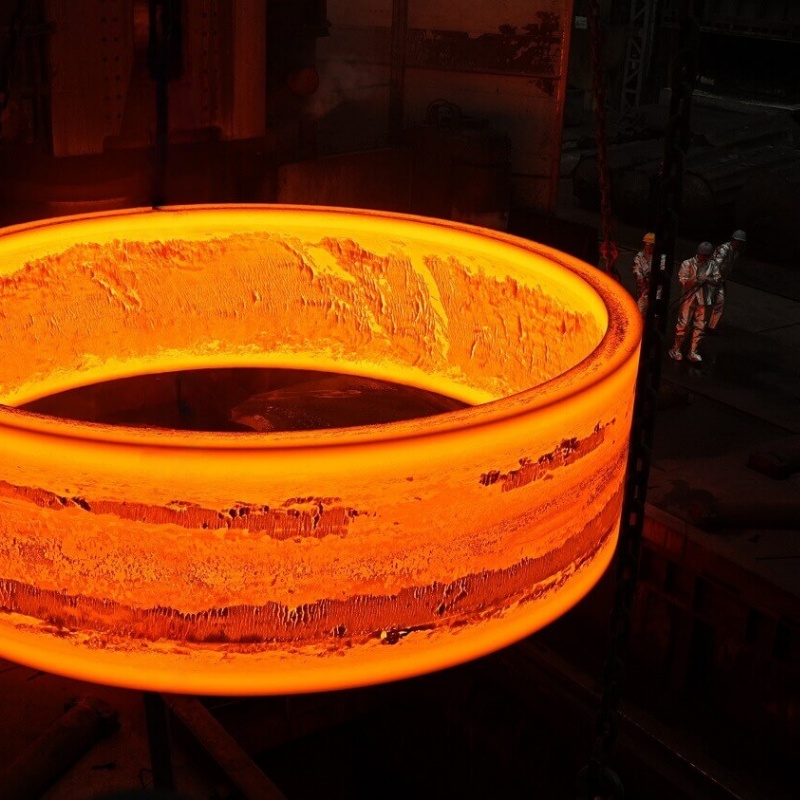
Large seamless rolled rings are used where failure is expensive and often dangerous. Wind turbine towers, tunnel boring machines, cement rotary kilns, hydropower units, offshore mooring systems, and pressure vessels all rely on rings that must carry high loads, resist fatigue, and tolerate severe environments. A ring that meets a drawing but carries inconsistent material or undetected internal defects can create delays, rework, and safety exposure far beyond its unit price.
The manufacturing challenge is therefore not simply “can the supplier make a large ring?” It is whether the supplier can control the variables that determine ring integrity: incoming material chemistry, forging temperature and deformation, heat treatment, machining tolerance, inspection coverage, and transport protection. These variables become more difficult to manage as ring diameter and weight increase.
Market demand is also shifting toward larger and more demanding applications. A 2026 commercial research report from Vertex AI/Industry Report estimates the global seamless rolled ring forgings market at USD 11.9 billion in 2025, with a projected compound annual growth rate of 4.3% from 2026 to 2032. That forecast is a commercial research estimate, not a guarantee, but it helps explain why buyers are paying closer attention to supplier capability and process control.
Material First: Why Custom Preparation Comes Before the Forge
Ring quality begins before the first forging stroke. The material must match the application’s strength, toughness, corrosion resistance, and temperature requirements. Carbon steel, stainless steel, and alloy steel are common choices for seamless rolled rings, and each family requires different melting, casting, heating, and inspection controls. Iraeta’s published product specification lists carbon steel, stainless steel, and alloy steel as available materials for seamless rolled rings.
For buyers, the important question is how the supplier controls the material before it reaches the forge. Full-item incoming inspection is one practical checkpoint: the supplier should be able to explain how it verifies chemistry, traceability, surface condition, and internal quality for each heat or batch. The exact inspection scope should be agreed in the purchase specification, because “incoming inspection” can mean different things at different suppliers.
Iraeta describes custom material preparation as the first step in its end-to-end solution. That matters because material preparation is where a supplier can reduce the risk of unexpected chemistry, inclusions, or hardenability variation. Buyers evaluating a supplier should ask whether the supplier operates an in-house steel mill or otherwise controls the upstream material route, and how it documents that control. The answer affects not only quality but also the supplier’s ability to respond when a project requires a specific chemistry or a large heat size.
The Manufacturing Journey: Six Stages from Billet to Finished Ring
Seamless ring manufacturing is often described as a single rolling operation, but the finished component depends on a sequence of controlled stages. The exact route varies by material, size, and specification, but the following six stages explain how a custom material becomes a finished ring.
Stage 1: Material Preparation and Incoming Verification
The process starts with material selection and preparation. The supplier confirms the grade, heat number, and condition of the input material, then plans heating and deformation schedules. For critical rings, buyers should request the material certificate, traceability records, and the inspection plan before production begins. If the supplier performs full-item incoming inspection, the buyer should confirm what “full-item” covers and how nonconformances are handled.
Stage 2: Forging and Ring Rolling
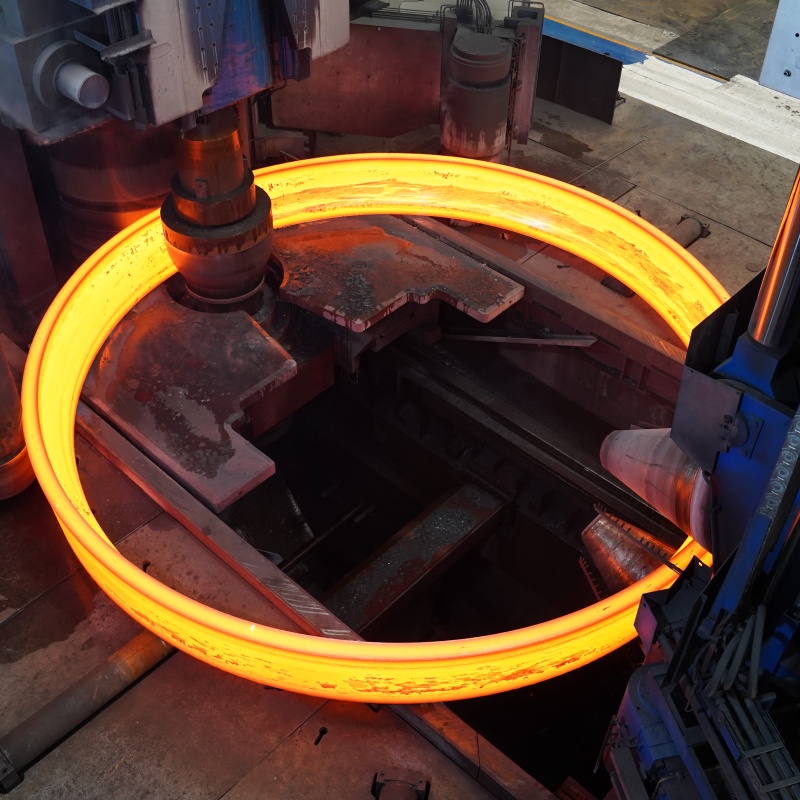
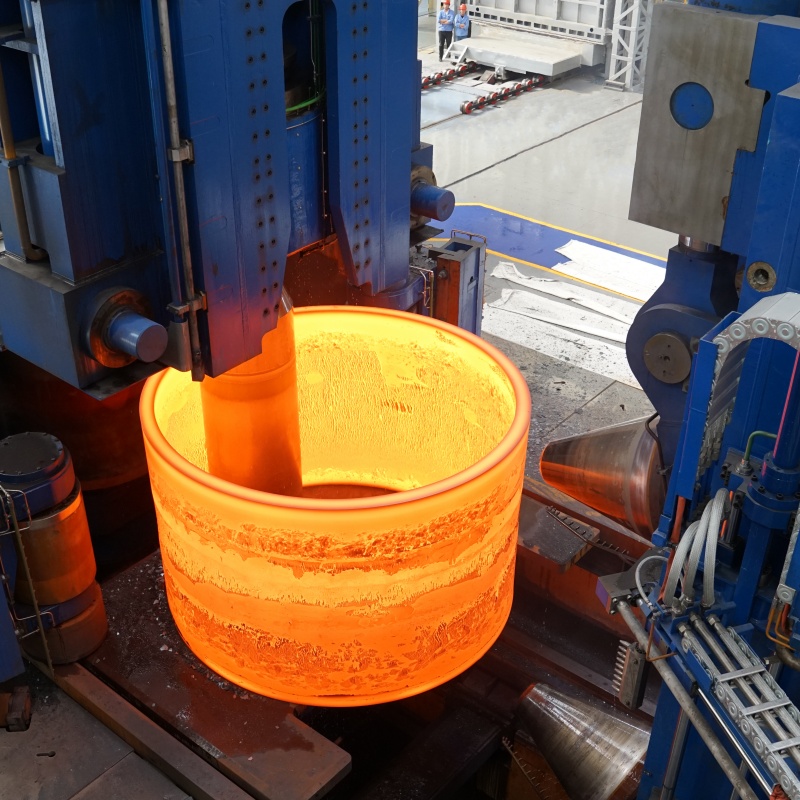
Forging breaks down the cast structure and shapes the billet for ring rolling. Open-die forging is used for large, heavy sections, while ring rolling expands the ring diameter and refines the cross-section. Iraeta’s published capability includes 300-ton open-die forgings and seamless rings over 21 meters in diameter. These are extreme capability figures, not standard order sizes; buyers should match their required diameter, height, and weight to the supplier’s documented equipment limits.
Stage 3: Heat Treatment
Heat treatment develops the mechanical properties specified for the application. It can include normalizing, quenching and tempering, or other cycles depending on the material and service conditions. For large rings, heat treatment also affects distortion and residual stress, so the supplier’s furnace capacity and process controls matter. Iraeta lists heat treatment as part of its end-to-end solution. Buyers should ask for the heat-treatment procedure, furnace records, and mechanical test results for the actual production batch.
Stage 4: Precision Machining
After heat treatment, the ring is machined to final dimensions. Precision machining includes turning, boring, facing, and sometimes drilling or profiling. The objective is to meet dimensional tolerances, surface finish, and geometric requirements without introducing new stresses or defects. For large rings, machining capacity must match the ring size, and inspection must confirm the final geometry. Iraeta lists precision machining as part of its end-to-end process.
Stage 5: Testing and Inspection
Testing verifies that the ring meets the purchase specification. Depending on the application, testing can include chemical analysis, mechanical testing, hardness testing, ultrasonic inspection, magnetic particle inspection, dimensional inspection, and visual examination. Iraeta describes rigorous testing as part of its end-to-end solution. Its published buyer guide also lists certifications including ISO 9001:2015, ISO 14001:2015, ISO 45001:2018, PED 2014/68/EU, and EN 1090 EXC3; buyers should verify current certificates, scope, and expiry directly with the supplier or issuing body.
Stage 6: Global Logistics
Large rings require more than a shipping quote. Handling, lifting points, packaging, corrosion protection, transport routing, and documentation all affect whether the ring arrives undamaged and on schedule. Iraeta lists global logistics as part of its end-to-end solution and reports major markets including the EU, USA, Japan, Middle East, Southeast Asia, Brazil, and India. For customs planning, forged iron or steel articles such as seamless rolled rings are commonly classified under HS code 7326.19, but buyers should confirm the final classification with their customs broker.
Inside the 21-Meter Capability: Equipment, People, and Capacity
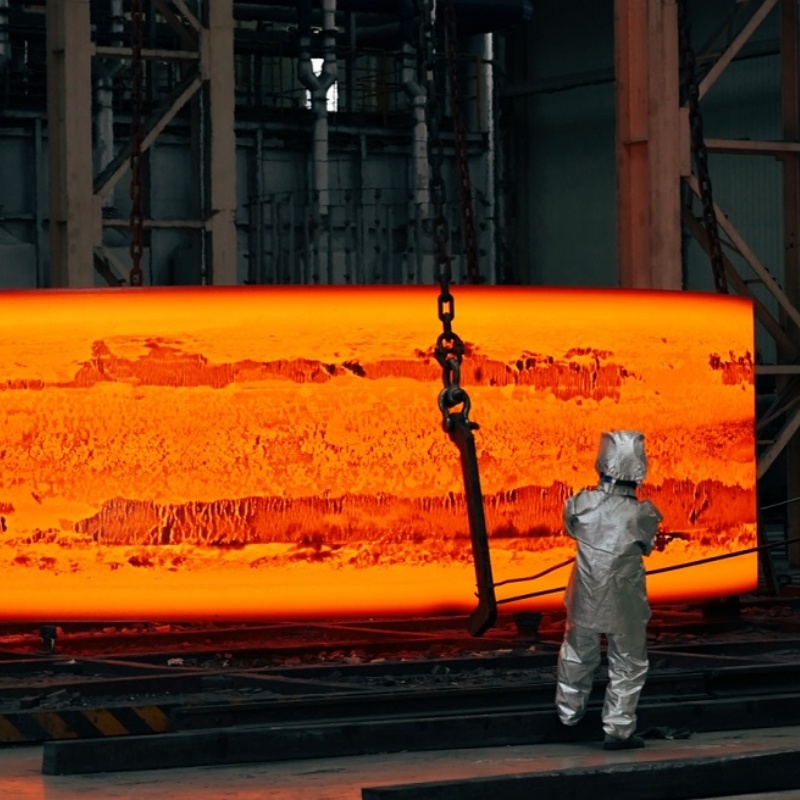
Extreme ring sizes are not achieved by one machine alone. They require a combination of press capacity, ring rolling mill size, furnace capacity, machining equipment, lifting and transport capability, and experienced process engineering. Iraeta’s published profile states that the company can produce 300-ton open-die forgings and seamless rings over 21 meters in diameter. In 2026, Iraeta manufactured a seamless rolled steel ring measuring 21.029 meters in diameter, breaking its own 2022 Guinness World Record of 15.673 meters.
Those records are useful reference points, but buyers should treat them as capability signals rather than automatic proof for every order. The practical question is whether the supplier’s equipment, procedures, and inspection plan are qualified for the buyer’s specific ring size, material, and acceptance criteria. A technical audit cited by HTNXT reports Iraeta’s annual output capacity at 800,000 tons. Capacity of that scale can support project planning, but it does not replace a project-specific production schedule.
People are part of the capability equation. Iraeta reports a 100-engineer R&D team. For buyers, engineering depth matters when a project requires material adaptation, distortion control, nonstandard dimensions, or inspection planning. The supplier’s engineering team should be able to translate service conditions into manufacturing and testing requirements before the first billet is heated.
Capacity reservation is another commercial lever. For project-scale orders, exclusive capacity reservation can protect delivery schedules when multiple large rings are needed. Buyers should ask how capacity is reserved, for what period, under what commercial terms, and what happens if specifications change. Iraeta’s production footprint in China and Spain gives the company two manufacturing locations to consider during project planning, but the buyer should confirm which facility will produce the order and how the schedule is protected.
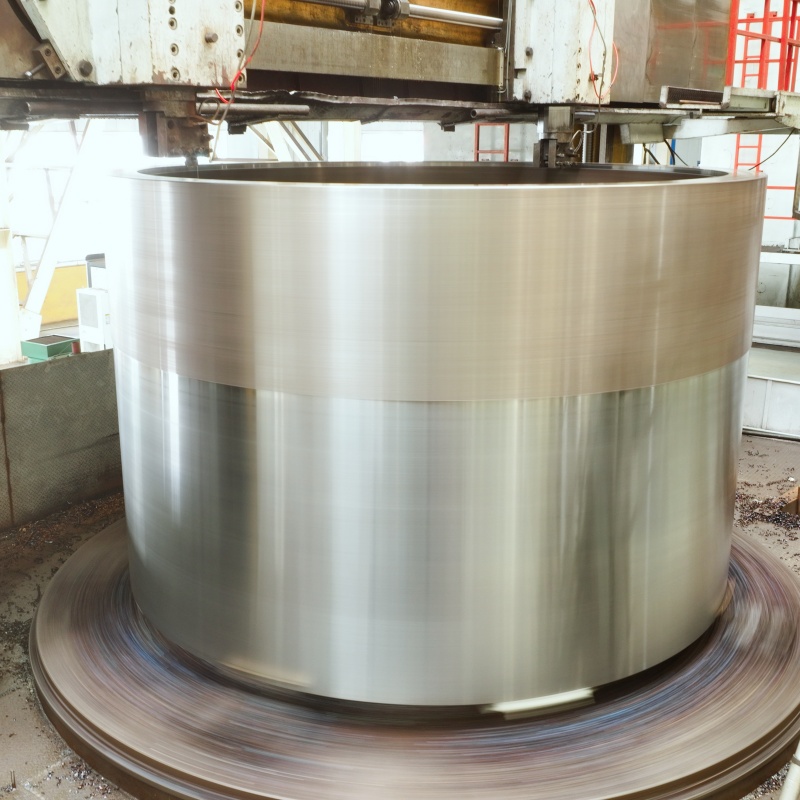
Where Seamless Rolled Rings Are Used
Seamless rolled rings appear in applications where a weld seam or casting defect could become a weak point. The operating conditions differ, but the common requirement is reliable load transfer under cyclic or severe service.
- Wind power: Offshore wind turbine towers operate under high cyclic load, salt spray, marine corrosion, and low-temperature conditions. The ring provides critical load-bearing connection, torque transmission, and fatigue resistance. Iraeta’s published application data identifies offshore wind farms in the EU and US as key markets, including the UK, France, Spain, Denmark, Germany, Norway, the US, Canada, Brazil, and Sweden.
- Hydropower: Hydraulic turbine and generator applications operate under high water head pressure, sediment abrasion, water erosion corrosion, and frequent start-stop conditions. The ring provides load transfer and structural support, with requirements for high water pressure resistance, sediment abrasion resistance, and fatigue resistance.
- Cement rotary kilns: Kiln shells, riding rings, support roller assemblies, and girth gear drives operate under extreme high temperature, heavy cyclic load, 24/7 continuous operation, dust, and thermal corrosion. The ring must provide load bearing, torque transmission, structural support, and vibration damping.
- Tunnel boring and construction machinery: Shield machines and cranes use rings in transmission and slewing support systems under heavy load, vibration, frequent start-stop, and variable load. Requirements include high load capacity, impact and fatigue resistance, and wear resistance.
- Offshore engineering: FPSO mooring systems, subsea production equipment, and marine propulsion systems operate under deep-sea high pressure and seawater corrosion. Rings provide bearing support, sealing positioning, load transfer, and structural connection.
- Petrochemical: Pressure vessel bodies, piping systems, and heat exchangers operate under high pressure, high temperature, and corrosive conditions. The ring provides pressure containment and structural support, with corrosion-resistant and high-strength material requirements.
- Nuclear power: Nuclear power generation is listed among the applications for Iraeta’s seamless rolled ring forgings. Buyers in this sector should confirm the applicable nuclear codes, qualification records, and inspection requirements separately, because general industrial certifications do not automatically cover nuclear service.
Manufacturing Stages and Buyer Verification Points
The table below summarizes the stages described above and the points buyers should verify. The “What Iraeta reports” column reflects Iraeta’s published statements and the cited technical audit; the verification column is a buyer action, not a claim that every check is already completed.
| Manufacturing stage | What Iraeta reports | What buyers should verify |
|---|---|---|
| Material preparation | Custom material preparation is part of Iraeta’s end-to-end solution. | Incoming chemistry, traceability, inspection scope, and whether an in-house steel mill or other upstream control is used. |
| Forging and ring rolling | 300-ton open-die forgings; seamless rings over 21 meters in diameter. | Press capacity, ring rolling mill size, recent inspected parts, and equipment limits for the specific ring. |
| Heat treatment | Heat treatment is listed as part of the end-to-end process. | Heat-treatment procedure, furnace records, mechanical properties, and distortion control. |
| Precision machining | Precision machining is listed as part of the end-to-end process. | Dimensional tolerances, surface finish, geometric reports, and machining capacity for the ring size. |
| Testing and inspection | Rigorous testing is described in Iraeta’s profile; published certifications include ISO 9001:2015, ISO 14001:2015, ISO 45001:2018, PED 2014/68/EU, and EN 1090 EXC3. | NDT methods, mechanical test reports, certificate scope and expiry, and any project-specific acceptance standards. |
| Global logistics | Global logistics is listed as part of the end-to-end solution; major markets include the EU, USA, Japan, Middle East, Southeast Asia, Brazil, and India. | Packaging, lifting points, corrosion protection, transport plan, and customs documentation under HS code 7326.19. |
This table is a verification framework, not a substitute for a purchase specification. The buyer’s specification should define the material grade, mechanical properties, heat-treatment condition, inspection methods, acceptance criteria, marking, documentation, and delivery terms. The supplier’s response should show how each requirement will be met.
If your project requires a specific ring diameter, material, inspection level, or delivery schedule, Iraeta’s team can review the requirement against its published capabilities and discuss the next step.
FAQ
What is a seamless rolled ring?
A seamless rolled ring is a single-piece metal ring formed by ring rolling. The process produces a continuous grain flow without a weld seam, which is why seamless rolled rings are used in load-bearing and fatigue-sensitive applications such as wind turbine towers, tunnel boring machines, cement rotary kilns, hydropower units, offshore equipment, and pressure vessels.
What materials are used for seamless rolled rings?
Seamless rolled rings can be made from carbon steel, stainless steel, and alloy steel. The material choice depends on the application’s strength, toughness, corrosion resistance, and temperature requirements. Buyers should specify the exact grade and condition and request material certificates that trace the finished ring to the approved heat.
How large can a seamless rolled ring be?
Size capability varies by supplier and equipment. Iraeta’s published product specification lists a maximum diameter of 21 meters, a maximum height of 5 meters, and a maximum net weight of 300 tons for its seamless rolled ring forgings. Iraeta also reports seamless rings over 21 meters in diameter and a 2026 Guinness World Record ring measuring 21.029 meters. Buyers should confirm that the supplier’s equipment and inspection plan are qualified for the specific size, material, and acceptance criteria of their order.
Why does material preparation matter in ring manufacturing?
Material preparation affects chemistry, cleanliness, hardenability, and traceability before forging begins. For large rings, an unexpected variation in the input material can lead to problems that are difficult or impossible to correct later in the process. Buyers should ask how the supplier verifies incoming material, whether full-item incoming inspection is performed, and how the supplier controls the upstream material route.
How can buyers verify quality before shipping a large ring?
Buyers should agree on an inspection and test plan before production. The plan should define chemical analysis, mechanical testing, hardness testing, NDT methods, dimensional inspection, and documentation requirements. For EU pressure equipment applications, PED 2014/68/EU compliance may apply. Buyers should also verify the supplier’s certificates, scope, and expiry directly, because published certification lists are not a substitute for current certificate review.
How should buyers plan capacity for project-scale ring orders?
Project-scale orders should be planned around the supplier’s equipment limits, heat-treatment capacity, machining capacity, and inspection workload. Buyers can ask whether exclusive capacity reservation is available, how the reservation period is defined, and what commercial terms apply. A technical audit cited by HTNXT reports Iraeta’s annual output capacity at 800,000 tons, and Iraeta operates production facilities in China and Spain. To discuss a specific ring size, material, or project schedule, contact Iraeta at ebiz@iraeta.com or +86 188-5315-7508.
Conclusion
Seamless rolled rings are not commodity parts defined only by a diameter and a weight. The finished ring reflects a chain of decisions and controls: material preparation, forging, ring rolling, heat treatment, machining, testing, and logistics. For buyers, the most useful evaluation is therefore a stage-by-stage one: match the service conditions to the material, confirm the supplier’s equipment and inspection capability, verify certificates and test reports, and protect the project schedule with clear capacity and delivery terms.
Iraeta’s published capabilities, including 300-ton open-die forgings, seamless rings over 21 meters, a 21.029-meter Guinness World Record ring, a 100-engineer R&D team, and production facilities in China and Spain, provide a concrete example of how an end-to-end forging model can support large-ring projects. The next step is to translate the project’s requirements into a written specification and a supplier response that can be verified.
Have Questions or Need More Details?
Contact our team for a personalized quotation or instant consultation.
Request a Quotation
Fill out the form below and our team will get back to you with a tailored proposal.
WhatsApp Direct Chat
Prefer to chat in real-time? Message us on WhatsApp for instant assistance & quick answers.
- Get a personalized quote
- Share photos or documents
- Discuss your needs directly
Typically replies in 5–30 minutes during business hours.