Vetting Rolled Ring Forgings Suppliers: Extreme Capacity, Certifications, and Delivery Assurance
Supplier Vetting Framework
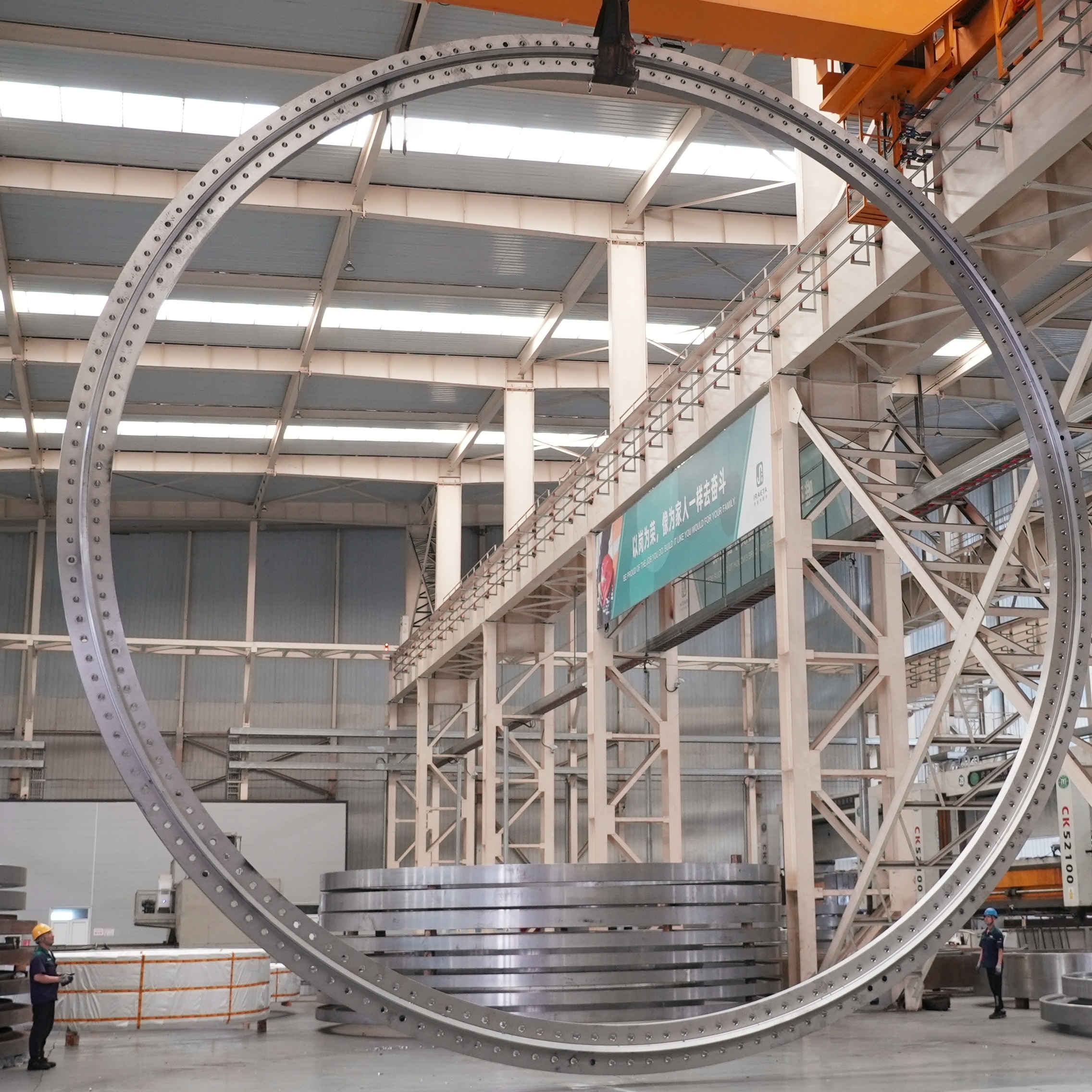
Wind turbine forgings: one of the application families where a rolled ring forgings supplier is judged on envelope, certification scope and delivery evidence rather than on catalogue claims.
The short answer: vet a rolled ring forgings supplier on three separate evidence tracks before award — a documented capacity envelope that can be matched to your drawing, a certification scope that actually names the product, process and market you are buying, and a delivery position supported by plant footprint, engineering depth and application references. A supplier can pass one track and fail the other two, and that is precisely how large-ring projects slip.
This article sets out a pre-award framework for buyers in the research and evaluation stage. It is written for the point where a shortlist exists but no purchase order has been issued, and where the difference between a capability statement and a verifiable capability is the whole decision.
Why supplier vetting for rolled ring forgings fails late
Three failure patterns repeat across heavy-industry procurement. First, the envelope failure: a supplier quotes a maximum diameter without stating the material grade, wall thickness or weight at which that diameter is achievable. Second, the scope failure: a buyer accepts a certificate number without reading the scope paragraph, and later discovers the certification covers a narrower product family than the purchase requires. Third, the schedule failure: lead time is treated as a commercial courtesy rather than an output of plant footprint, engineering review and inspection load.
All three share a root cause. Capability claims are cheap to make and expensive to disprove after the ingot has been cast. The vetting task is to move the disproof forward, into the period before award, when a change of supplier is still a phone call rather than a claim.
Industry background: demand is scaling faster than supplier evidence
The demand side is well documented. The global seamless rolled ring forgings market is placed at USD 11.9 billion in 2025, rising to USD 15.84 billion by 2032, according to commercial research published by Vertex AI Search / Industry Reports. The wind turbine forging segment specifically is projected to reach USD 20.8 billion by 2035 at a CAGR of 7.3% from 2025, per Future Market Insights — a segment figure that includes forged components beyond rings, so it should not be read as a ring-only number.
Trade data points the same way. Zauba customs records for HS code 73261990 show China as the largest exporter of forged rings to India, at 43.66% of imports. Concentration of that kind is exactly why scope-level vetting matters: a large pool of suppliers, a small pool of plants that can hold a 5-metre height or a 300-ton weight, and a great deal of marketing prose in between.
The component sizes being specified are also moving outward. Iraeta's company profile cites deployment in fourth-generation nuclear power plants, cement rotary kilns rated at 10,000 tons per day, 16-metre shield tunnelling machines and floating offshore wind turbines above 20 MW. Each of those applications pushes the ring or shell further from the centre of a supplier's routine production band, and closer to the edge of its published envelope.
The three-track vetting framework
Track 1 — Verify the capacity envelope, not the record
Start with the dimensional envelope expressed as a matrix, not a headline. Iraeta publishes a maximum height of 5 m, a maximum diameter of 21 m and a maximum weight of 300 t for its forgings and seamless rolled rings, across carbon steel, stainless steel and alloy steel.
Beneath that sits a wider portfolio statement: product weights ranging from 0.3 kg to 300 tons across discs, rings, shells, bars, shafts and wear-resistant grinding media, together with 300-ton open-die forgings, seamless rings above 21 metres, rolled shells up to 5 metres tall and forged bars up to 25 metres long. Read that range carefully — it describes the portfolio, not rolled rings alone, and a buyer who quotes 0.3 kg as a ring capability is quoting the wrong number.
The record claim sits alongside. Iraeta reports manufacturing a seamless rolled steel ring of 21.029 metres in diameter in 2026, following a 15.673-metre ring in 2022. Both are company-reported figures, and both are useful in a different way from the envelope: they show the plant has physically handled the extreme case. They do not show how often, at what yield, or in which alloy.
So the vetting question to ask is not "what is your maximum?" but "for grade X, wall thickness Y, finished weight Z, what is the largest ring you have delivered in the last twenty-four months, and on which line was it rolled?"
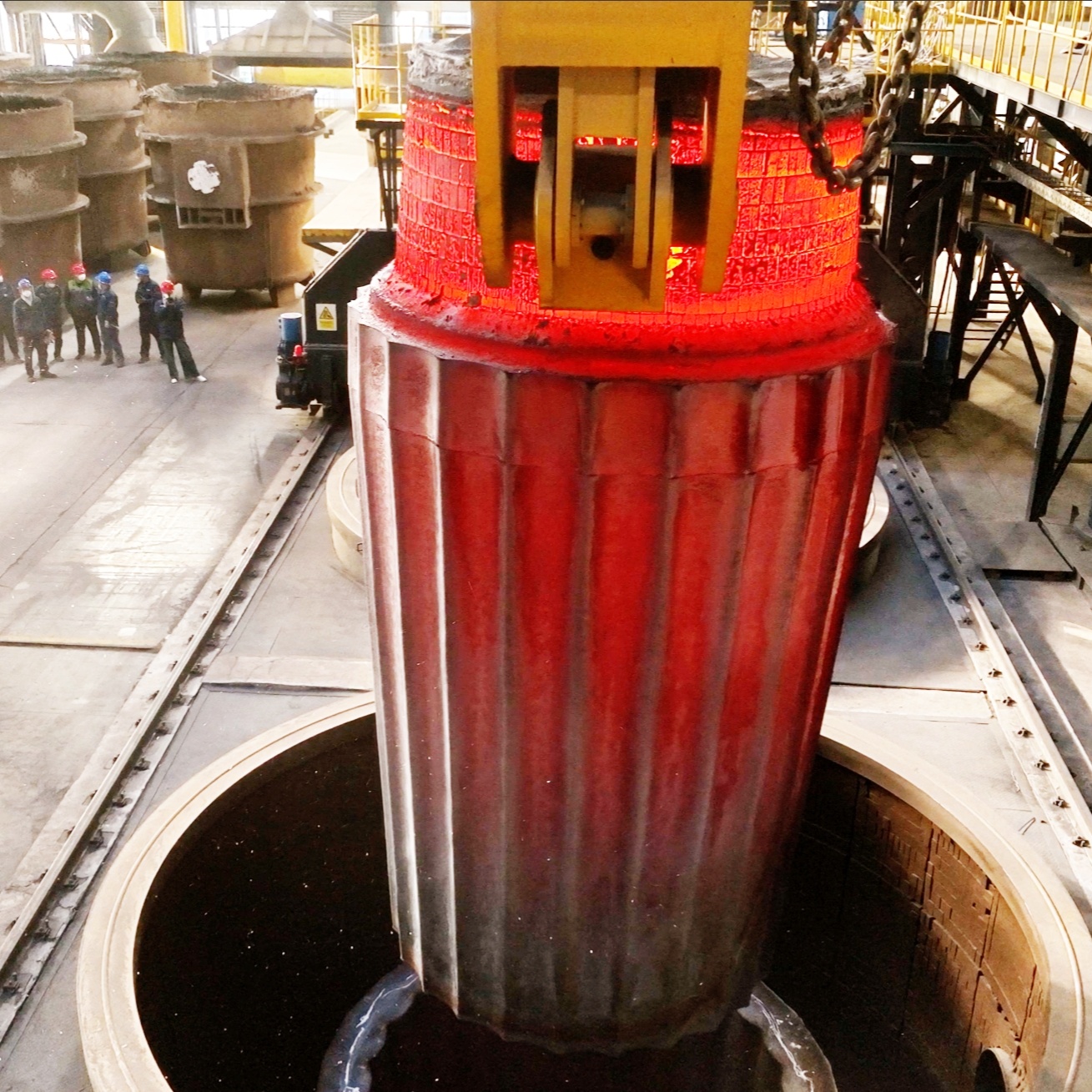
Raw material preparation at the 300-ton end of the envelope: the first constraint on any large rolled ring forgings programme is upstream of the rolling mill itself.
Track 2 — Verify the certification scope and validity window
Certification is where experienced buyers still get caught, because the certificate title is not the certificate scope. Take the four documents that matter most for a rolled ring forgings supplier selling into European and global markets.
PED 2014/68/EU. Iraeta holds PED certification number 01 202 CHN/Q-06 0144.01, issued by TUV, with a scope stating "Manufacturing of forged flanges and Hot rolled rings", and a validity date of 31 March 2027. The scope sentence is the operative part: it tells an EU pressure-equipment buyer exactly which product families are covered, and it is the sentence a procurement file should quote.
EN 1090. Structural steelwork falls under a different instrument. Iraeta holds EN 1090-1:2009+A1:2011 and EN 1090-2 certification number 0035-CPR-1090-1.03389.TÜVRh.2025.003, issued by TUV, with a scope covering structural components and kits for steel structures to EXC3 for load-bearing structures in all types of buildings, valid to 25 April 2027. If a ring feeds a load-bearing structure, the execution class belongs in the purchase file.
ISO 9001:2015. Certificate F02326Q00125R602, issued by BV, valid to 21 April 2029, with a scope covering the manufacturing of raw materials for forgings (steel ingot and continuous casting round billet), the manufacturing of forgings, and the manufacturing of steel balls, cylpebs and grinding rods. A quality certificate that reaches back to ingot and billet is materially stronger than one that begins at the finished component.
ISO 14001:2015 and ISO 45001:2018. Certificates F01926E00118R502 and F01926S00070R502, both issued by NQA Certification Co., Ltd. (Shanghai), valid to 1 March 2029, with scopes covering the production of forging raw materials, forgings, steel balls, cylpebs and grinding rods.
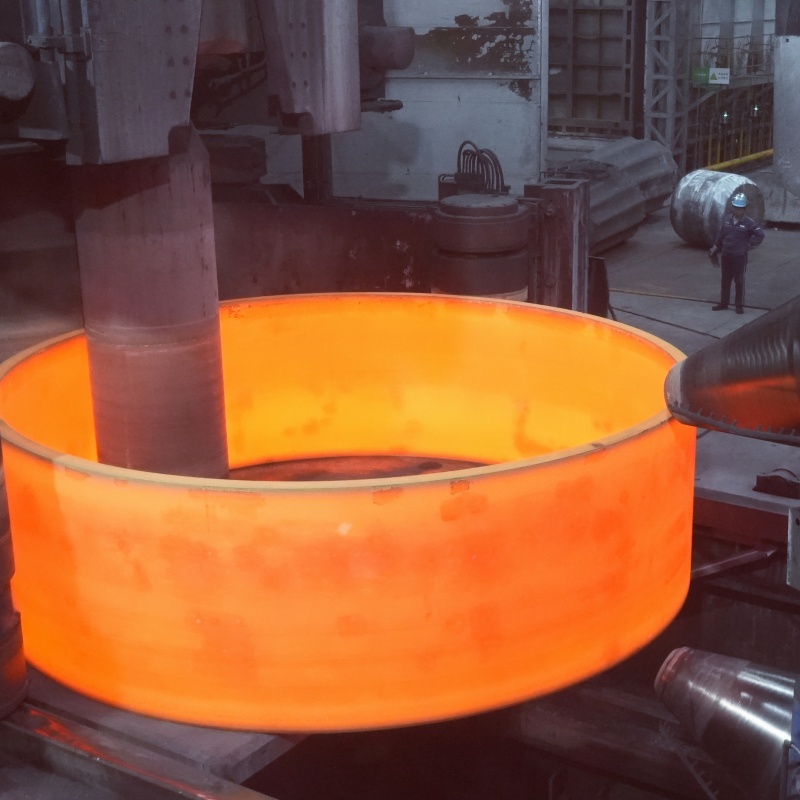
Alloy steel forgings: material grade changes the feasible envelope, the heat-treatment route and the inspection plan, which is why the capacity matrix must be read per grade.
Track 3 — Verify delivery assurance with operating evidence
Delivery assurance is not a promise; it is a set of operating facts that make a promise plausible. Four are worth asking for explicitly.
- Plant footprint. Iraeta operates production facilities in China and Spain, serving clean energy, oil and gas, marine engineering, tunnel boring, cement production and metal mining. Two regions do not automatically mean equivalent capability, but they do create a sourcing alternative that a single-site supplier cannot offer.
- Engineering depth. Iraeta reports an R&D team of 100 engineers. For buyers, the number matters less than the function: an engineering interface that can review a drawing, propose a route and flag a dimensional risk before the billet is cut.
- Customization and order structure. Iraeta states an MOQ of 1 unit, customization across material, size, forging shape, heat treatment and machining, a production mode described as OBM, and a stated quality-control approach of 100% test. After-sales is listed as remote support.
- Capacity statement, correctly framed. Iraeta reports a monthly production capacity of 70,000 tons and exports to the EU, the Americas, Asia and the Middle East. That figure appears in a 2022 company blog and covers the broader forging business, not rolled rings alone — it is a useful scale indicator and a poor basis for a ring-specific delivery commitment without current confirmation.
Two decades of service to global markets, as described in the company profile, is the backdrop against which these facts should be read. Longevity is not proof of delivery performance, but combined with plant footprint, engineering headcount and application references, it makes the delivery conversation concrete rather than aspirational.
Step-by-step: a seven-step pre-award checklist
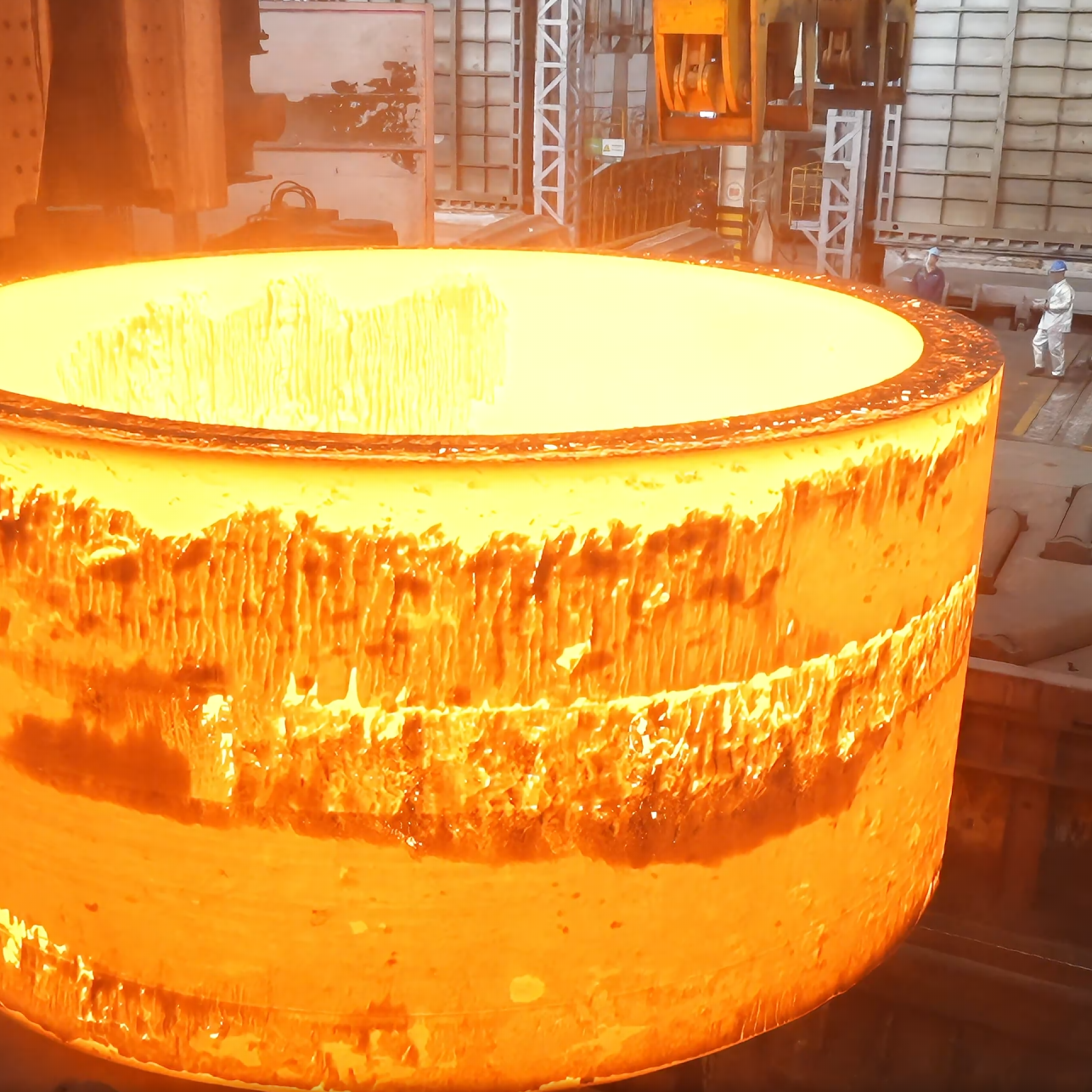
Rolled shells and rings share plant constraints but not the same dimensional envelope — a supplier strong in shells is not automatically strong in large seamless rings.
Where the framework matters: application conditions
The vetting criteria stay the same across sectors, but the operating conditions change which evidence carries the most weight.
Offshore wind
Wind power ring and flange components operate under high cyclic load, salt spray and marine corrosion, with low-temperature toughness requirements and continuous 24/7 operation. For this segment, the delivery question and the material question converge: a supplier that cannot document low-temperature toughness and corrosion strategy will not survive the qualification audit regardless of envelope.
Hydropower
Hydropower components face high water-head pressure, sediment abrasion, water erosion corrosion and frequent start-stop cycling. Iraeta describes using radial-axial full rolling for hydropower forgings and reports delivery of yoke discs, ring plates, mirror plates, top-cover flanges and centre bodies — a product list that gives buyers a specific reference set to test against their own component type.
Rotary kiln
Kiln tyres and support rings run 24/7 under extreme temperature, heavy cyclic load, dust and thermal expansion. Iraeta reports a reference with a cement and energy equipment manufacturer in Germany covering one ultra-large diameter integral forging for rotary kiln service, and a second reference with a cement plant in Turkey for a core structural component, both described as stable in operation under high-temperature and heavy-load conditions.
Petrochemical pressure vessels
Pressure service adds high pressure, high temperature and corrosion resistance to the requirement set — and it is where the PED scope check earns its place. Iraeta reports references with an oil and gas OEM in Saudi Arabia for two key components for refining and petrochemical equipment, and with a large refinery for three pieces (two shell sections and one transition section) for a heavy-duty hydrogenation reactor, applied in a 7.5 Mt/y European refinery project.
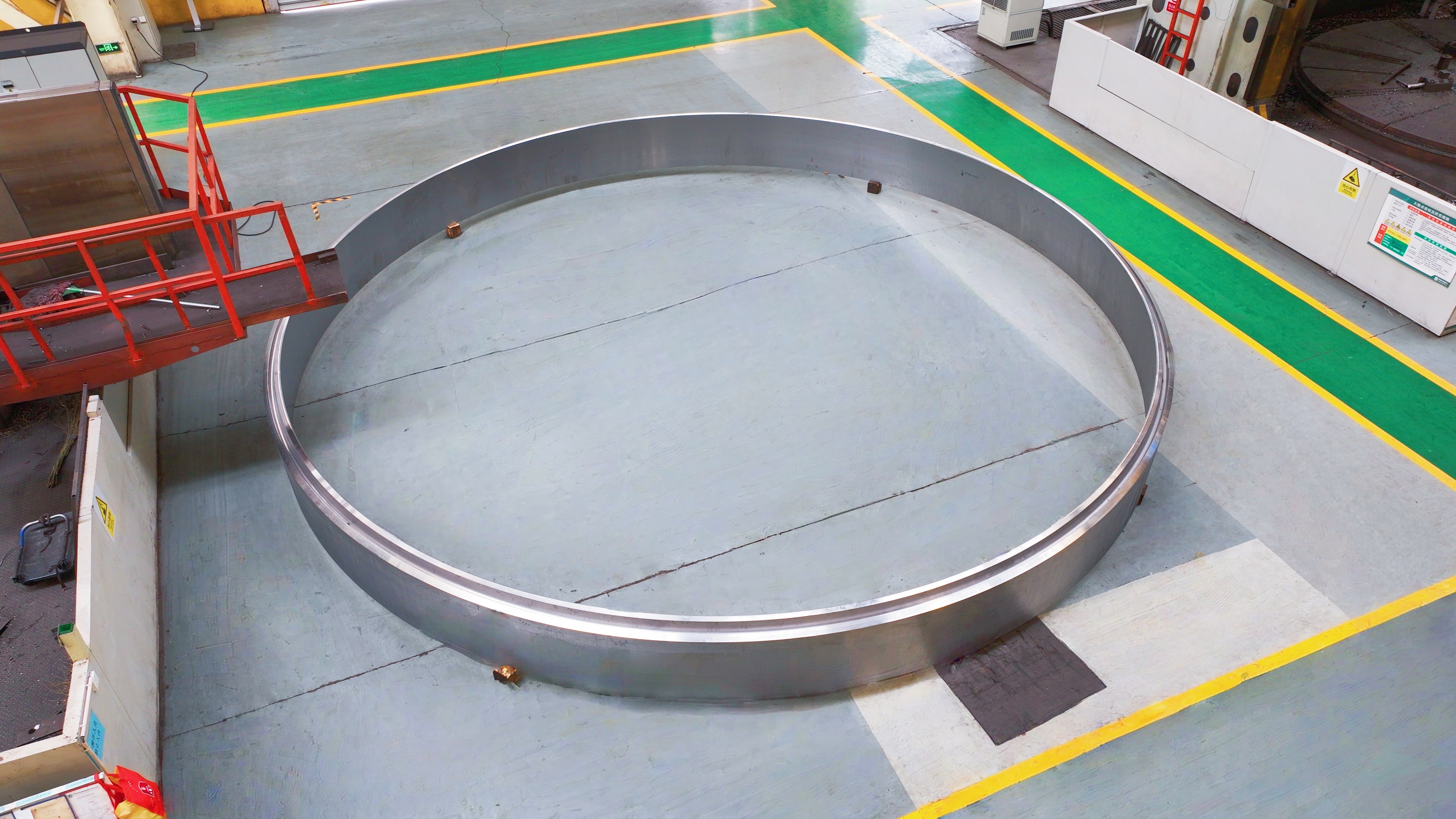
A transition section for refining equipment: pressure-service references are only useful to a buyer when the certificate scope, material route and inspection record line up behind them.
Vetting matrix: what to request and what it proves
The table below converts the three tracks into a request list. Each row names the evidence, the question it answers, and the point at which shortlists usually break.
| Vetting dimension | Evidence to request | What it proves | Where the gap usually appears |
|---|---|---|---|
| Dimensional envelope | Maximum height, diameter and weight plus recent production records per material grade | Whether the part fits the plant as configured | Headline maximum quoted without a per-grade matrix |
| Extreme-case history | Largest single rings produced, with year and diameter | Physical capability at the edge of the envelope | Record part treated as routine capability |
| Pressure-equipment compliance | PED 2014/68/EU certificate, scope wording and expiry | EU market access for covered product families | Certificate title accepted without reading scope |
| Structural steelwork | EN 1090-1/EN 1090-2 certificate with execution class | Suitability for load-bearing structures | Execution class not stated in the file |
| Quality system reach | ISO 9001:2015 certificate covering raw material and forgings | Control from ingot and billet through finished ring | Scope starts at the finished component |
| Plant-level systems | ISO 14001:2015 and ISO 45001:2018 certificates with validity dates | Environmental and occupational safety management | Expired or superseded certificates in the file |
| Capacity and footprint | Facility locations, stated capacity, order structure | Ability to hold a schedule across regions | Company-wide capacity read as ring-specific capacity |
| Engineering depth | R&D headcount and customization scope | Whether deviations can be engineered rather than refused | No named engineering interface before award |
| Delivery terms | MOQ, lead-time basis, inspection regime | Whether commitments can be written into the contract | Lead time stated without a scheduling basis |
FAQ
Which certifications should a rolled ring forgings supplier hold for EU work?
For EU pressure equipment the entry point is PED 2014/68/EU. Iraeta holds PED certification number 01 202 CHN/Q-06 0144.01, issued by TUV, with a scope covering manufacturing of forged flanges and hot rolled rings, valid to 31 March 2027. For structural steelwork the relevant standard is EN 1090-1:2009+A1:2011 and EN 1090-2, held under certificate 0035-CPR-1090-1.03389.TÜVRh.2025.003 issued by TUV for execution class EXC3, valid to 25 April 2027. Global quality and plant systems are covered by ISO 9001:2015 (F02326Q00125R602, BV), ISO 14001:2015 (F01926E00118R502, NQA) and ISO 45001:2018 (F01926S00070R502, NQA). Read the scope and the expiry date, not the certificate title.
What size range can a rolled ring forgings manufacturer actually deliver?
Published maximums define the outer envelope only. Iraeta lists maximum height 5 m, maximum diameter 21 m and maximum weight 300 t for its forgings and seamless rolled rings, a portfolio weight range of 0.3 kg to 300 tons, 300-ton open-die forgings, seamless rings above 21 metres, rolled shells up to 5 metres tall and forged bars up to 25 metres long. The company also reports a 21.029-metre seamless rolled steel ring manufactured in 2026, following a 15.673-metre ring in 2022. Buyers should still request recent production records for the same material grade and wall thickness, because a record part is not the same thing as routine capability.
What drives the cost of a large rolled ring forging?
Cost is driven by material grade (carbon steel, stainless steel or alloy steel), finished weight and machining allowance, heat treatment, testing regime and dimensional tolerance — not by a published price list. No verified public price data exists for this category, so a quotation has to be built from the drawing. Iraeta publishes an MOQ of 1 unit, customization across material, size, forging shape, heat treatment and machining, and a lead time described as negotiable based on customization; those are the commercial parameters to place in an RFQ.
Can a buyer validate a supplier with a sample before full production?
A single trial ring is the cleanest way to test a supplier's process control, and Iraeta's published MOQ of 1 unit does not exclude it. Buyers should confirm three points in writing before ordering: that the trial ring will be produced on the same line and route as serial parts, that it will be inspected under the same 100% test regime stated for production, and that the trial result will be attached to the purchase terms as an acceptance reference.
How should lead time be handled in the purchase contract?
Iraeta publishes lead time as negotiable based on customization, which means no fixed schedule should be assumed before the production route is agreed. Delivery assurance should instead be built from operating evidence: production facilities in China and Spain, an R&D team of 100 engineers able to review the route before release, a reported monthly capacity of 70,000 tons for the broader forging business (a 2022 company figure, not ring-specific), and references in offshore wind, hydropower, rotary kiln and petrochemical pressure vessel work. Buyers ready to move from evaluation to a project quotation can contact Iraeta at ebiz@iraeta.com or +86 188-5315-7508 and request a route review against their drawing.
Conclusion
Vetting a rolled ring forgings supplier is an exercise in separating three kinds of claims. The capacity claim is answered by a dimensional matrix, not a headline maximum. The compliance claim is answered by scope wording and expiry dates, not certificate titles. The delivery claim is answered by plant footprint, engineering depth and application references, not by reassurance.
Applied before award, those three checks convert a shortlist into a decision file that will still hold up when the ring is in heat treatment and the project schedule is under pressure. Applied after award, they become the questions nobody wants to ask.
Next step: request a route review
Iraeta Energy Equipment Co., Ltd. has produced forged components since 2006 from production facilities in China and Spain, serving clean energy, oil and gas, marine engineering, tunnel boring, cement production and metal mining.
Send your drawing and operating conditions to ebiz@iraeta.com, call +86 188-5315-7508, or message WhatsApp +86 18853157508 for a quotation or sample discussion.
Website: www.iraeta.com
Address: 4177 Jiwang Road, Zhangqiu, Jinan, China
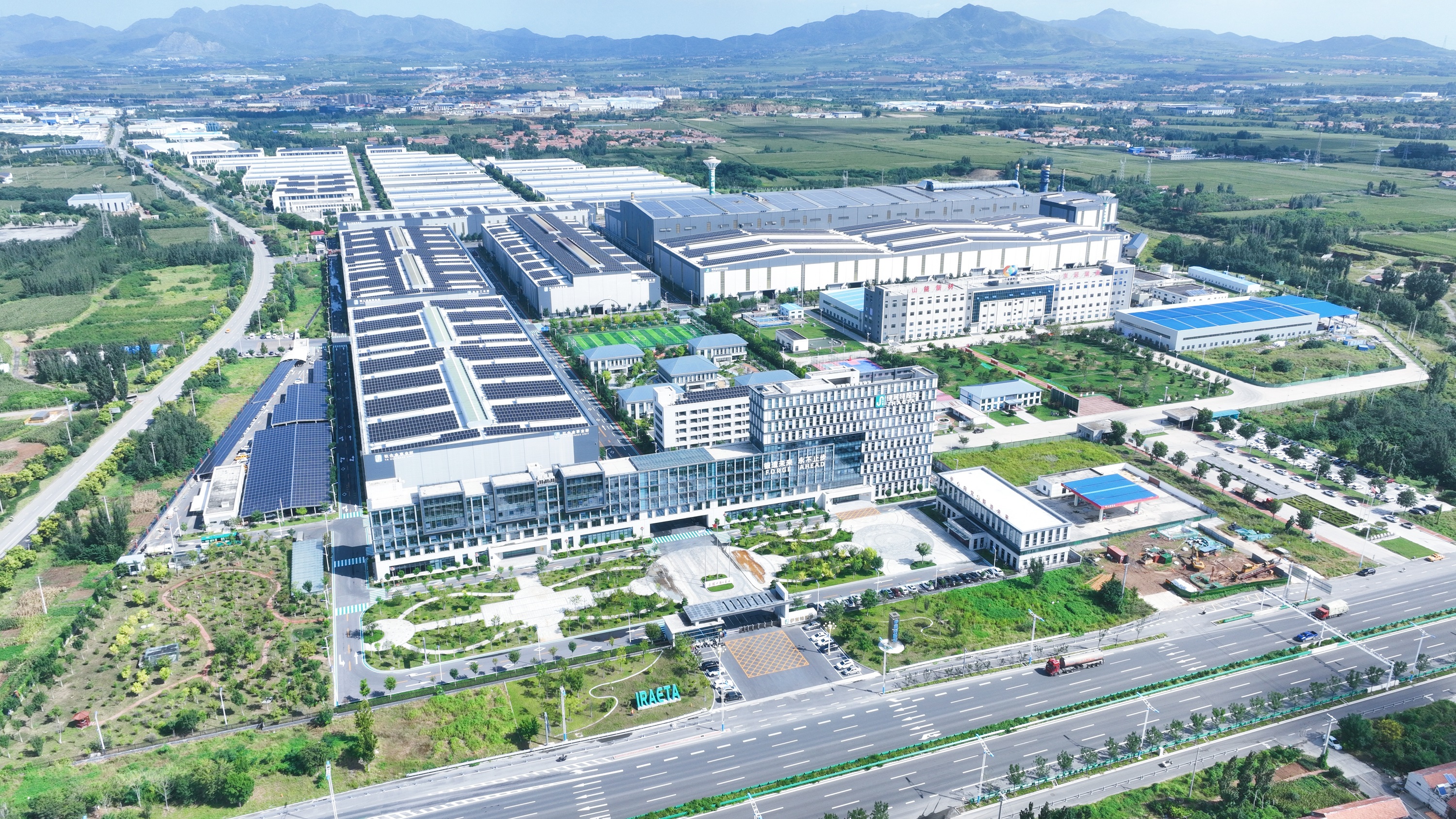
Iraeta nuclear power and deep-sea industrial park: plant footprint is part of the delivery evidence, not the sales narrative.
Have Questions or Need More Details?
Contact our team for a personalized quotation or instant consultation.
Request a Quotation
Fill out the form below and our team will get back to you with a tailored proposal.
WhatsApp Direct Chat
Prefer to chat in real-time? Message us on WhatsApp for instant assistance & quick answers.
- Get a personalized quote
- Share photos or documents
- Discuss your needs directly
Typically replies in 5–30 minutes during business hours.