What Are Seamless Rolled Ring Forgings? A Beginner's Guide to Their Role in Heavy Industry
Seamless Ring Forgings · Beginner's Guide
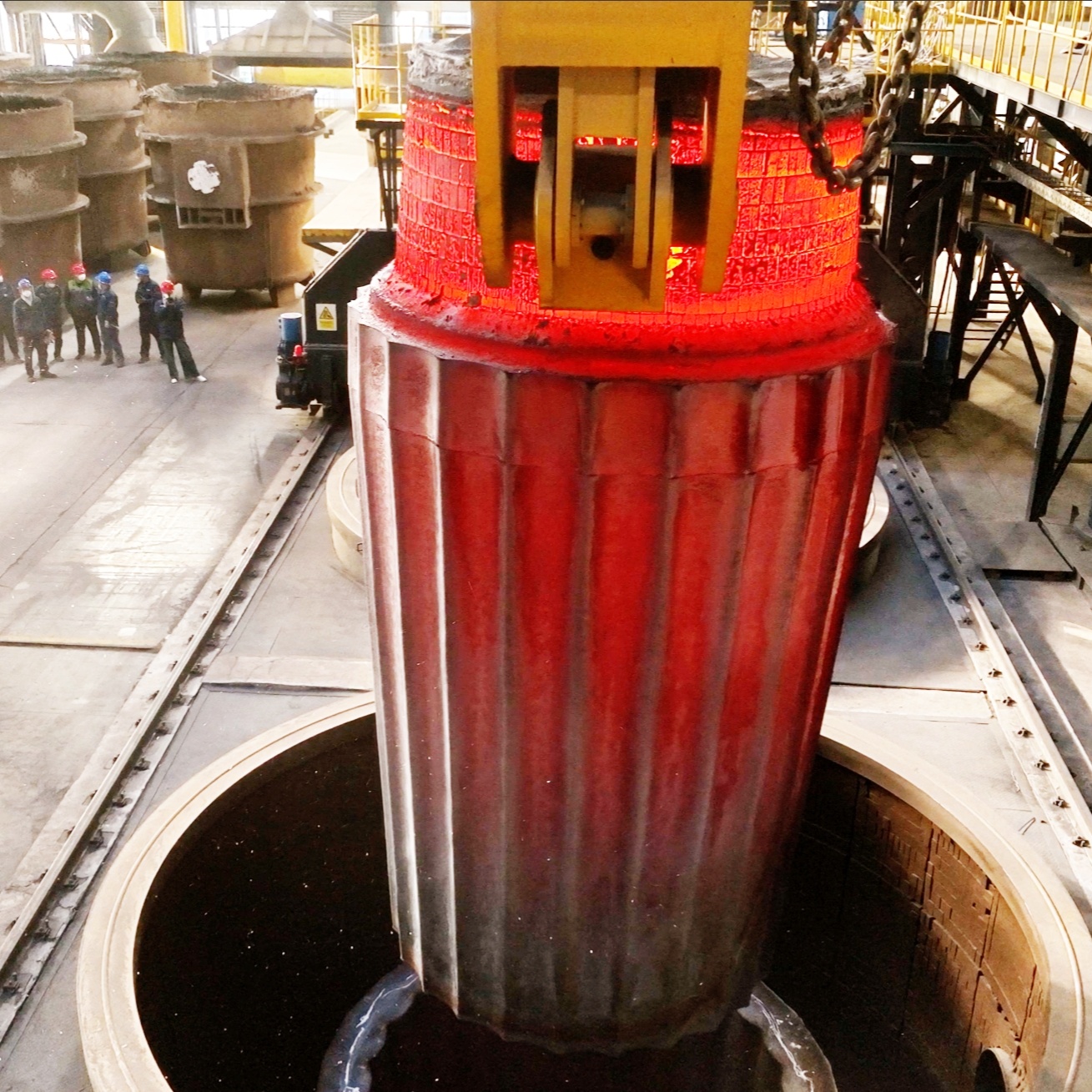
A seamless rolled ring forging is a single-piece metal ring formed by heating a pierced billet and rolling it in the radial and axial directions until it reaches its final diameter and wall thickness. No weld runs around the circumference, so the ring carries load as one continuous body. That is why these rings sit at the joints of wind turbines, hydroelectric units, cement kilns and pressure vessels, where a break in continuity is the last thing an engineer wants.
This guide is written for people who are new to the category: procurement staff moving into a heavy-industry category, engineers specifying a ring for the first time, or distributors adding forged components to a portfolio. It explains how the process works, which properties actually matter, what forms come out of it, and which checks buyers use to judge a supplier. Every figure below comes from a documented source — either Iraeta's published capability data or third-party market research — and company-reported values are identified as such.
What Are Seamless Rolled Ring Forgings?
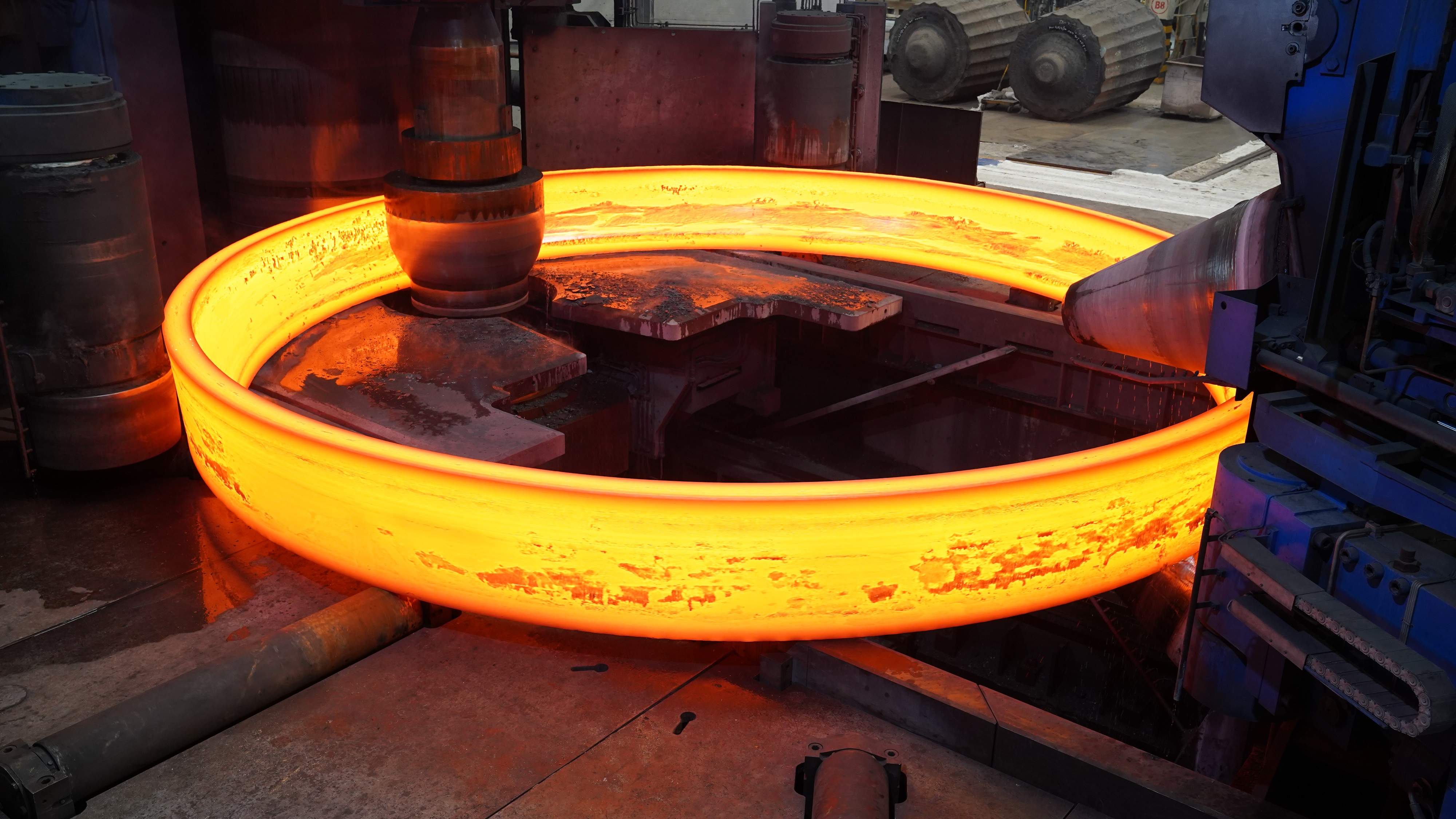
A seamless rolled ring forging is a ring produced by deforming metal rather than by joining it. A billet is pierced to create a hole through the centre, heated to forging temperature, and then rolled between driven rolls that press on the inside and the outside of the wall at the same time. The wall thins, the diameter grows, and the ring is brought close to its final geometry — a near-net shape that later needs only a controlled machining allowance removed.
The distinction that matters most to buyers is structural. A welded ring is a strip closed into a circle, and the closure is a joint with its own metallurgy, its own inspection requirement and its own position in the stress path. A seamless ring has no such closure; the material runs continuously all the way around.
Seamless, Rolled, Forged: What Each Word Guarantees
- Seamless — there is no circumferential weld, so the ring behaves as one body under hoop stress and no weld seam has to be inspected in service.
- Rolled — the ring is formed by simultaneous radial and axial rolling, which enlarges the diameter, reduces wall thickness and keeps the profile close to final shape.
- Forged — the steel is shaped under pressure at temperature, so the material is consolidated by deformation rather than solidified from a melt in a mould.
A Working Definition for Procurement Use
On a purchase order the definition becomes a specification: a seamless rolled ring is a heat-treated, machined and inspected ring forged from a named steel grade, with inner diameter, outer diameter, height, profile and tolerance band all fixed by the drawing. Iraeta Energy Equipment Co., Ltd. is a forging manufacturer founded in 2006 with production facilities in China and Spain, producing rings, shells, bars, shafts and wear-resistant grinding media for clean energy, oil and gas, marine engineering, tunnel boring, cement and metal mining customers.
Within that portfolio, the seamless rolled ring range is documented with a maximum height of 5 m, a maximum diameter of 21 m and a maximum weight of 300 tons, in carbon steel, stainless steel and alloy steel. Those three numbers define the practical starting point for any feasibility conversation.
The Problem Seamless Rings Solve in Heavy Equipment
Almost every heavy-industry machine has a place where a rotating or pressurised body must be joined to something else. A rotary kiln shell rides on tyres. A hydroelectric runner connects to a shaft through a ring plate. A wind turbine tower carries a flange that bolts to the next section. A hydrogenation reactor joins shell sections through a transition ring. In each case the ring is the interface component — the part that transfers load from one large structure into another.
That interface has to do two jobs at once: carry high load and stay dimensionally stable over a long service life. A welded ring introduces a circumferential joint into precisely the zone where the stress path is most concentrated, and that joint becomes an additional inspection point throughout the asset's life. A ring rolled as one piece removes the joint from the design, so the load path stays continuous and the inspection burden shifts to material and dimensional verification rather than to weld quality.
There is a second, quieter problem the process solves: machining allowance. A ring rolled to near-net shape arrives close to final dimensions, so less material is cut away, less machining time is consumed, and the fibre continuity achieved during rolling survives into the finished part. For a 300-ton component, the difference between a near-net ring and a rough oversized block is measured in weeks of machining.
Industry Background: Why the Ring Matters More Than It Looks
Ring forgings sit inside several of the largest industrial equipment categories in the world. An industry research report published in 2026 estimates the global seamless rolled ring forgings market at USD 11.9 billion in 2025, rising to USD 15.84 billion by 2032. A separate market study projects the wind turbine forging market — a segment that includes rings, flanges and gears — to reach USD 20.8 billion by 2035, growing at a compound annual rate of 7.3% from 2025.
Two forces drive that demand. The first is equipment scale: as turbines, kilns and reactors grow, the ring at each interface grows with them, and the number of suppliers able to roll a ring of that size shrinks. The second is service life: heavy assets are expected to run for decades, so the cost of a ring failure is measured in downtime and replacement logistics rather than in the price of the part itself.
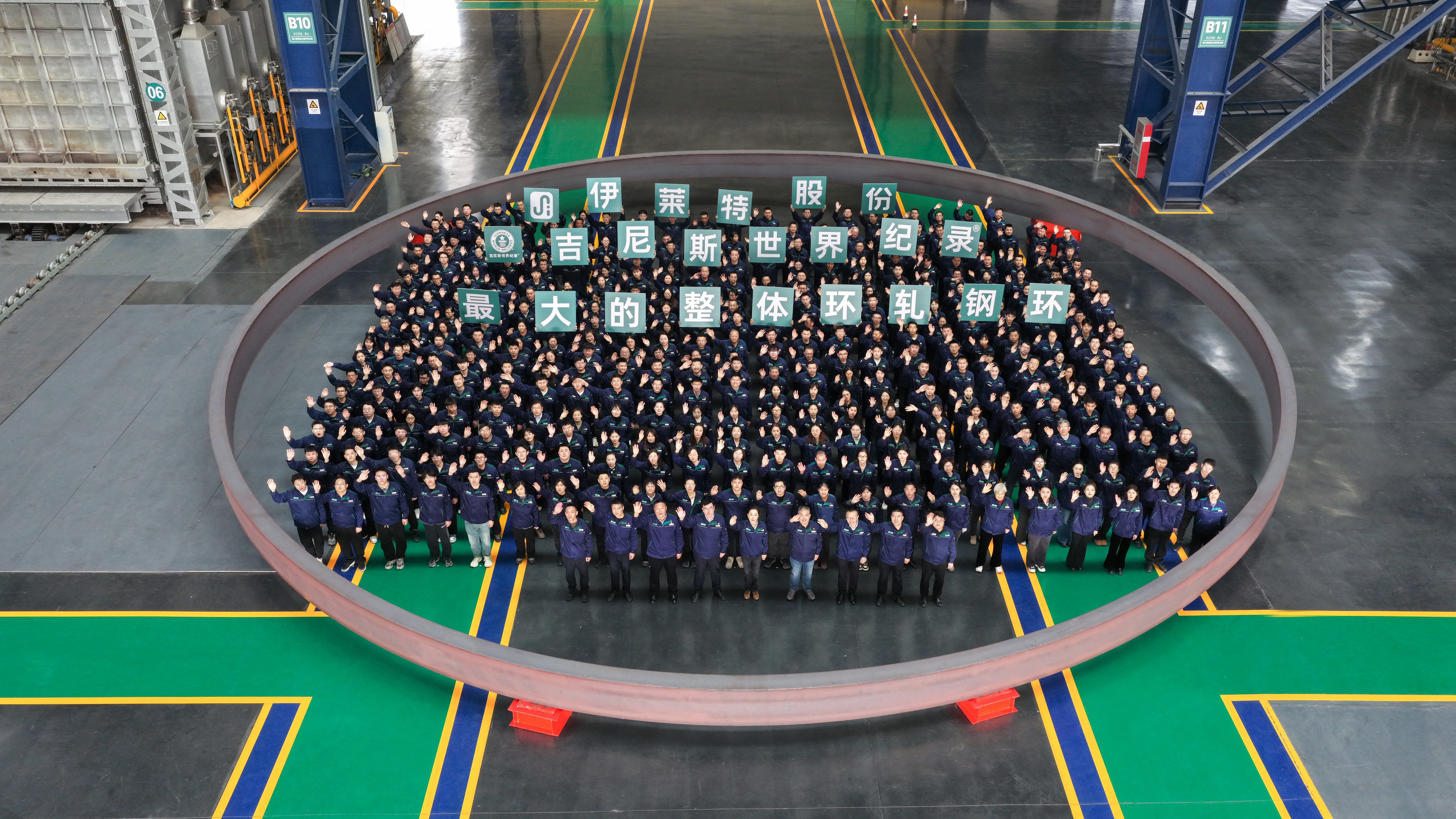
The scale end of the market has moved quickly. Iraeta reports a seamless rolled steel ring measuring 21.029 m in diameter manufactured in 2026, breaking its own 2022 record of 15.673 m. The company describes its components as deployed in fourth-generation nuclear power plants, cement rotary kilns with 10,000 tons per day output, 16 m shield tunnelling machines and floating offshore wind turbines above 20 MW. Whether or not a given project needs a ring of that size, the existence of such capacity signals what the upstream supply base can now attempt.
The Ring Rolling Process, Step by Step
Understanding the sequence is useful even for buyers who will never stand on a shop floor, because each step creates a question that belongs in the RFQ.
- Raw material preparation. Iraeta's ISO 9001:2015 scope covers the manufacturing of raw materials for forgings — steel ingot and continuous casting round billet — so the starting stock is produced under the same quality system as the finished ring.
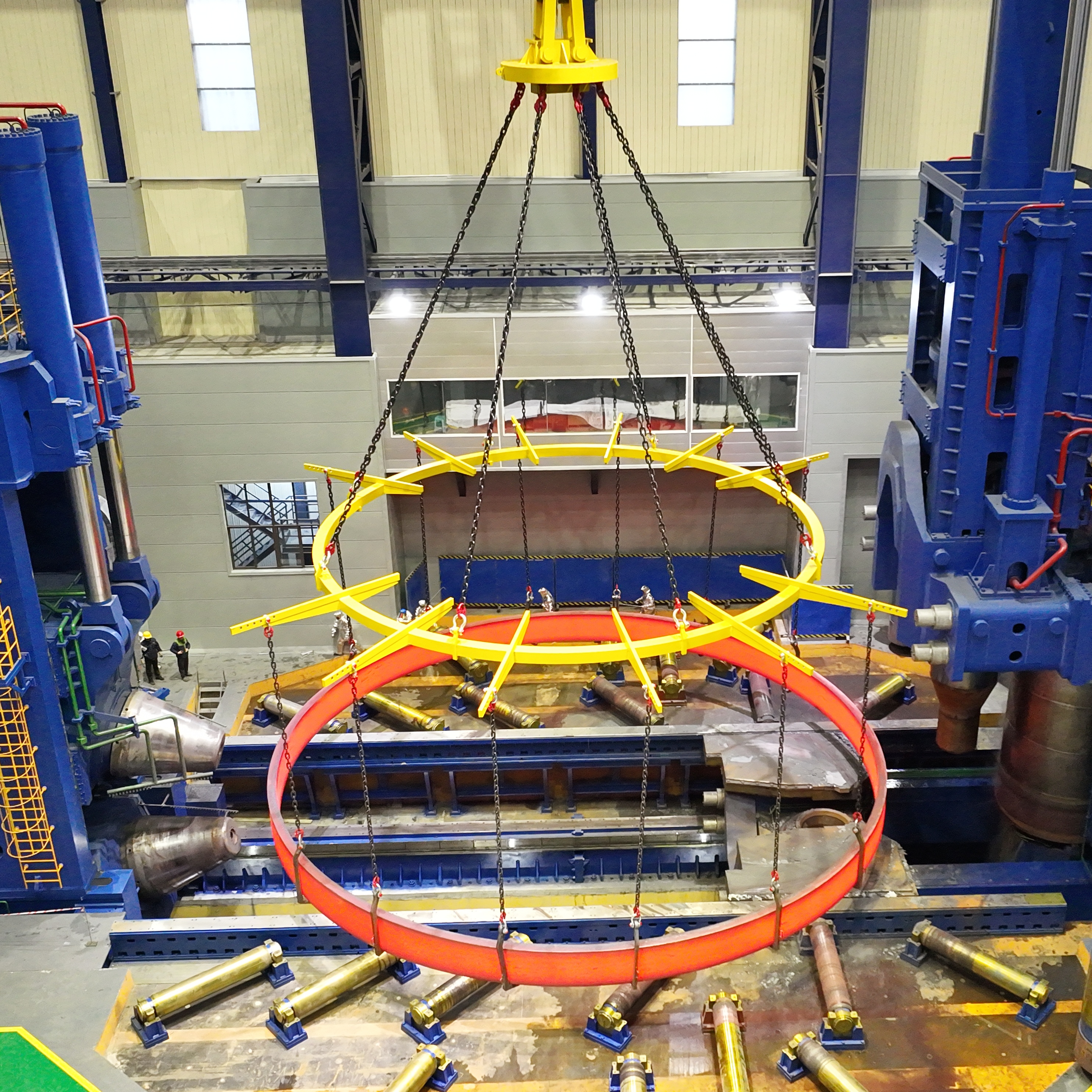
- Heating. The billet is brought to forging temperature so the steel can be deformed without cracking.
- Upsetting and piercing. The heated billet is compressed and pierced to create a ring-shaped blank with a hole through the centre. This is the preform that everything downstream depends on.
- Radial-axial rolling. The pierced blank is rolled simultaneously in the radial and axial directions. The diameter increases, the wall thickness decreases, and the ring approaches its final profile.
- Forge-rolling for thick walls. Where a ring is thick-walled or geometrically complex, open-die forging can be combined with radial-axial rolling — a route Iraeta describes as combining the densification of forging with the precision and dimensional control of rolling.
- Heat treatment. Applied to the ordered specification. Heat treatment is one of the listed customisation options, alongside material, size, forging shape and machining.
- Precision machining. The near-net ring is machined to the drawing; this is where final tolerance and surface finish are established.
- Testing. Iraeta lists 100% test as its quality control approach, and pre-shipment test or inspection as the acceptance criterion.
- Documentation and logistics. Listed export markets include the EU, the Americas, Asia and the Middle East, with delivery terms such as CIF available.
Which Mechanical Properties Actually Matter
Newcomers often look for one defining property. In practice four matter, and they pull against each other during specification.
- Fatigue strength. Rings in wind, hydro and rotating kiln service see load cycles rather than a single steady force. Fatigue behaviour is what determines whether a component survives years of that cycling.
- Load-bearing capacity. Kiln tyres and support rings carry the weight of an entire rotating assembly, so the section must transmit load without unacceptable deflection.
- Thermal stability. Cement kiln components operate under high temperature and heavy load simultaneously; dimensional drift under heat changes the clearances the whole machine was designed around.
- Dimensional accuracy. Near-net-shape forming reduces machining allowance, which shortens lead time and preserves material continuity in the finished part.
In documented Iraeta projects, ring components are described with precision forging and machining, high temperature resistance, excellent fatigue strength, high load-bearing capacity, excellent thermal stability and extended service life. Those descriptions come from application cases rather than from a general material datasheet, so they should be read as project-level evidence of what the process is expected to deliver, not as a guaranteed value for every grade and geometry.
What Comes Out of the Process: Product Forms and Their Jobs
Seamless rings rarely ship as an anonymous circle of steel. They ship as a named component with a defined interface. The forms below come from the same rolling route but do different work.
Wind power flanges and bearing rings
A wind power flange is the bolted connection between tower sections, or between the tower and the nacelle structure; a bearing ring is the raceway support that lets the assembly rotate. Both are ring-shaped load paths, and both are sized by the turbine platform rather than by the steel mill — which is why flange and bearing ring demand rises as turbine ratings rise.
Kiln tyres and drive rings
A kiln tyre is the ring that rides on the support rollers of a rotary kiln and carries the entire rotating shell; a drive ring transmits torque from the drive train into that shell. Both are ultra-large-diameter integral forgings, and both are judged on load-bearing capacity and thermal stability rather than on cosmetic finish.
Hydroelectric forgings
Iraeta reports radial-axial full rolling for hydropower forgings and lists yoke discs, ring plates, mirror plates, top-cover flanges and center bodies among the components it produces. In a hydro unit these parts connect the runner to the shaft and close the machine's pressure boundary, so dimensional accuracy and material integrity matter as much as raw strength.
Shells and transition sections for pressure equipment
Shell sections and transition sections are the rolled and forged bodies that make up reactor and vessel geometry. They are used where a cylindrical shell changes diameter or thickness, which makes near-net-shape forming particularly valuable: the closer the forged profile sits to the finished contour, the less weld build-up and machining the fabricator has to absorb.
Profiling rings and pipe flanges
Profiling rings carry a shaped cross-section rather than a plain rectangle, so the rolled profile already contains the geometry the finished part needs. Pipe flanges follow the same logic at smaller diameters, connecting pipe runs to equipment nozzles.
Size, Material and Capacity: What a Buyer Can Specify
Capability in this category is expressed as an envelope, not a single number. The documented envelope for Iraeta's seamless rolled rings is summarised below.
| Parameter | Documented value |
|---|---|
| Maximum ring diameter | 21 m on the current parameter sheet; 21.029 m reported for a 2026 ring |
| Maximum ring height | 5 m |
| Maximum ring weight | 300 tons |
| Product weight range (wider portfolio) | 0.3 kg to 300 tons |
| Materials | Carbon steel, stainless steel, alloy steel |
| Customisation | Material, size, forging shape, heat treatment, machining |
| Minimum order quantity | 1 unit |
| Quality control | 100% test |
| Monthly capacity (forging business) | 70,000 t |
| Lead time | Negotiable based on customisation |
| Export markets | EU, Americas, Asia, Middle East |
| Production mode | OBM |
Note on reading these figures: the 0.3 kg to 300 tons range describes the wider forged-product portfolio rather than rings alone, and the monthly capacity figure is a company-reported number covering the broader forging business. Both should be confirmed against a specific RFQ rather than used as a product-specific commitment.
How to Evaluate a Seamless Rolled Ring Supplier
Supplier evaluation in this category is mostly about matching claims to evidence. Six checks cover the essentials.
1. Dimensional envelope against actual equipment
Ask for the maximum diameter, height and weight the supplier can roll, and ask which equipment produces it. A stated maximum that no machine can physically handle is a warning sign; a stated maximum with a named mill behind it is a starting point for feasibility review.
2. Material range and metallurgical control
Carbon steel, stainless steel and alloy steel behave differently under the same rolling schedule. Confirm which grades the supplier routinely processes, and confirm that raw material production sits inside a controlled quality system rather than being bought on the open market without traceability.
3. In-house heat treatment and machining
Heat treatment and machining are the two steps most often subcontracted, and both directly affect final properties and tolerance. A supplier that performs them in-house shortens the route, removes hand-off risk and can respond faster to a specification change.
4. Inspection regime and acceptance criteria
Ask what percentage of product is tested and what the acceptance criteria are. Iraeta states 100% test as its quality control approach, with pre-shipment test or inspection as the acceptance criterion and payment terms of 30/70.
5. Certification scope, not just certificate presence
A certificate is only useful if its scope covers the product being bought. Iraeta holds PED 2014/68/EU certification issued by TUV under certificate number 01 202 CHN/Q-06 0144.01, with a scope covering the manufacture of forged flanges and hot rolled rings, valid to 31 March 2027. It also holds ISO 9001:2015 (BV, F02326Q00125R602, valid to 21 April 2029), EN 1090 (TUV, 0035-CPR-1090-1.03389.TÜVRh.2025.003, valid to 25 April 2027), ISO 14001:2015 (NQA, F01926E00118R502) and ISO 45001:2018 (NQA, F01926S00070R502), the latter two valid to 1 March 2029.
6. Manufacturing footprint and commercial terms
Facilities in more than one region create a sourcing alternative if logistics or tariffs shift; Iraeta operates production facilities in China and Spain. On commercial terms, a minimum order quantity of 1 unit and negotiable lead time make a trial order realistic before a multi-year frame agreement is signed.
Use Cases: How Seamless Rings Perform in Real Projects
Cement and energy equipment, Germany
A German cement and energy equipment manufacturer took delivery of one core supporting ring, used as a rotary kiln tyre for large-scale industrial equipment. The documented highlights are ultra-large-diameter integral forging, precision machining, high load-bearing capacity, excellent thermal stability and extended service life. The component ran stably in European industrial projects and met the customer's quality standards for heavy-duty applications.
Cement plant, Türkiye
A Turkish cement plant installed one set of core structural components for a cement rotary kiln. The documented highlights are precision forging and machining, high temperature resistance, excellent fatigue strength and extended service life; the component operated stably under high-temperature and heavy-load conditions.
Oil and gas OEM, Saudi Arabia
An oil and gas OEM ordered two units of key components for refining and petrochemical equipment. The documented highlights are high forging precision, wear resistance, high temperature resistance and long service life. The project achieved stable operation and full compliance with the project's quality and safety requirements.
Large refinery, heavy-duty hydrogenation reactor
A large refinery customer ordered three pieces — two shell sections and one transition section — for a heavy-duty hydrogenation reactor. The case documents integral ring rolling and near-net-shape forming, superior mechanical performance and a shorter production lead time, with qualified performance in a 7.5 Mt/y European refinery project. The parts are designed for long service life and long-term operation.
Documented Applications at a Glance
| Project | Component | Documented highlights |
|---|---|---|
| Germany | Core supporting ring / rotary kiln tyre for large-scale industrial equipment (1 unit) | Ultra-large-diameter integral forging, precision machining, high load-bearing capacity, thermal stability |
| Türkiye | Core structural component for a cement rotary kiln (1 set) | Precision forging and machining, high temperature resistance, fatigue strength |
| Saudi Arabia | Key components for refining and petrochemical equipment (2 units) | High forging precision, wear resistance, high temperature resistance |
| Saudi Arabia / European refinery project | 2 shell sections and 1 transition section for a heavy-duty hydrogenation reactor | Integral ring rolling, near-net-shape forming, superior mechanical performance, shorter lead time |
Frequently Asked Questions
Which certifications should a seamless rolled ring supplier hold for heavy-industry projects?
Match the certificate to the product and the market, then check the scope statement. Iraeta holds PED 2014/68/EU certification from TUV under certificate 01 202 CHN/Q-06 0144.01, whose scope covers the manufacture of forged flanges and hot rolled rings and runs to 31 March 2027. It also holds ISO 9001:2015 from BV (F02326Q00125R602, valid to 21 April 2029), EN 1090 from TUV (0035-CPR-1090-1.03389.TÜVRh.2025.003, valid to 25 April 2027), ISO 14001:2015 (NQA, F01926E00118R502) and ISO 45001:2018 (NQA, F01926S00070R502), both valid to 1 March 2029.
How large a seamless rolled ring can actually be produced?
The documented parameter sheet lists a maximum height of 5 m, a maximum diameter of 21 m and a maximum weight of 300 tons in carbon steel, stainless steel and alloy steel. Beyond the standard envelope, Iraeta reports a 21.029 m diameter seamless rolled steel ring manufactured in 2026, which it describes as breaking its own 2022 record of 15.673 m. Buyers should treat the standard envelope as the quoting basis and the record dimensions as evidence of capability at the edge.
What is the minimum order quantity, and what can be customised?
The minimum order quantity is 1 unit, which makes a trial or prototype order practical. Customisation covers material, size, forging shape, heat treatment and machining, and production is offered in OBM mode. In practice this means the drawing, steel grade and heat-treatment condition are set per order rather than chosen from a fixed catalogue.
How is a ring inspected and accepted before shipment?
Iraeta states 100% test as its quality control approach. Acceptance criteria are based on pre-shipment test or inspection, delivery terms include CIF, and payment terms are 30/70. For project work, the inspection plan should be agreed at the quotation stage so that test scope, documentation and witness points are fixed before rolling begins.
How long does production and delivery take?
Lead time is quoted as negotiable based on customisation, because a 300-ton thick-walled ring and a small profiling ring do not share a schedule. The company-reported monthly capacity of 70,000 t covers the broader forging business rather than any single product line, so the realistic answer comes from an RFQ review rather than from a generic figure. Sending the drawing, steel grade, finished dimensions and operating conditions at the start is the fastest route to a firm date and quotation — the contact details below reach the team directly.
Conclusion
Seamless rolled ring forgings are a narrow category with an outsized role. The definition is simple — a pierced, heated billet rolled radially and axially into a one-piece ring with no circumferential joint — but the consequences are not. The absence of a weld keeps the load path continuous, near-net-shape forming keeps machining allowance low, and the rolling route determines how large a ring can be made at all.
For a first-time buyer, three checks carry most of the weight: confirm the dimensional envelope against real equipment, confirm that heat treatment, machining and inspection are controlled rather than outsourced, and confirm that certificate scopes match the product and market. Everything else — grade selection, profile design, tolerance band — follows from those three answers.
Next Step: Request a Sample or Quotation
If you are specifying a seamless rolled ring for a new project, the fastest way to confirm feasibility is to send the drawing, the steel grade, the finished dimensions and the operating conditions. Iraeta reviews the request against its documented range — up to 5 m in height, 21 m in diameter and 300 tons in weight — and responds with a quotation, a recommended process route and sample arrangements.
Email: ebiz@iraeta.com · Tel: +86 188-5315-7508 · WhatsApp: +86 18853157508 · Website: www.iraeta.com
Address: 4177 Jiwang Road, Zhangqiu, Jinan, China

Have Questions or Need More Details?
Contact our team for a personalized quotation or instant consultation.
Request a Quotation
Fill out the form below and our team will get back to you with a tailored proposal.
WhatsApp Direct Chat
Prefer to chat in real-time? Message us on WhatsApp for instant assistance & quick answers.
- Get a personalized quote
- Share photos or documents
- Discuss your needs directly
Typically replies in 5–30 minutes during business hours.