
Seamless Rolled Ring vs. Cast Ring for Hydropower Applications: A Head-to-Head Decision Guide
Hydropower Component Selection Guide
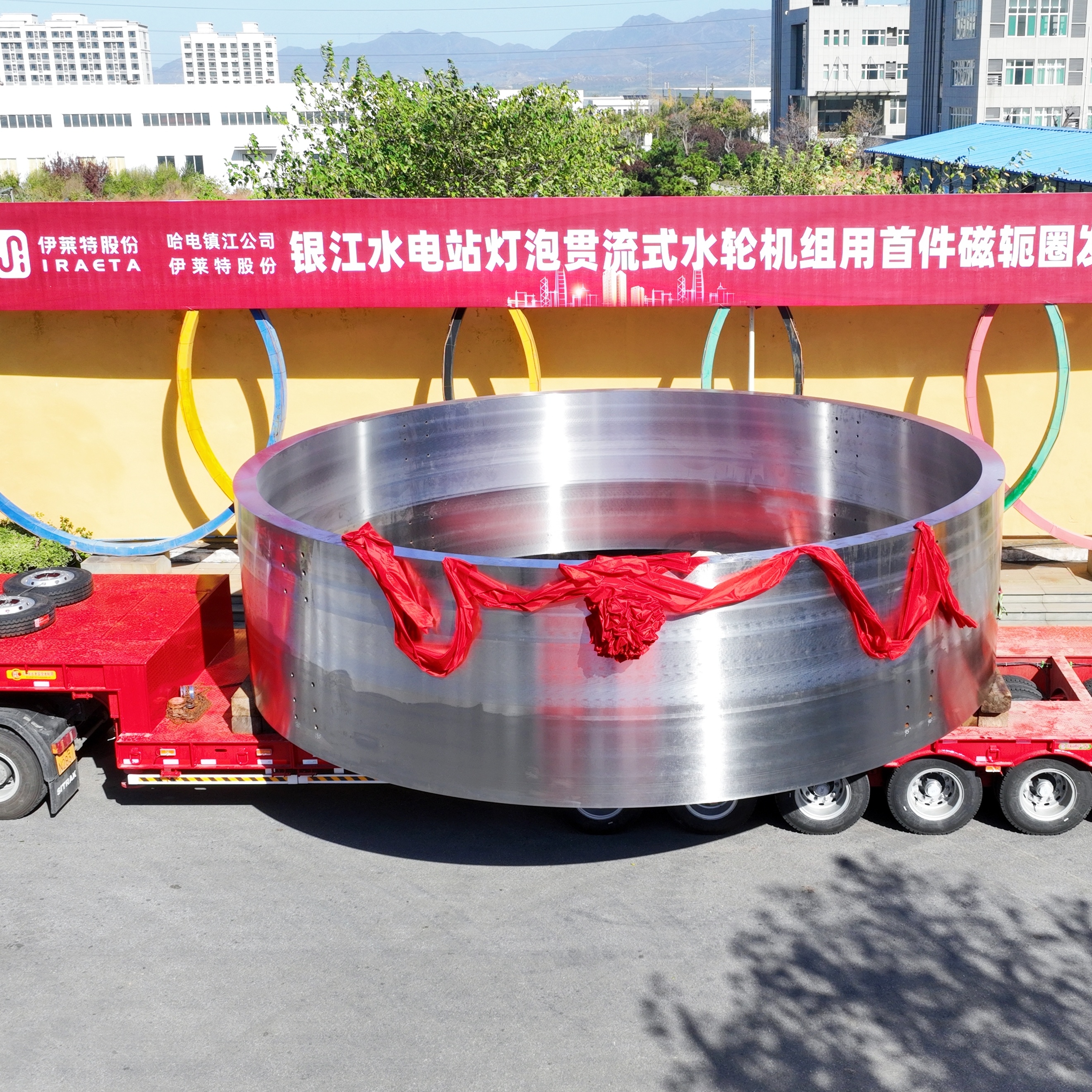
For hydro turbine and pumped-storage rings exposed to high water head pressure, sediment abrasion and frequent start-stop cycling, the decision between a seamless rolled ring forging and a cast ring should be made on load path, fatigue duty and inspectability—not on shape alone. Seamless rolled ring forgings are the more defensible route when the ring is a structural load-transfer component and the specification calls for high water pressure resistance, fatigue resistance and long service life. Cast rings can still be considered for suitable geometries, but they require a different qualification focus: internal soundness, section properties and repeatable NDT.
This guide is written for buyers, project engineers and procurement teams comparing rolled ring forgings with cast alternatives for hydropower. It uses the hydropower duty facts in the available corpus and avoids supplier performance claims that are not documented.
Problem Definition: What Makes a Hydropower Ring Different?
A hydropower ring is not a decorative flange. In a hydro turbine generating unit, the ring sits in a load path. It must transfer load and provide structural support while the unit operates under high water head pressure. Sediment abrasion, water erosion corrosion and cyclic loading are part of the duty. Frequent start-stop operation adds another fatigue dimension.
The corpus for this topic states the hydropower working conditions directly: high water head pressure, sediment abrasion, water erosion corrosion, cyclic load, and long-term underwater or humid operation. It also lists the special requirements: high water pressure resistance, sediment abrasion resistance, water erosion resistance, fatigue resistance, high sealing performance and long service life. The matched equipment is the hydraulic turbine and generator.
That combination changes the buying question. The buyer is not only asking, 'Can this ring be made to diameter?' The buyer is asking, 'Can this ring route deliver a sound load-transfer structure, survive start-stop fatigue, and remain inspectable over a long service life?'
Industry Background: Why the Forged-versus-Cast Decision Comes Up
Hydropower projects—especially hydro turbine units and pumped storage power stations—increasingly place rings in demanding structural roles. The application corpus identifies two related cases. Product 296 is used in the hydropower industry and hydro turbine generating unit projects, operating under high water head pressure, transferring loads, and designed for sediment abrasion environments with frequent start-stop mode. Product 297 is applied in pumped storage power station projects, providing structural support under high water pressure resistance and fatigue resistance, with hydraulic turbines and generators as supporting equipment.
In parallel, ring manufacturing has moved toward larger and heavier formats. The product corpus describes heavy forgings and large forgings that include ring forgings, rolled ring forgings, hollow forgings, shell forgings and related types. Iraeta's published capability statements cover custom ring forgings up to 300 tons in weight, over 21 meters in diameter and up to 5 meters in height. The company also reports a 21.029-meter-diameter seamless rolled steel ring in 2026 and a 15.673-meter ring in 2022.
Those size figures matter to the cast-versus-forged decision because larger rings magnify the consequences of any internal discontinuity or dimensional rework. A foundry and a forging supplier may both quote a large ring, but the process route, inspection burden and qualification path are not the same.
Detailed Solution: Where Seamless Rolled Ring Forgings Fit
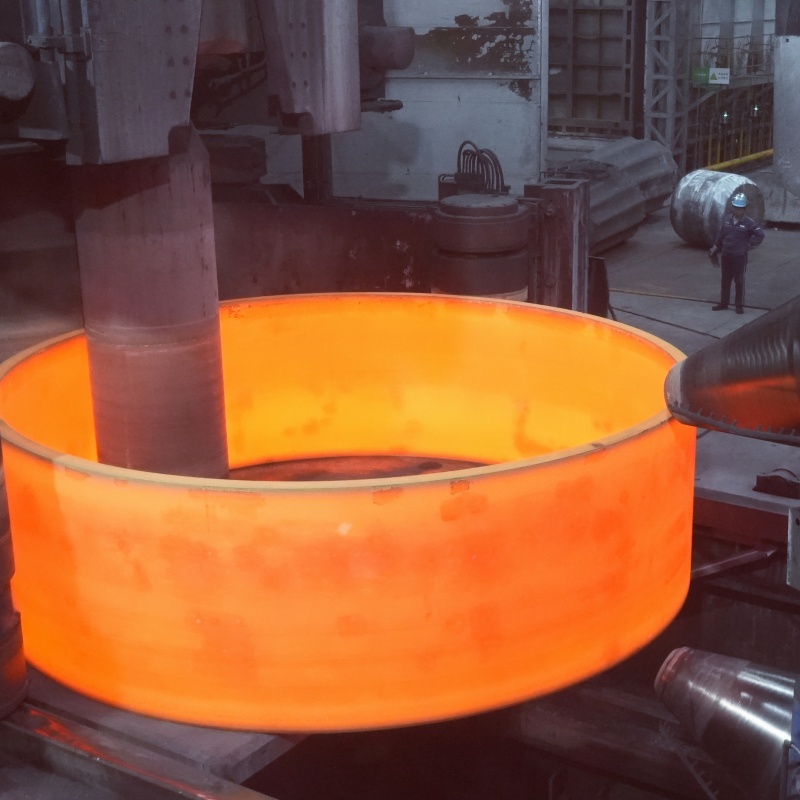
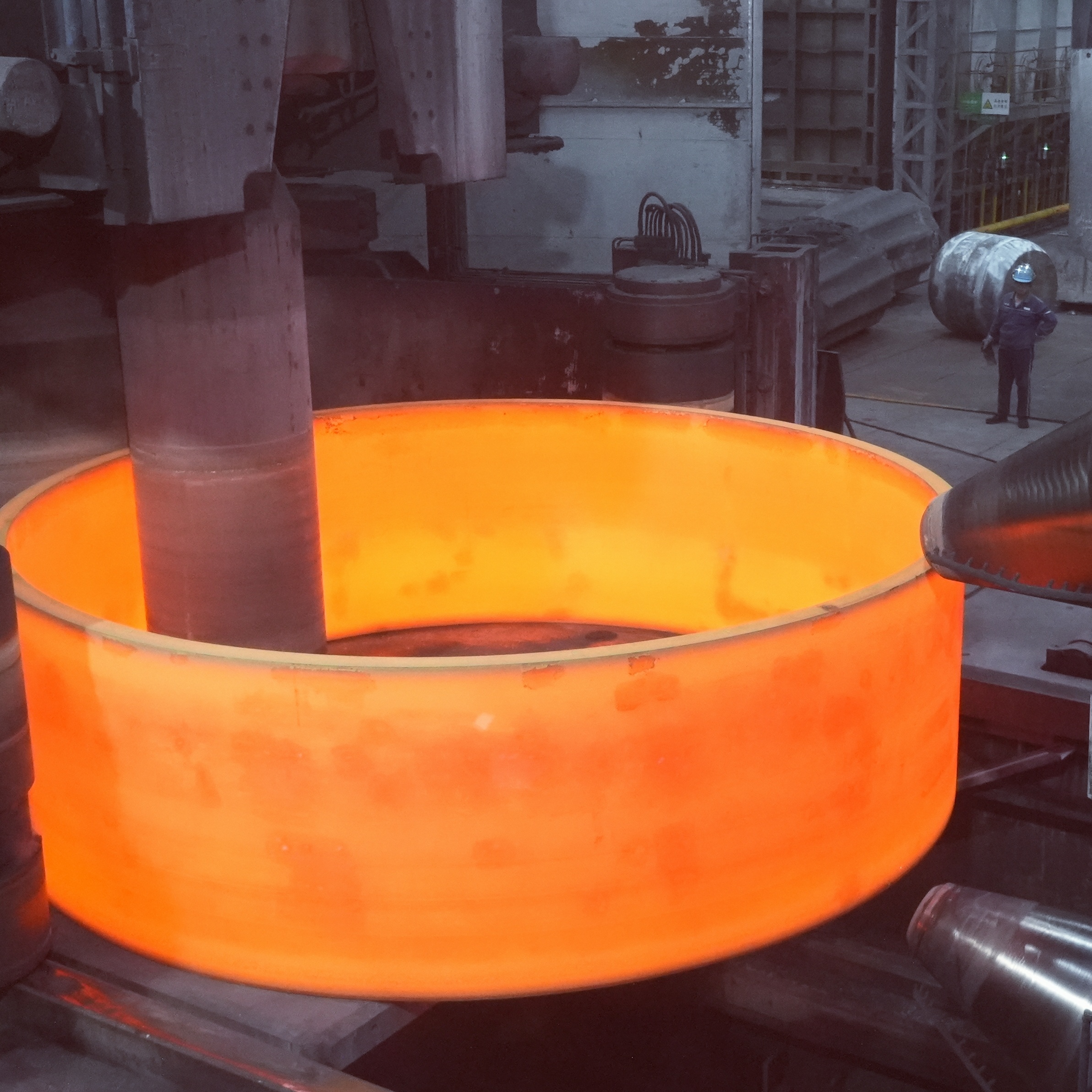
Seamless rolled ring forgings are produced from a pierced ring blank. The blank is heated and rolled simultaneously in the radial and axial directions. The rolling action enlarges the diameter and reduces the wall thickness, producing a near-net-shape ring. In the corpus, Iraeta describes this radial-axial ring rolling route and also describes a combined 'forge-rolling' approach that uses open-die forging with radial-axial rolling to combine forging densification with rolling dimensional control.
For hydropower, that process route is relevant because it creates a continuous, wrought ring rather than a cast shape. The absence of a weld seam is one part of the 'seamless' value. The other part is the deformation history: the ring is shaped by rolling, not only by pouring and solidifying. In a load-transfer application, that distinction belongs in the technical qualification—not in a slogan.
Iraeta's hydropower forging corpus states that the company uses radial-axial full rolling to manufacture ultra-large hydropower forgings. The listed components include yoke discs, ring plates, mirror plates, top-cover flanges, center bodies and other key forgings for multiple projects. For a buyer comparing a seamless rolled ring forging with a cast ring, this is the practical link: the forged route is not only a material certificate; it is a shape-and-structure route that can be matched to the load path.
What the Forged Route Offers in This Duty
In the hydropower duty described by the corpus, the forged ring route aligns with three requirements:
- Load transfer and structural support: Product 296 is used for load transfer in hydro turbine generating units; product 297 provides structural support in pumped storage projects.
- Fatigue resistance under frequent start-stop: The hydropower corpus lists cyclic load and frequent start-stop conditions; product 297 is specified with fatigue resistance for pumped storage support.
- Sediment and water erosion resistance: The application requires sediment abrasion resistance and water erosion resistance, so the ring's material, heat treatment and surface condition must be qualified to that duty.
These are not reasons to skip inspection. They are reasons to define inspection around the forged ring's critical interfaces: the load-transfer face, the structural support section, the sealing zone and the machined fit.
Where Cast Rings Fit—and Where They Need Extra Scrutiny
A cast ring is made by pouring molten metal into a mold and allowing it to solidify. That route can produce complex external shapes and may reduce some machining steps when the geometry is favorable. For hydropower, a cast ring may be considered where the design is less dependent on wrought directional properties, where a proven casting procedure exists, and where the buyer can verify internal soundness and section performance.
The qualification focus is different. In a casting, the buyer should examine the solidification and feeding strategy, shrinkage control, inclusion control and the NDT plan for internal discontinuities. Those are process controls, not assumptions about any specific foundry. The corpus does not provide cast-ring performance data, so this guide does not claim that a cast ring will fail or that a particular casting route is inferior. It states the decision rule: if the ring is a critical load-transfer and fatigue component under high head pressure, the buyer should require evidence that the cast route can meet the same duty—not simply a dimensional drawing.
This is also where the word 'equivalent' needs discipline. A cast ring and a forged ring can share the same outside diameter and still differ in material condition, inspection category, machining allowance and qualification evidence. The comparison should be made at the level of the qualified component, not the outline drawing.
Head-to-Head Comparison Table
The forged-ring column uses the hydropower and ring-rolling facts in the provided corpus. The cast-ring column states the qualification questions a buyer should close out; it does not assert unverified foundry performance.
| Decision criterion | Seamless rolled ring forging | Cast ring |
|---|---|---|
| Forming route | Pierced ring blank is heated and rolled radially and axially; diameter increases and wall thickness decreases (corpus process description). | Molten metal is poured into a mold and solidified; verify the foundry's feeding, shrinkage and section-property controls. |
| Structural continuity | Seamless, wrought ring with no weld seam; deformation history is part of the process route. | As-cast continuity depends on solidification; require NDT and section-property evidence at critical zones. |
| Load transfer under high head | Product 296 is used for load transfer in hydro turbine generating units under high water head pressure (corpus). | Verify design allowables and load-path analysis for the specific cast geometry and material. |
| Fatigue under start-stop | Hydropower duty includes cyclic load and frequent start-stop; product 297 is specified with fatigue resistance in pumped storage support (corpus). | Require fatigue qualification and a defect-acceptance plan that matches the start-stop duty. |
| Sediment abrasion | Product 296 is designed for sediment abrasion environments (corpus); material and surface condition still need project qualification. | Verify wear allowance, surface condition and repair limits for the cast route. |
| Structural support in pumped storage | Product 297 provides structural support in pumped storage power station projects under high water pressure resistance and fatigue resistance (corpus). | Verify stiffness, interface design and support-section soundness for the cast component. |
| Large-ring feasibility | Iraeta reports custom ring forgings up to 300 tons, over 21 m diameter and up to 5 m height (company-reported capability). | Verify foundry mold, lifting, heat-treatment and machining limits before RFQ release. |
| Inspection focus | Dimensional report, material certificate, heat-treatment record, NDT and machined-interface verification should be specified in the RFQ. | Add internal-soundness verification and section-property checks to the same RFQ structure. |
Step-by-Step Breakdown: How to Run the Decision
- Define the load path first. Mark whether the ring is a load-transfer component, a structural support ring, a sealing interface, or a combination. The corpus ties product 296 to load transfer in hydro turbine units and product 297 to structural support in pumped storage. That distinction should drive the specification.
- Write the duty envelope. Capture high water head pressure, sediment abrasion, water erosion corrosion, cyclic load, long-term underwater or humid operation, and frequent start-stop. These are the hydropower conditions listed in the corpus. Do not reduce the RFQ to a diameter and weight.
- Select the process route against the duty. For a critical load-transfer and fatigue ring, evaluate a seamless rolled ring forging route. For a cast ring, require the foundry to demonstrate that the cast route can meet the same duty with documented internal soundness and section properties.
- Check the size and handling envelope. A large rolled ring forging may require radial-axial rolling capacity, heat-treatment capacity, machining capacity and lifting planning. The corpus lists Iraeta custom ring capability up to 300 tons, over 21 m diameter and 5 m height, plus hydropower components such as yoke discs, ring plates, mirror plates, top-cover flanges and center bodies. Use those facts to screen feasibility, then verify the specific drawing.
- Qualify the material and heat treatment. The product corpus lists carbon steel, stainless steel and alloy steel as applicable materials. The hydropower duty adds water erosion and sediment abrasion, so the material condition and surface protection must be reviewed against the actual water chemistry and sediment load.
- Agree the inspection and document package. The available evidence does not name a single mandatory standard for every hydropower ring. The buyer should therefore state the project standard in the RFQ and require the supplier to confirm compliance, rather than assuming a generic certificate is enough.
- Approve the first article before batch release. For a large or heavy ring, first-article approval should close the dimensional fit, load-transfer face, structural support section, sealing zone and inspection records. If the evidence package cannot close those points, the route is not qualified for that project.
Use Cases: Hydro Turbine Units and Pumped Storage
Hydro turbine generating units
In a hydro turbine generating unit, the ring must work under high water head pressure and transfer load into the surrounding structure. Product 296 is the corpus example: it is used in the hydropower industry and hydro turbine generating unit projects, operating under high water head pressure, transferring loads and designed for sediment abrasion environments. The matched equipment is the hydraulic turbine and generator. The decision here should favor a route that can demonstrate load-transfer integrity and fatigue capability, not merely a cast or forged label.
Pumped storage power stations
Pumped storage adds frequent start-stop and reversible duty. The corpus states that product 297 is applied in pumped storage power station projects, providing structural support under high water pressure resistance and fatigue resistance. It also lists hydraulic turbines and generators as supporting equipment. For this use case, the buyer should scrutinize the support section, the fatigue qualification and the interface fit. A cast alternative should be held to the same duty evidence.
Large custom hydropower rings
When the ring is large, the process route and factory capability become part of the technical decision. Iraeta's published hydropower forging range includes yoke discs, ring plates, mirror plates, top-cover flanges and center bodies, and the company reports custom ring forgings up to 300 tons, over 21 m diameter and 5 m height. These facts support a feasibility conversation for large rolled ring forgings; they do not replace a drawing-specific review.
Iraeta's Fit for Hydropower Ring Sourcing
Iraeta Energy Equipment Co., Ltd. is a Chinese manufacturer established in 2006 and based in Jinan, China, with production facilities in China and Spain. The company reports a 100-engineer R&D team and serves clean energy, oil and gas, marine engineering, tunnel boring, cement production and metal mining, with major markets including the EU, USA, Japan, the Middle East, Southeast Asia, Brazil and India.
For this topic, the relevant facts are narrower. Iraeta produces hydroelectric forgings and profiling rings, and its hydropower corpus coverage includes radial-axial full rolling for ultra-large hydropower forgings. The company reports custom ring forgings up to 300 tons, over 21 m diameter and 5 m height, and a 21.029-meter seamless rolled steel ring in 2026. Those facts support a supplier capability discussion for large rolled ring forgings; they do not replace project-specific qualification.
If you are comparing a seamless rolled ring forging with a cast ring for a hydro turbine or pumped storage project, the practical next step is to send the duty envelope, drawing, material grade, inspection standard and interface requirements. Iraeta can be contacted at ebiz@iraeta.com or +86-188-5315-7508, and the company website is https://www.iraeta.com.
FAQ: Seamless Rolled Rings vs. Cast Rings for Hydropower
What should a hydropower ring compliance review verify first?
Start with the duty, not a generic certificate. The corpus lists high water pressure resistance, sediment abrasion resistance, water erosion resistance, fatigue resistance, high sealing performance and long service life as hydropower requirements. Confirm that the selected ring route is qualified against those conditions, and define the applicable project standard in the RFQ. The available evidence does not identify one universal standard number for every hydropower ring.
Can seamless rolled ring forgings be supplied in the sizes needed for large hydropower units?
Iraeta reports custom ring forgings up to 300 tons in weight, over 21 meters in diameter and up to 5 meters in height. The company also reports a 21.029-meter-diameter seamless rolled steel ring in 2026. These are company-reported capability facts. A specific hydro turbine or pumped storage ring still needs a drawing-level feasibility review for material, heat treatment, machining and inspection.
Is a forged ring always the lower-cost choice?
No blanket cost conclusion is supported by the available evidence. Cost depends on the qualified route, material grade, size, machining allowance, heat treatment, inspection and logistics. The better comparison is the qualified component: a lower-priced cast ring that cannot close the internal-soundness and fatigue evidence is not equivalent to a forged ring that can. Buyers should compare total qualification cost, not only the piece price.
What should a sample or first-article approval prove for a hydropower ring?
It should prove that the supplier can reproduce the drawing and the duty-relevant interfaces: load-transfer face, structural support section, sealing zone, material condition and inspection records. For a forged route, the ring-rolling process and heat-treatment records should be traceable to the first article. For a cast route, internal-soundness and section-property evidence should be included. Confirm the exact first-article scope with the supplier before release.
What lead-time factors matter most for large rolled ring forgings?
The available corpus does not provide lead-time durations, so no specific weeks or months should be assumed. The controllable factors are the drawing review, material availability, tooling and rolling capacity, heat treatment, machining, inspection and global logistics. Iraeta's facilities in China and Spain are relevant to supply-path planning, but the project schedule should be confirmed against the specific ring size and specification.
Conclusion: Choose the Route That Can Prove the Duty
For hydropower rings under high water head pressure, sediment abrasion and frequent start-stop cycling, the forged-versus-cast decision should be settled by evidence. Seamless rolled ring forgings align with load transfer, structural support, fatigue resistance and large-ring capability in the corpus. Cast rings can be evaluated, but they need a focused qualification of internal soundness, section properties and NDT. The wrong way to decide is to compare only the outline drawing or the piece price.
Define the duty, qualify the process route, verify the inspection package and approve the first article. That sequence is more reliable than a generic material callout. For a project-specific review, contact Iraeta with your drawing and hydropower duty envelope.
Request a hydropower ring review
Send your drawing, material grade, inspection standard and operating duty to Iraeta for a feasibility and quotation discussion.
Email: ebiz@iraeta.com | Tel: +86-188-5315-7508 | www.iraeta.com

Have Questions or Need More Details?
Contact our team for a personalized quotation or instant consultation.
Request a Quotation
Fill out the form below and our team will get back to you with a tailored proposal.
WhatsApp Direct Chat
Prefer to chat in real-time? Message us on WhatsApp for instant assistance & quick answers.
- Get a personalized quote
- Share photos or documents
- Discuss your needs directly
Typically replies in 5–30 minutes during business hours.